


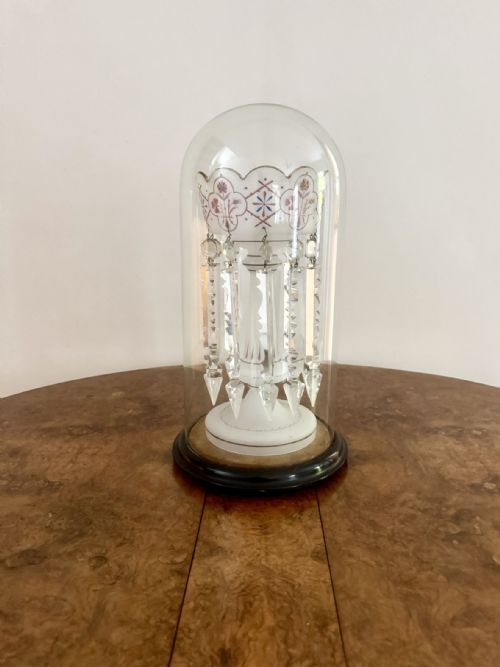
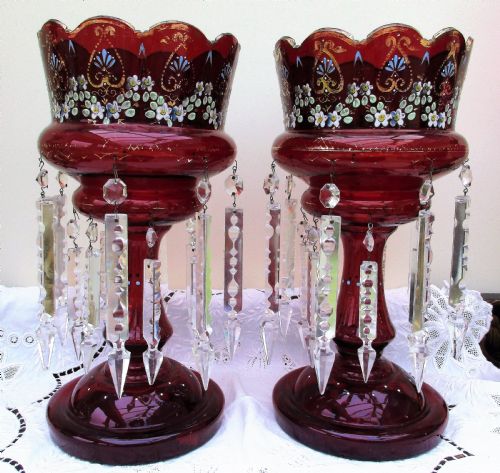
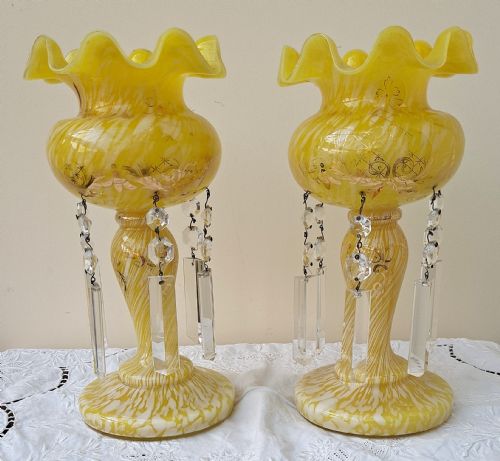


Hand Painted Glass Lusters
Hand painted glass lustres are brilliant mantel ornaments designed to catch the candlelight, bringing colour and reflective sparkle to a room.
Hand Painted Glass Lusters
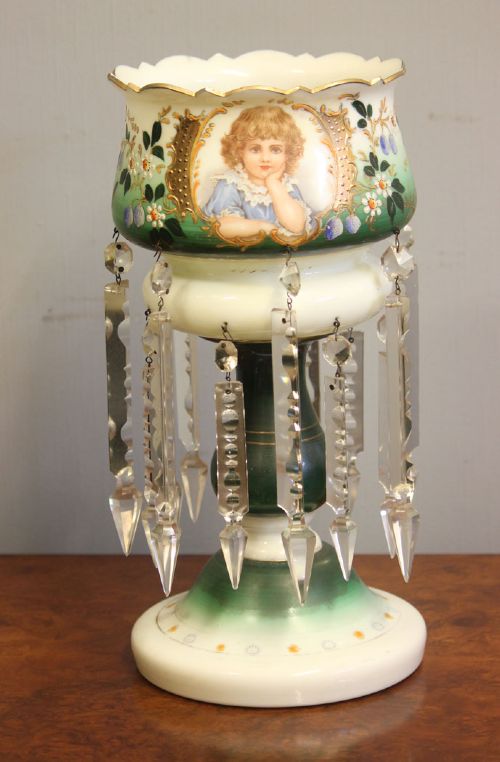
Hand painted glass lustres are ornamental candle lamps designed to sit on a mantelpiece or table, hung with crystal prisms that refract light. These decorative pieces appear most frequently as Victorian items dating from the nineteenth century.
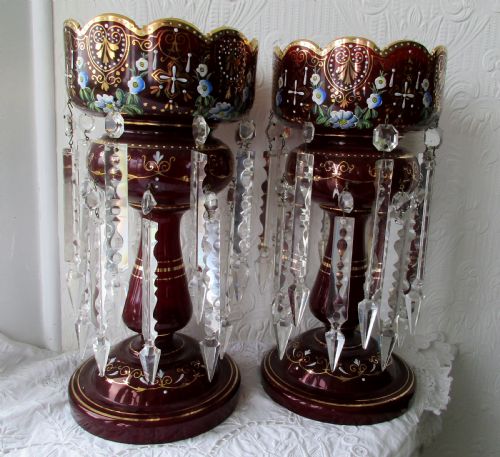
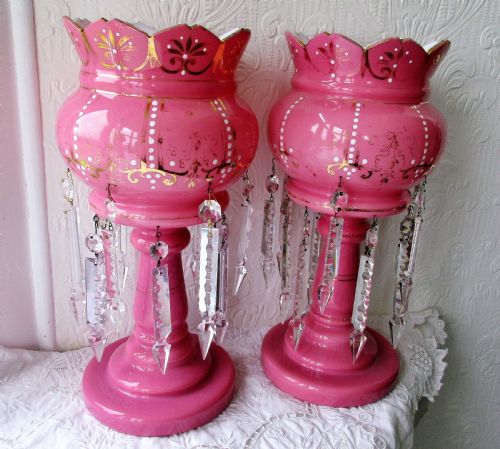
Buyers encounter single pieces alongside matched pairs fitted with hanging glass prisms. English and French origins predominate among the nineteenth-century examples recorded in the listings.
How they were made
Glassmakers shaped lead crystal and coloured glass into tall stems and bowls, incorporating cut glass facets to enhance the play of light. Many items received rich layers of enamel and gold leaf applied by hand over the glass surface.
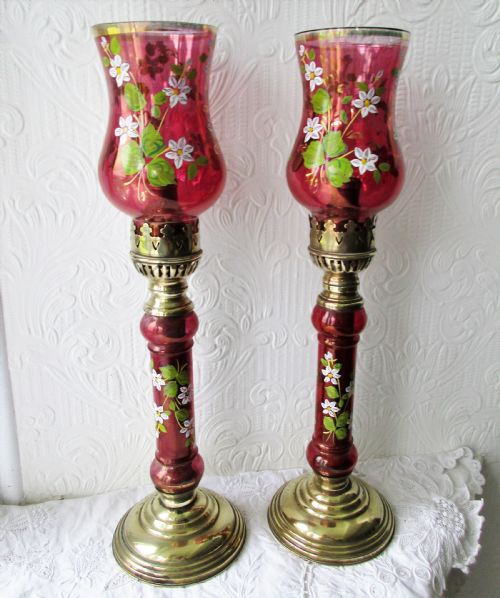
Makers embellished the bodies with hand-painted floral motifs and gilt highlights, securing dangling crystal prisms from the rims on metal or glass lugs. Overlay glass techniques appear on Bohemian pieces, where layers of contrasting glass were cut away to reveal the colour beneath.
Hand Painted Glass Lusters Retail Price Guide 2026
Typical asking prices for hand painted glass lusters among the pieces listed under this phrase on Sellingantiques today, from the lower quarter to the upper quarter. They describe what is for sale here now, not the wider market.
The listings span the nineteenth century, featuring Victorian styles in ruby glass, green glass, opaline, and crystal.
What varies in quality
Quality rests upon the depth of the glass colour and the crispness of the hand-painted enamel and gilt work. Rich ruby and green glass bodies with intact, dense gilding stand above simpler versions.
The completeness and original match of the hanging crystal prisms dictate the overall standard of a lustre. Lustres retaining their full complement of matching cut glass prisms possess greater integrity than those with replaced or missing drops.
The Hand Painted Glass Lusters Glossary
- Lustre
- An ornamental glass vase fitted with hanging crystal pendants designed to reflect candle or lamplight. These decorative objects became popular in the nineteenth century for drawing room mantelpieces.
- Prism
- A cut glass pendant suspended from the rim of a lustre to refract light. They hang in numbers around the bowl.
- Ruby glass
- Deep red glass created by adding gold chloride to the molten batch during manufacture. This rich coloration defines many nineteenth-century examples.
- Opaline glass
- An opaque, pale glass with a milky appearance, often tinted in soft shades. French makers utilised this material extensively for decorative table wares.
- Overlay glass
- A technique involving two or more layers of different coloured glass fused together before cutting. Portions of the outer layer are ground away to expose the contrasting colour underneath.
Hand Painted Glass Lusters: Frequently Asked Questions
What is a glass lustre used for?
Hand painted glass lustres functioned primarily as decorative mantelpiece ornaments rather than practical lighting sources. Their hanging crystals caught and multiplied the flickering light from candles placed nearby.
Over time, they evolved into status symbols within Victorian parlours, displaying rich colours and elaborate hand-painted decoration to impress visitors.
How do I identify Victorian glass lusters?
Victorian glass lustres typically display distinct nineteenth-century forms, heavy lead crystal construction, and characteristic hand-painted enamel or gilt floral motifs. They frequently appear in saturated colours like ruby, green, pink, and yellow.
Examining the manufacturing techniques on the base and the cut of the hanging prisms helps confirm the nineteenth-century production period.
Are glass lustres always sold in pairs?
While many surviving glass lustres appear as matched pairs intended for symmetrical placement on a mantelpiece, single examples also occur. Pairs command stronger interest from collectors seeking balanced fireplace decoration.
Individual lustres often survived separately after mishaps separated their counterparts over the decades.
How do I care for glass lusters?
Glass lustres require gentle cleaning by hand using lukewarm water and mild soap to protect the delicate enamel and gold leaf decoration. Removing the hanging prisms individually makes washing the main body and the pendants much safer.
Harsh chemical cleaners and abrasive cloths must be avoided to preserve the hand-painted surface details.