


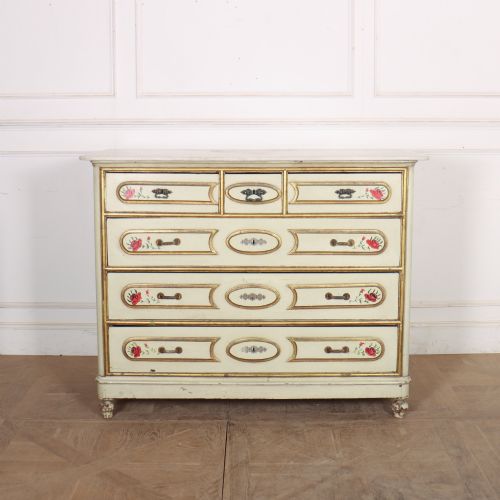


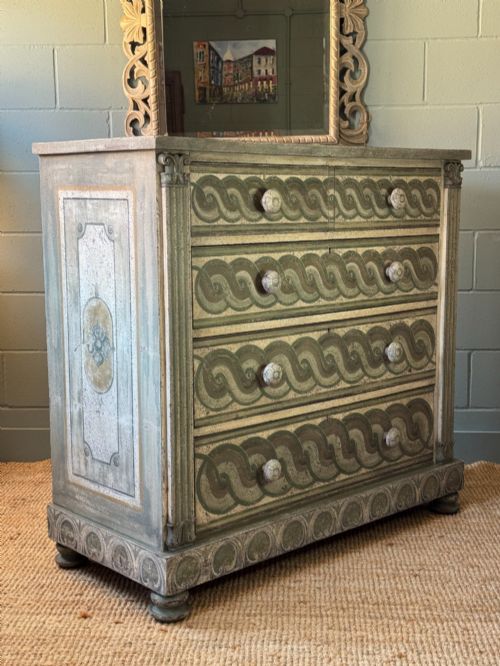


Hand Painted Dresser
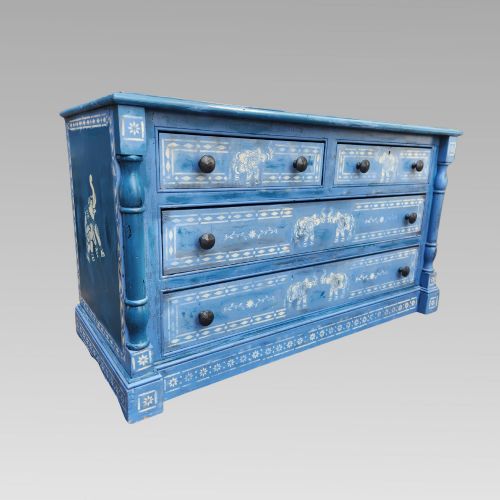
These hand painted dresser options and allied painted chests bring vernacular colour and surface character into domestic rooms.
Hand Painted Dresser
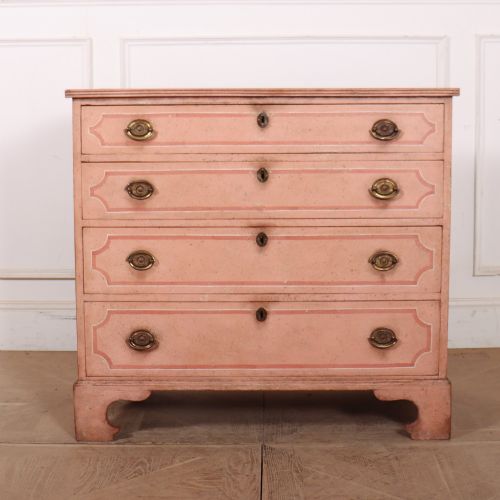
A search for a hand painted dresser typically reveals larger kitchen cupboards, dresser bases, and sideboards alongside taller chests of drawers spanning the Georgian, Victorian, and later periods. English country pieces sit alongside continental examples, notably Gustavian Swedish cabinets and Spanish commodes.
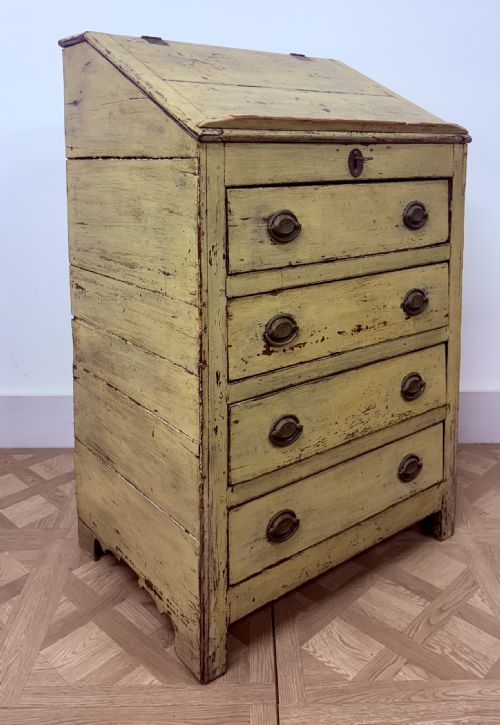
The pine chest of drawers forms the most frequent encounter on this page, often found with original painted surfaces or scumbled finishes. These utilitarian storage pieces range from provincial English workshop items to folk art cupboards from Sweden and Hungary.
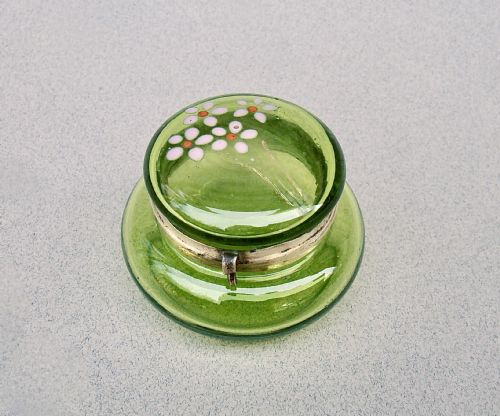
Smaller painted storage also appears through trinket boxes, dressing table jars, and porcelain caskets. Items such as French Sèvres or Meissen boxes introduce detailed surface decoration on a miniature scale.
Materials and Surface Methods
Makers utilised native softwoods and hardwoods, predominantly pine and ash, constructing carcases with traditional dovetailed drawer joints and applied mouldings. Surfaces were then prepared to receive coats of lead or oil-based paint.
Decoration relied on brushwork applied directly to timber or over grounds of gesso and enamel. Scumbling techniques involved dragging and manipulating translucent glazes over a pale base colour to imitate the grain of richer woods.
Finer decorative items incorporated porcelain and glass components, decorated with hand-painted floral motifs and secured with brass or gilt metal mounts.
Hand Painted Dresser Retail Price Guide 2026
Typical asking prices for hand painted dresser among the pieces listed under this phrase on Sellingantiques today, from the lower quarter to the upper quarter. They describe what is for sale here now, not the wider market.
One exceptional Victorian pine chest preserves literal school records, featuring hand sign-written lettering naming the Bluecoat School in Liverpool.
Evaluating Painted Surfaces
Quality rests primarily in the survival and integrity of the original paint layer. Pieces retaining their untouched historic decorative scheme, complete with honest wear and patination, command greater interest than later repainted surfaces.
The sophistication of the brushwork distinguishes provincial utility from deliberate artistic expression. Fine folk art detailing, pictorial Venetian scenes, or precise floral work elevate a functional storage piece into an object of decorative focus.
Structural integrity and hardware choices also differentiate tiers of production. Original brass pulls, working locks, and well-fitted drawers preserved alongside clean internal timber denote careful original manufacture.
GEMLA FABRIKERS·Meissen
The Hand Painted Dresser Glossary
- Scumble
- A painting technique where a semi-opaque glaze is applied over a lighter base colour and manipulated with combs or rags to simulate wood grain. This finish appears frequently on Victorian pine furniture.
- Gustavian
- The Swedish interpretation of French neoclassical style, characterised by restrained carving, pale grey or cream paint, and light proportions. Pieces from this tradition are common among continental storage items.
- Japanned
- European imitation of East Asian lacquer work, created using layers of varnish and paint decorated with motifs in gilt. This finish occurs on decorative English case furniture.
- Bureaux
- Writing cabinets featuring a sloping fall-front that opens to reveal internal drawers and pigeonholes above a set of lower drawers. They bridge the function of desk and chest.
- Commode
- A low chest of drawers or cabinet, often originating from France or Spain. The term usually denotes decorative case furniture intended for formal rooms.
Hand Painted Dresser: Frequently Asked Questions
What is a scumbled pine chest?
A scumbled pine chest is a storage piece finished with a decorative glaze dragged over a solid wood base to imitate oak or walnut grain. Craftsmen used this method during the nineteenth century to give humbler softwoods a richer appearance.
Over decades, these layers acquire a distinct patination where the top glaze softens and wears around the drawer pulls. This finish remains a hallmark of regional domestic furniture.
How do I identify a Gustavian cabinet?
Gustavian cabinets present neoclassical restraint, featuring pale painted surfaces in soft greys, creams, or white. They often incorporate fluted columns, panelled doors, and simplified floral carvings derived from French models.
Originating in Sweden during the late eighteenth century and continuing into the nineteenth, these pieces prioritize light proportions and functional interior storage.
Are painted chests original?
Establishing originality requires examining how the paint interacts with the timber substrate and underlying wear patterns. Many domestic pieces received fresh coats of colour during their working lives in farmhouses or schools.
Original paint typically shows uniform age shrinkage and integration into the wood pores, whereas later decoration often sits flatly across bumps and historic damage.
What are dresser bases used for today?
Dresser bases serve as versatile sideboards and low credenzas in modern kitchens, hallways, and living spaces. Their combination of cupboards and wide drawers provides substantial concealed storage for tableware or linens.
The flat top surface also offers a practical stage for lamps, ceramics, and larger decorative objects.