
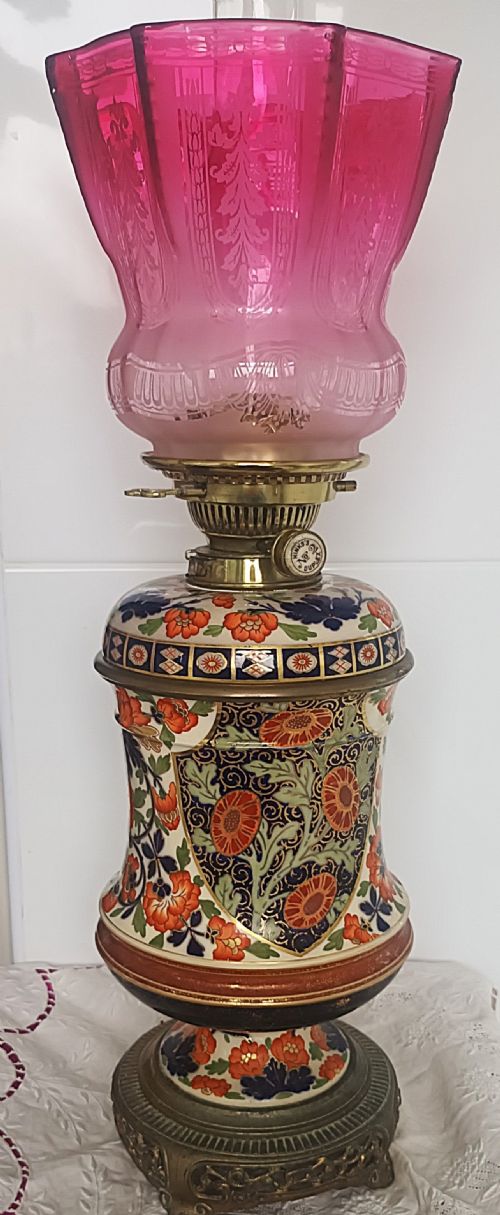


Hand Painted Ceramic Lighting
Hand painted ceramic lighting brings together centuries of fired clay and pigment, turned into functional illumination with global influence.
Hand Painted Ceramic Lighting
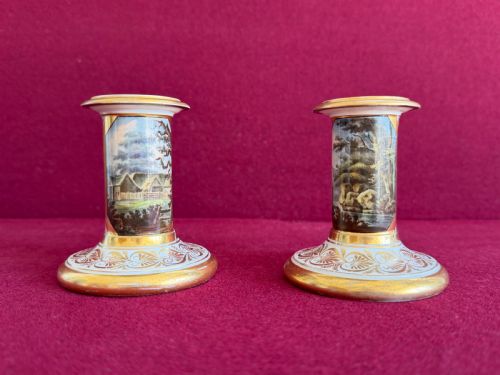
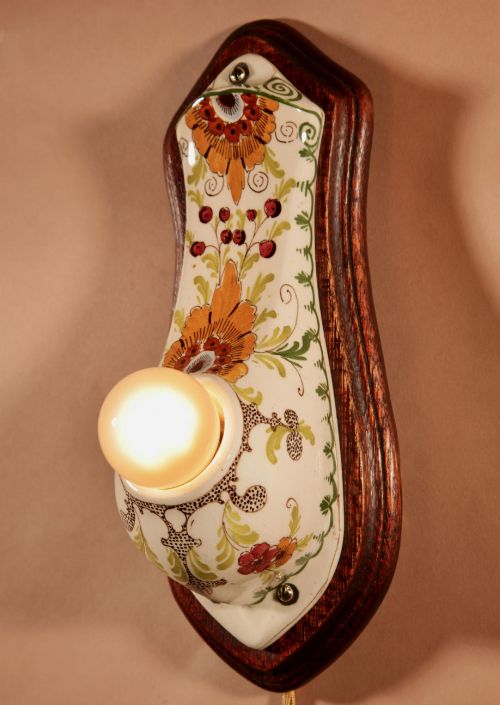
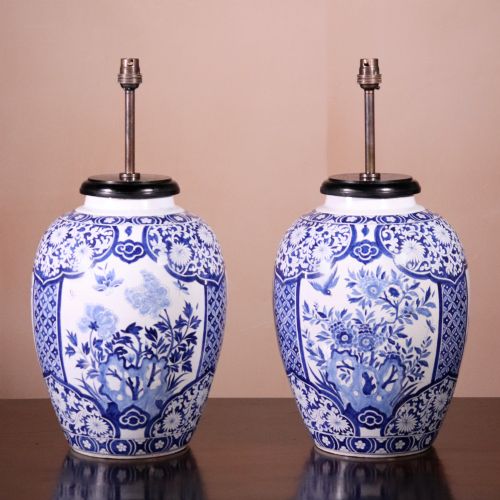
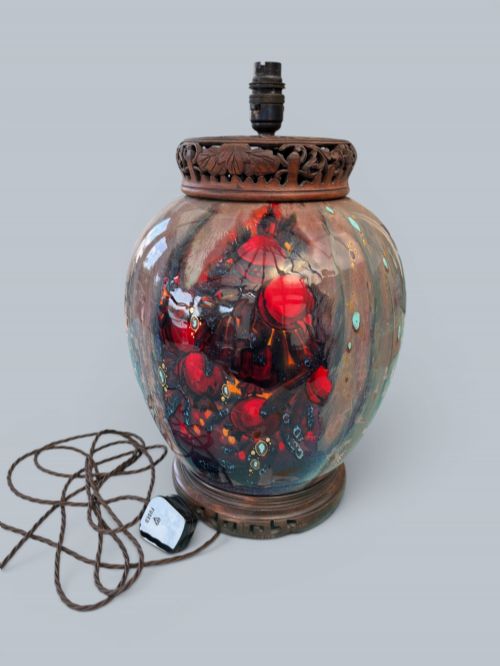
Hand painted ceramic lighting encompasses table lamps, oil lamps, candlesticks, wall lights and candelabra fashioned from glazed bodies. Many examples utilise converted antique vessels, particularly Chinese export porcelain and Japanese export wares, fitted for electricity or original oil burning.
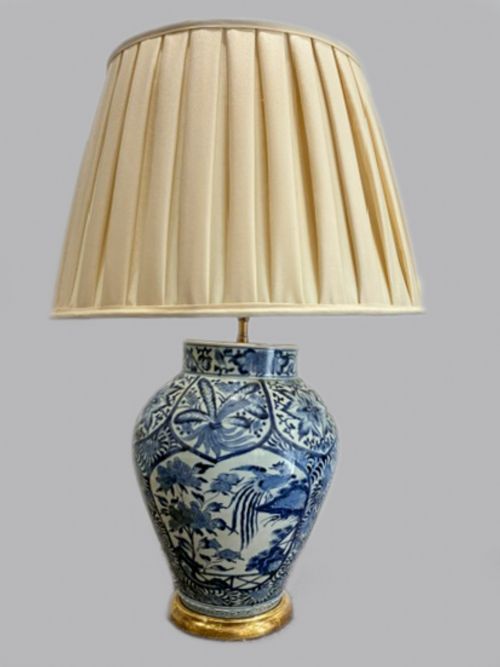
The selections span from seventeenth century fragments to twentieth century productions, bringing domestic porcelain and earthenware into interiors. Pieces range from blue and white ginger jars to polychrome famille verte and satsuma bodies.
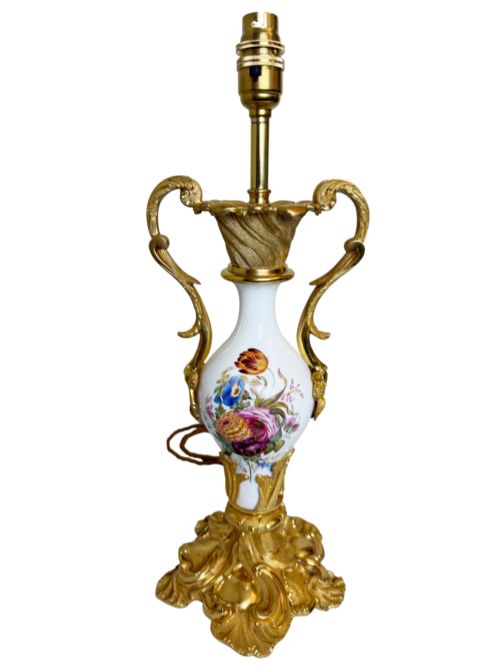
Makers and factories across Europe and Asia contributed to this group, incorporating brass and bronze mounts onto porcelain bodies. Buyers encounter both single statement pieces and matched pairs designed for mantelpieces or side tables.
How they were made
Potters shaped clay on the wheel or in moulds before applying mineral pigments beneath or above the glaze. Chinese porcelain and European earthenware received hand painted cobalt blue, famille rose, or enamelled decoration before high temperature firing.
Metalworkers added brass, gilt bronze, and wood mounts to stabilise the ceramic bases and hold burners or bulb fittings. Many nineteenth century examples integrated glass chimneys, fabric shades, and ceramic fonts.
Some nineteenth century lamps still retain the quiet weight of old oil fonts, reminding us of evenings spent reading by wick light.
What varies in quality
The fineness of the hand painted brushwork dictates visual depth, separating commercial production from skilled studio or factory output. Clarity of glaze, precision of firing, and the integration of bronze or brass mounts influence overall execution.
Proportion matters when ancient vessels undergo conversion into lamps, balancing the weight of the ceramic body against the height of the stem and shade. Original matched pairs hold greater symmetry than assembled companions.
Royal Worcester·Barr Flight And Barr·Moorcroft Art Pottery·Sitzendorf Porcelain·Gien France
The Hand Painted Ceramic Lighting Glossary
- Famille Verte
- A Chinese porcelain palette dominated by green enamel, popular in Qing dynasty wares. Artisans used this transparent green alongside iron red, yellow and blue.
- Delft
- Tin glazed earthenware originating from the Netherlands and modelled on Chinese blue and white imports. The opaque white surface accepts painted motifs before a clear lead glaze finish.
- Candelabra
- Branched lighting fixtures designed to hold multiple candles rather than single bulbs. These often feature figural porcelain supports with metal arms.
- Satsuma
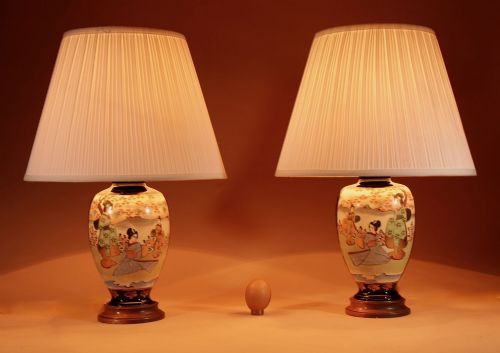
- Japanese earthenware characterised by a crackle glaze and ornate polychrome or gilt decoration. These pieces frequently show intricate figural scenes and floral panels.
- Ginger Jar
- A high shouldered storage jar with a domed lid, frequently adapted for domestic illumination. Their broad bodies provide ample canvas for hand painted botanical or narrative scenes.
Hand Painted Ceramic Lighting: Frequently Asked Questions
How do I choose a pair?
Look for matching heights, consistent glaze tones and identical hand painted motifs across both ceramic bodies. Pairs often originate from converted ginger jars or factory production runs.
Placement requires symmetrical surfaces such as sideboards or bedside tables where balanced proportions complete the arrangement.
Are these converted from vases?
Many examples utilise antique vases, ginger jars and vessels adapted for modern electrical wiring or historic oil burners. Conversion methods vary from drilled bases to secure collar mounts.
This practice preserves older ceramics by giving them a domestic function suited to modern rooms.
How do I clean ceramic lamps?
Dust gently with a soft dry cloth to protect hand painted enamel and delicate gilt bronze mounts. Avoid harsh chemical cleaners that might damage historic glazes.
Keep fabric shades separate during cleaning to prevent dust transfer onto porous earthenware surfaces.
Can I date these pieces?
Dating relies on stylistic clues, factory marks, glaze characteristics and the nature of the ceramic body. Eighteenth century pieces display distinct potting techniques compared to nineteenth century revivals.
Metal mounts and conversion hardware also provide clues regarding the period of adaptation.