



Hand Painted Brackets
These hand painted brackets and associated wall furnishings bring bold Chinoiserie and gilded Revival styles straight into a room.
Hand Painted Brackets
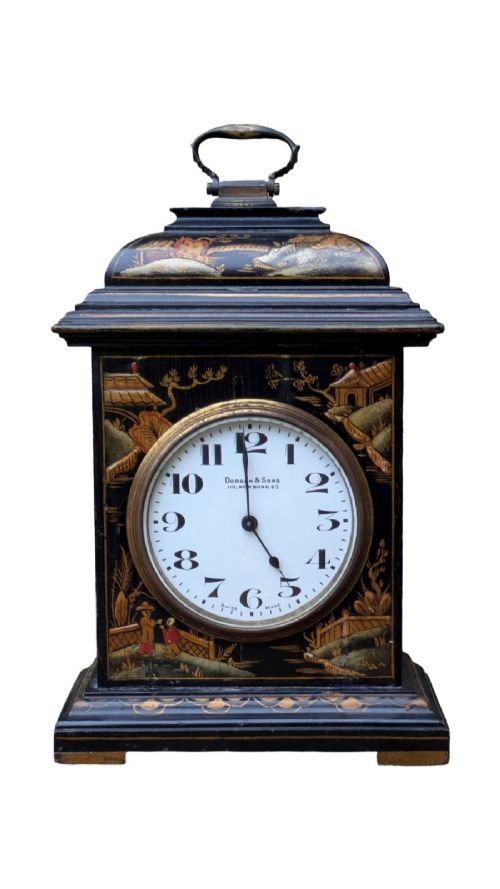
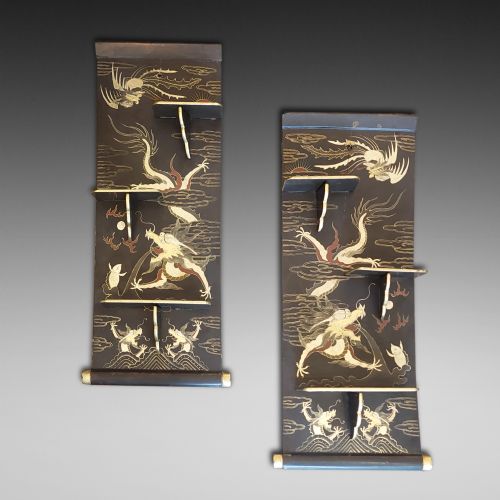
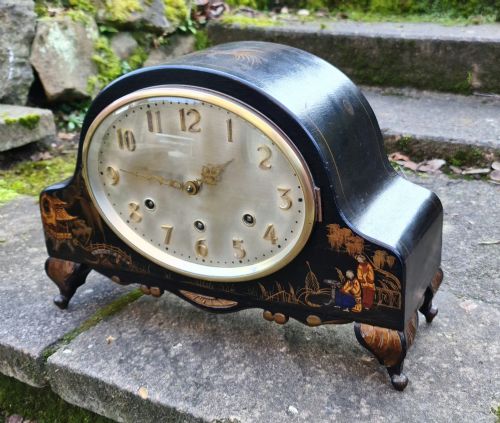
When searching for hand painted brackets, buyers encounter decorative wall supports, hanging shelves, and corbels alongside related mantel clocks and console tables. These pieces span the nineteenth and early twentieth centuries, featuring distinct aesthetic movements from Edwardian Chinoiserie to French Rococo Revival.
The objects most frequently met on this page include Chinoiserie mantel clocks and wall shelves adorned with hand-painted motifs. Other prevalent forms encompass porcelain corbels and lacquered wooden supports reflecting Regency and aesthetic movement design principles.
How they were made
Maker construction relies heavily on wood, brass, and porcelain, often finished with lacquer or specialised paint layers. Artisans applied detailed hand-painted decoration over ebonised, antique white, or lacquered wooden surfaces to achieve depth.
Metal components utilise cast brass and ormolu, pairing with glass and enamel dials on timepieces. Carved wooden elements and moulded porcelain figures provide the structural foundation for ornamental wall brackets and console tables.
Hand Painted Brackets Retail Price Guide 2026
Typical asking prices for hand painted brackets among the pieces listed under this phrase on Sellingantiques today, from the lower quarter to the upper quarter. They describe what is for sale here now, not the wider market.
What varies in quality
Quality differentiates through the precision of the hand-painted decoration and the crispness of the underlying woodwork or porcelain modelling. Superior examples display refined brushwork on Chinoiserie scenes and intricately cast metal mounts rather than simplified surface application.
The depth of the historical finish, whether genuine lacquer, period paint, or ebonised wood, dictates visual success. Pieces retaining their original decorative schemes without heavy later repainting demonstrate superior integrity.
The Hand Painted Brackets Glossary
- Chinoiserie
- European decorative style inspired by Chinese artistic traditions, featuring painted landscapes, figures, and motifs on furniture and clocks. It gained particular popularity during the eighteenth century and saw revivals in Edwardian design.
- Rococo Revival
- Nineteenth-century design movement characterised by asymmetrical scrollwork, naturalistic curves, and ornate ornamentation. This style heavily influences the appearance of many nineteenth-century wall brackets and timepieces.
- Ormolu
- Gilt bronze ornamentation applied to furniture, clocks, and decorative objects. The technique involves creating a finely chased bronze object and applying a gold amalgam.
- Corbel
- Architectural bracket projecting from a wall to support a weight, often highly decorative in porcelain or carved wood. They frequently appear in pairs to support shelves or small consoles.
- Ebonisation
- Finishing process used to stain wood, typically fruitwood or beech, so that it mimics heavy ebony. This technique was a hallmark of the Aesthetic Movement in the nineteenth century.
Hand Painted Brackets: Frequently Asked Questions
What rooms suit hand painted brackets?
These decorative wall supports suit sitting rooms, halls, and studies where architectural detail requires enhancement. They provide sturdy display surfaces for small decorative objects or plants while adding period character.
Positioning them at eye level allows the hand-painted details and carved forms to be fully appreciated. They work effectively either singly as focal points or in matched pairs flanking a mirror or doorway.
How do I care for painted wood?
Maintenance requires dusting gently with a dry, soft cloth to protect delicate hand-painted surfaces and lacquered finishes. Avoid modern chemical polishes and moisture, which can damage historic paint layers and gilt details.
Keeping pieces away from direct sunlight and sudden temperature changes prevents the wood and lacquer from cracking. Stable indoor conditions preserve the integrity of both the structural support and the decorative paint.
How do I identify French Rococo?
French Rococo pieces feature characteristic C-scrolls, shell motifs, and asymmetrical plant forms modelled in porcelain, wood, or cast metal. The style prioritises fluid, organic lines over rigid symmetry.
Examination of the surface reveals hand-painted floral or figural compositions framed by gilded or painted scrollwork. These elements distinguish genuine Revival pieces from later mass-produced imitations.
Were these clocks meant for walls?
The selection includes both wall-mounted shelf brackets and freestanding mantel clocks designed for tabletops or bracket shelves. Mantel clocks often share the decorative vocabulary of wall brackets, utilising matching Chinoiserie or Rococo aesthetics.
Understanding the distinction helps buyers place items correctly within a room scheme. Clocks require flat horizontal surfaces, while dedicated wall brackets anchor securely directly into vertical masonry or studwork.