




Hand Painted Artwork
These hand painted artwork selections span centuries of global skill, offering intimacy and colour that mass production simply cannot match.
Hand Painted Artwork
A search for hand painted artwork reveals an eclectic mix of flat mediums and decorative objects, ranging from delicate portrait miniatures and watercolour paintings to robust porcelain plaques and textile wall hangings. Pieces from the eighteenth, nineteenth and early twentieth centuries dominate the selection, crossing European, Asian and African traditions.
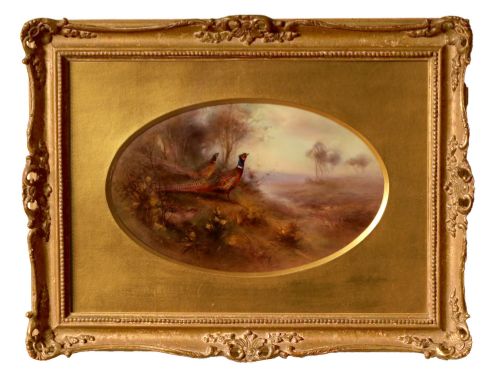
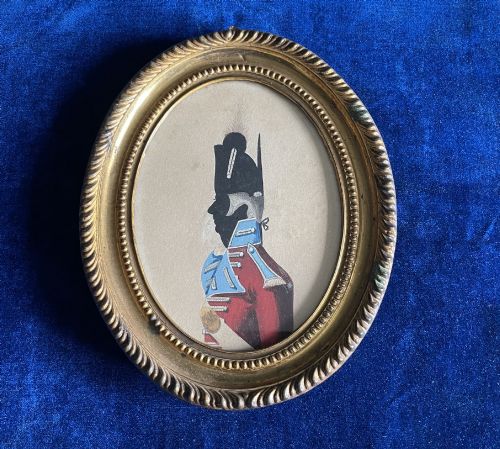
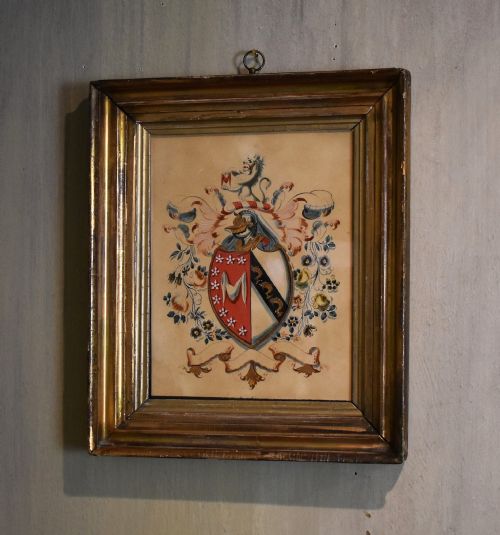
Buyers are most likely to encounter framed watercolours, gouache on silk or paper, and painted porcelain panels set within period frames. These works encompass diverse cultural expressions, from English heraldic devices and Russian Orthodox icons to Indian temple paintings and Chinese pith paper scenes.
The category also embraces functional items adapted for display, such as painted fan leaves, reverse-painted mirrors, carved wooden panels and stained glass. Each object represents a direct encounter with an artist's brush, whether working on fine ivory, ceramic surfaces or heavy timber.
Materials and technique
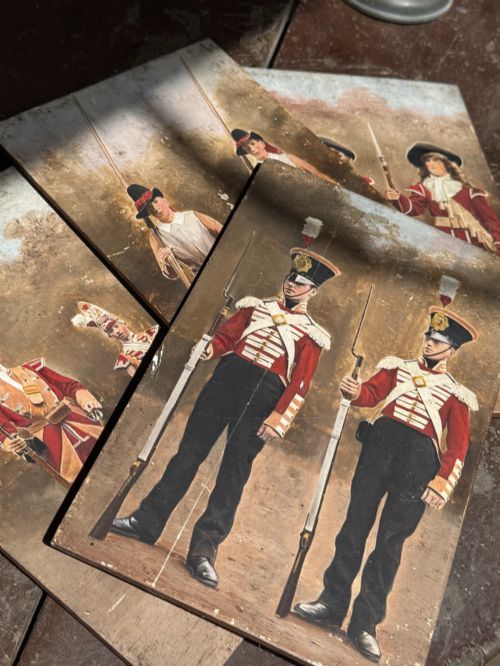
Makers utilised water-based pigments such as watercolour and gouache on supportive grounds like paper, silk, pith paper and ivory, often sealing delicate miniatures behind protective glass. On firmer grounds, artists applied oil or enamel directly to wood panels, canvas, ceramic tiles and porcelain blanks.
Support structures play an equal role in the construction of these works, employing carved wood, giltwood frames, and leaded settings for stained glass. Specialised decorative techniques include reverse painting on glass, crystoleum layering and intricate enamelling on metal frames.
Hand Painted Artwork Retail Price Guide 2026
Typical asking prices for hand painted artwork among the pieces listed under this phrase on Sellingantiques today, from the lower quarter to the upper quarter. They describe what is for sale here now, not the wider market.
Certain nineteenth-century artists painted microscopic details on delicate ivory using brushes fashioned from a single animal hair.
Judging quality
Quality rests upon the sureness of the brushwork and the preservation of the pigment, where confident execution distinguishes a master workshop from a commercial output. Finer pieces demonstrate meticulous detail in facial expressions, texturing and perspective, whereas lesser examples rely on formulaic repetition.
The integrity of the material support and the originality of the mounting also dictate distinction. Works retaining their contemporary frames, unblemished surfaces and stable grounds command greater regard than those compromised by over-painting or structural degradation.
KPM Berlin·Royal Worcester·George Soper·James Stinton
The Hand Painted Artwork Glossary
- Gouache
- An opaque water-based paint that dries to a matte finish, frequently utilised for botanical and portrait miniatures.
- Pith paper
- A delicate plant-based material used in nineteenth-century China for export watercolours.
- Crystoleum
- A Victorian technique where a photograph is applied to glass, made transparent, and hand-painted from behind.
- Icon
- A religious work of art, typically painted on wood panel within Eastern Christian traditions.
- Porcelain plaque
- A flat ceramic tablet fired at high temperatures and painted with enamel colours, often associated with Berlin factories.
Hand Painted Artwork: Frequently Asked Questions
How should I clean a antique painted panel?
Dust surfaces gently with a soft, dry brush without applying moisture or cleaning solutions.
Moisture can permanently lift fragile water-based pigments or damage unsealed wooden grounds.
Are these paper artworks prone to fading?
Watercolours and gouache remain sensitive to direct sunlight and ultraviolet exposure over time.
Display these pieces away from bright windows and utilise museum-grade glass for protection.
How do I identify a porcelain plaque?
Turn the piece over to examine the reverse for factory stamps, kiln marks or impressed ciphers.
Unmounted plaques often feature maker details or titles written in script on the ceramic body.
Can I hang these textiles in normal rooms?
Wall hangings and cloths require stable indoor humidity away from damp walls and direct heat sources.
Natural fibres expand and contract with environmental shifts, so ensure stable atmospheric conditions.