

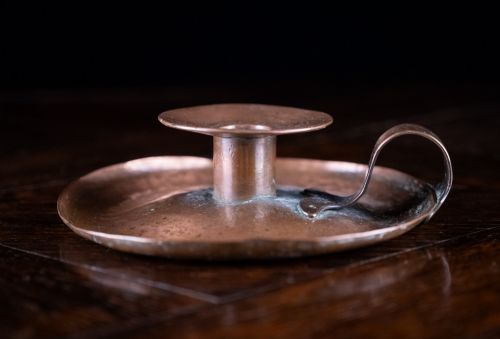
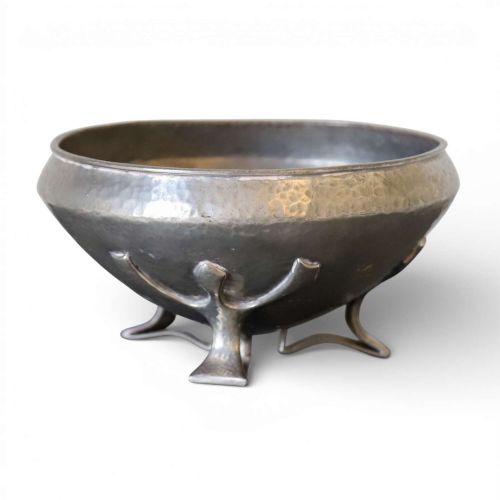


Hand Hammered Metal Dish
These hand hammered metal dish examples combine utility and decorative craft, offering buyers solid historic metalwork from the late nineteenth and early twentieth centuries.
Hand Hammered Metal Dish
A hand hammered metal dish represents domestic metalwork produced primarily during the Arts and Crafts, Art Nouveau, and Raj periods between eighteen eighty and nineteen thirty. Buyers looking at this page encounter various forms including decorative chargers, platters, trays, pedestal bowls, and wall plates.
The version most commonly met on this page is the Arts and Crafts copper charger or beaten pewter bowl, frequently displaying botanical motifs like clover flowers, pomegranates, and foliage. Persian and Anglo-Indian Raj examples also appear, bringing engraved repousse work and mixed brass and copper construction to the selection.
These pieces served as decorative centrepieces, wall decor, or functional table vessels in period interiors. Their surfaces record the direct physical labour of the metalsmith through visible hammering marks and hand-tooled decoration.
Materials and construction methods
Makers shaped these pieces from copper, brass, and pewter, often working the metal by hand through beating and repousse techniques. Copper and brass sheets received heavy hammering to build structural rigidity and distinctive surface textures.
Selected pieces incorporate applied decoration such as enamelled cabochons or engraved detailing to enrich the metal surface. Pewter formulations provided a softer medium suited for cast and hammered vessels produced by firms like Liberty and Co.
Hand Hammered Metal Dish Retail Price Guide 2026
Typical asking prices for hand hammered metal dish among the pieces listed under this phrase on Sellingantiques today, from the lower quarter to the upper quarter. They describe what is for sale here now, not the wider market.
Materials recorded across the inventory include plain copper, patinated copper, beaten pewter, brass, and applied enamel cabochons.
Assessing quality in antique metalwork
Quality depends on the depth and control of the hand tooling, separating standard production wares from pieces with crisp, purposeful repousse work and balanced proportions. The handling of botanical motifs and borders shows the artisan's direct skill.
The integrity of the material and the preservation of original patination dictate the visual weight of the dish. Pieces incorporating specialist elements like enamelled cabochons or integrated pedestals demonstrate greater ambition in design and execution.
Liberty and Co Tudric Pewter·Faulkner Bronze Company
The Hand Hammered Metal Dish Glossary
- Repousse
- A metalworking technique where the artisan pushes and hammers the design from the reverse side to create a raised relief on the front. This method creates depth and tactile quality on chargers and plaques.
- Charger
- A large ornamental plate or dish traditionally used for display rather than dining. These form the substantial wall and table pieces found in nineteenth and twentieth century metalwork.
- Cabochon
- A gemstone or piece of enamel polished smooth rather than faceted, often set into metalwork as a decorative accent. Enamelled versions add colour contrast to copper surfaces.
- Tazza
- A shallow bowl or dish raised on a pedestal foot, designed as a centrepiece. These elevated forms showcase metal surfaces on dining tables and sideboards.
- Pewter
- A malleable metal alloy historically used for domestic vessels and decorative items. In the Arts and Crafts period, it provided a dark, subdued finish when beaten by hand.
Hand Hammered Metal Dish: Frequently Asked Questions
What is a hand hammered metal dish used for?
These metal items functioned as decorative wall plates, table chargers, or pedestal centrepieces in historic interiors. Today, buyers place them on walls or tables to display traditional metalwork craft.
Their substantial construction makes them suitable for standalone display rather than heavy daily utility.
How do I identify Arts and Crafts metalwork?
Arts and Crafts pieces typically feature visible hammered surfaces, hand-worked details, and organic motifs such as pomegranates, foliage, or clover. Makers embraced the marks of physical labour rather than seeking industrial perfection.
Materials like beaten copper and Tudric pewter dominate this design movement, frequently paired with simple, sturdy forms.
What is the difference between copper and pewter dishes?
Copper dishes offer warm metallic tones that take on deep patinas over time, often decorated with repousse work or enamel cabochons. Pewter provides a softer, darker grey finish that responds well to casting and hand-beating.
Both materials were central to early twentieth-century design but yield very different visual weights in a room.
How should I clean antique metal dishes?
Antique metal dishes generally retain character through their existing patination and should not be aggressively polished to a bright shine. Gentle dusting and minimal intervention preserve the historic surface and hammering marks.
Harsh chemical cleaners can strip away desirable age-related patinas built up over a century or more.