


Hand Enamelled Crystal
Hand enamelled crystal pieces combine brilliant glass with vibrant painted decoration, offering both striking visual presence and decorative utility for the home.
Hand Enamelled Crystal
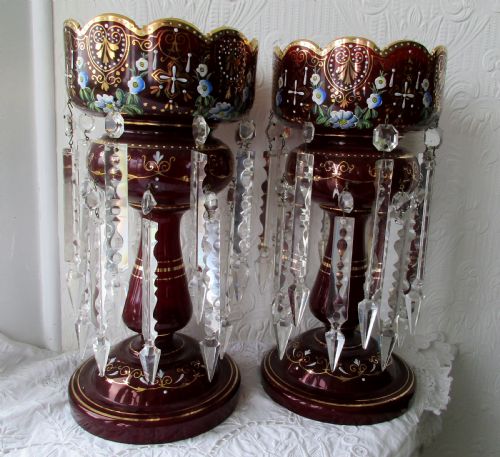
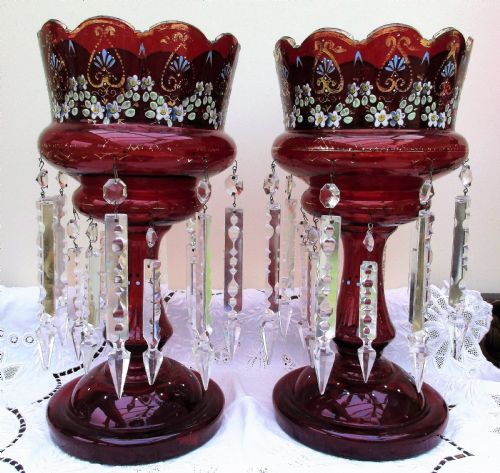
When searching for hand enamelled crystal, buyers encounter a diverse selection of decorative items spanning the nineteenth and twentieth centuries. These objects range from nineteenth-century Victorian ruby glass mantel lustres to twentieth-century Art Deco decanter sets.
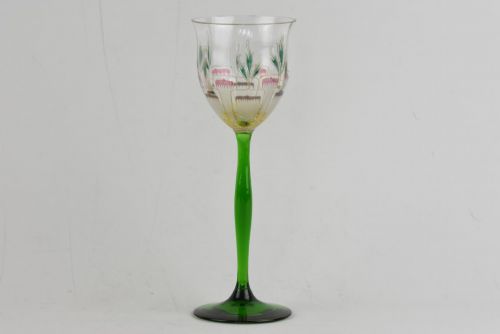
The most common versions on this page are mantel lustres and glassware, often originating from English, Bohemian, and German workshops. Pieces such as hock glasses, oil lamps, inkwells, and mantel clocks also appear frequently across various styles.
Stylistic influences vary widely across the inventory, encompassing Victorian, Art Nouveau, Jugendstil, Belle Epoque, French Second Empire, and Art Deco designs. Each period brings distinct decorative motifs to the enameled crystal surfaces.
How they were made
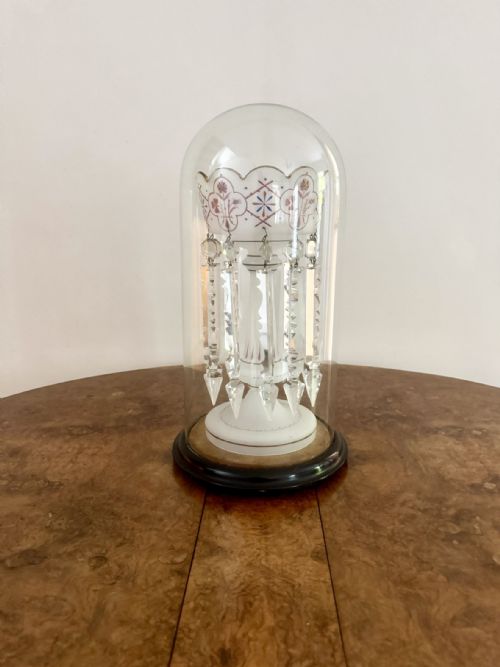
Makers utilised crystal, lead crystal, and ruby glass as the primary foundation for these decorative objects. Overlay glass techniques and glass domes added physical depth and dimension to the finished items.
Craftsmen applied enamel decoration by hand onto the glass surface, frequently incorporating gold leaf and gilt details. Gilt brass mounts and silver components were then integrated into select items such as inkwells and clocks.
Listings feature items spanning the 1860s through the 1930s, utilising enamel, crystal, lead crystal, ruby glass, and gold leaf.
What varies in quality
The precision and complexity of the hand painted enamel work largely determine the quality of each piece. Finer examples display meticulous floral or geometric detailing that remains sharp and vibrant across the crystal surface.
The weight and clarity of the underlying crystal or lead crystal foundation also set superior items apart. Integration of supplementary materials, such as gold leaf accents and gilt brass mounts, indicates higher production standards.
Theresienthal·Karl Palda
The Hand Enamelled Crystal Glossary
- Mantel lustre
- A decorative glass vase or candlestick hung with cut glass prisms designed to reflect candlelight. These items typically sit in pairs upon a mantelpiece.
- Ruby glass
- A deep red coloured glass produced by adding gold compounds to the molten batch during manufacture. It forms a striking base for contrasting enamel decoration.
- Lead crystal
- A type of glass containing metallic lead oxide that increases brilliance, weight, and workability. This material provides a clear canvas for hand enamelled designs.
- Overlay glass
- A layered glass technique where a thin casing of coloured glass covers a clear or contrasting body. Artisans cut through the outer layer to expose the contrasting colour underneath.
- Guilloche enamel
- A decorative technique where transparent enamel covers a mechanically engraved metal surface. This process creates repeating geometric patterns beneath the glossy finish.
Hand Enamelled Crystal: Frequently Asked Questions
Are mantel lustres still functional?
Mantel lustres function primarily as decorative mantelpiece ornaments rather than practical lighting sources. Their cut glass pendants catch and refract ambient light in a room.
Many collectors display pairs of lustres on mantelpieces or sideboards to enhance period interior schemes. They require no special installation beyond stable placement.
How do I identify Art Deco decanter sets?
Art Deco decanter sets feature geometric lines, stylised motifs, and characteristic lead crystal silhouettes from the early twentieth century. Maker attributions often point towards Bohemian production.
Inspect the pieces for hand enamelled patterns typical of twentieth-century workshops. These sets usually comprise a decanter accompanied by matching glasses or an ice bucket.
What is the difference between crystal and glass?
Crystal contains lead oxide, which adds weight, refractive brilliance, and softness for intricate cutting. Standard glass lacks this specific lead content and tends to feel lighter.
Items described as lead crystal or crystal offer superior clarity for showcasing hand painted enamel and gilt decoration. Both materials appear across nineteenth and twentieth-century inventory.
Can I use antique hock glasses?
Antique hock glasses serve as decorative examples of nineteenth and twentieth-century glassware artistry. Many collectors prefer to exhibit them in cabinets rather than use them for dining.
Hand enamelled details on fragile crystal can wear down with frequent use and washing. Gentle handling preserves the historical enamel and gold leaf decorations.