
Hand Embroidered Panel
When you search for a hand embroidered panel, you encounter centuries of textile artistry worked in silk, wool, and cotton across diverse cultural traditions.
Hand Embroidered Panel
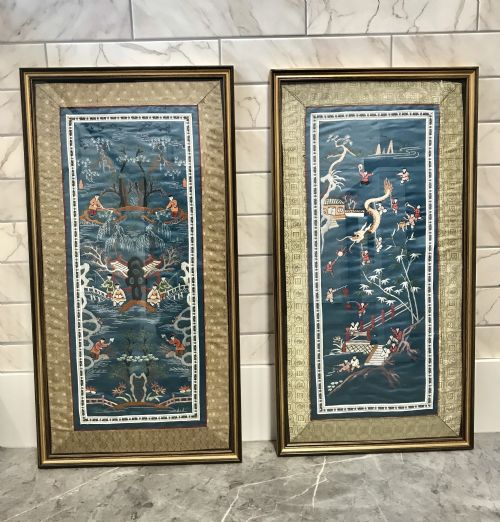
A hand embroidered panel brings together historic textile traditions ranging from English crewelwork to Central Asian suzanis and Greek island border fragments. Buyers seeking these works will find domestic needlework pictures alongside tribal dowry pieces and large wall hangings.
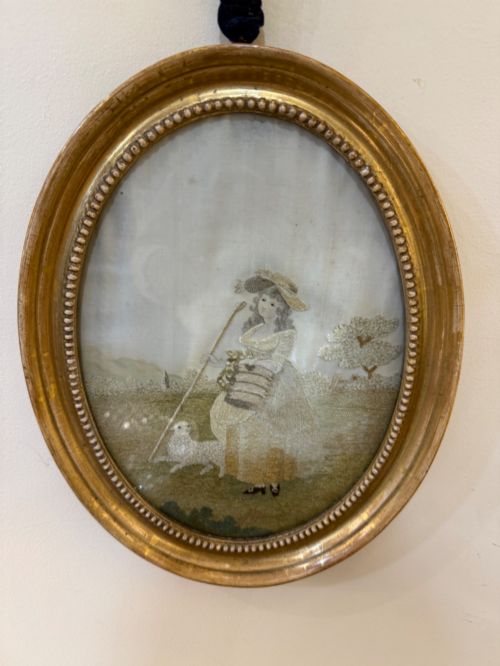
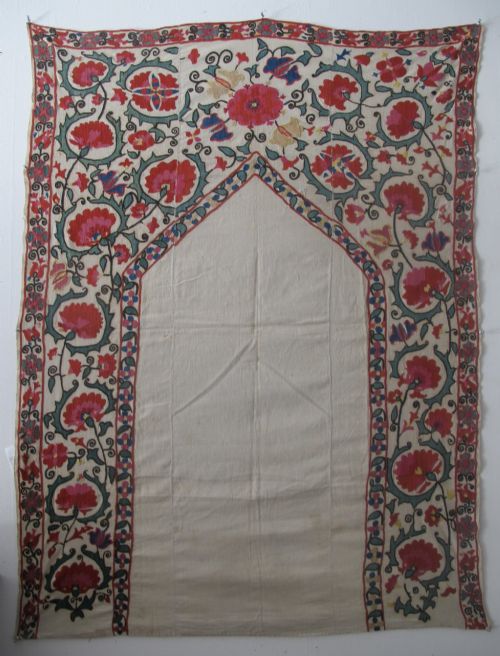
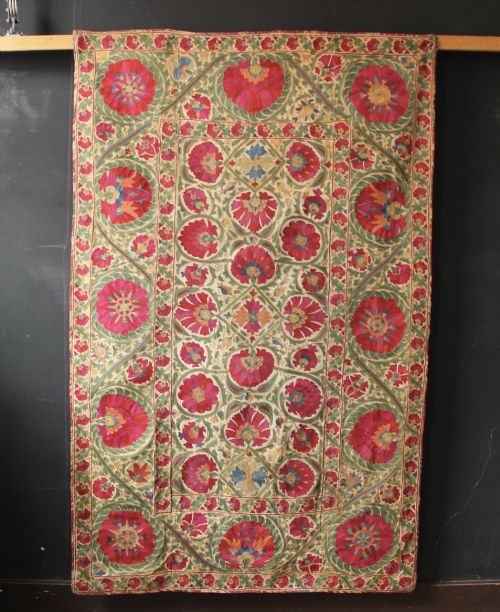
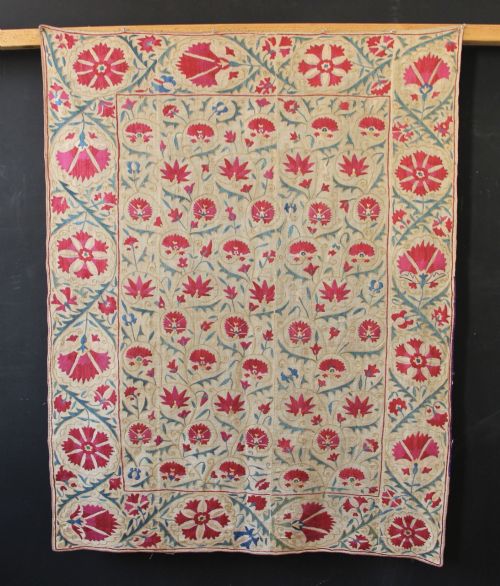
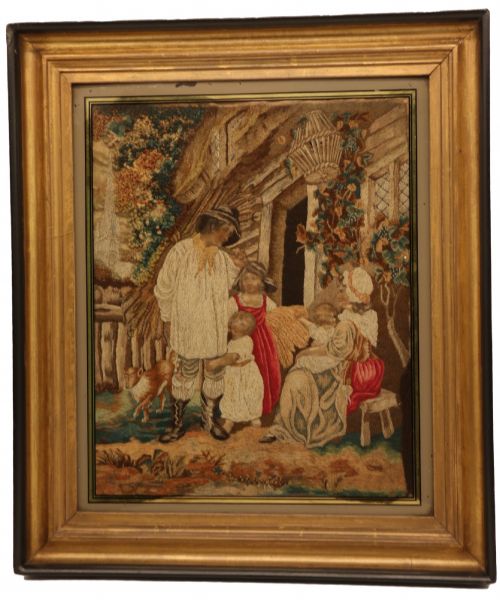
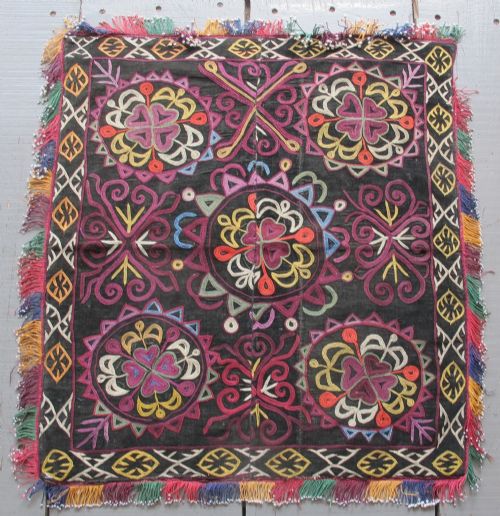
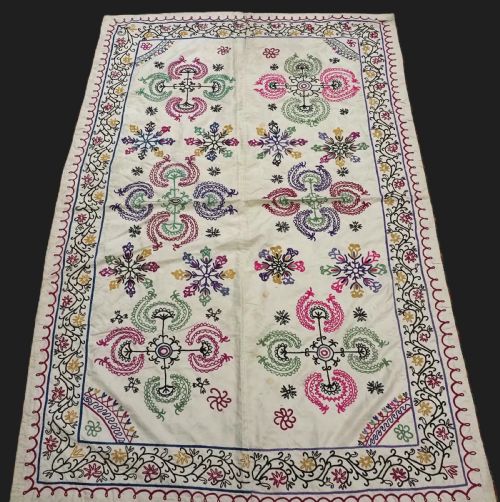
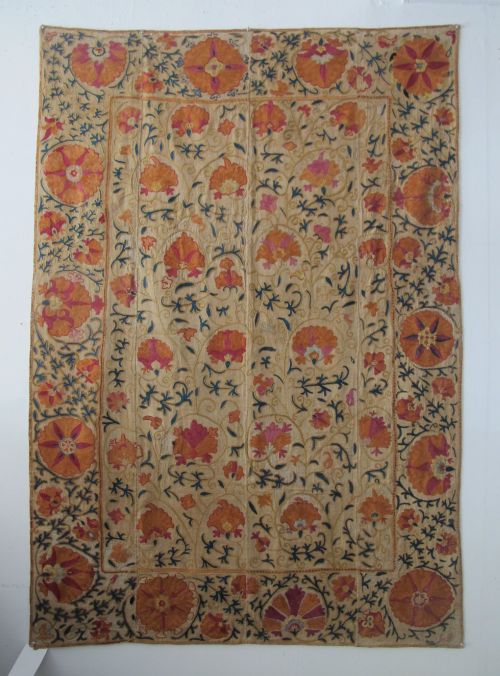
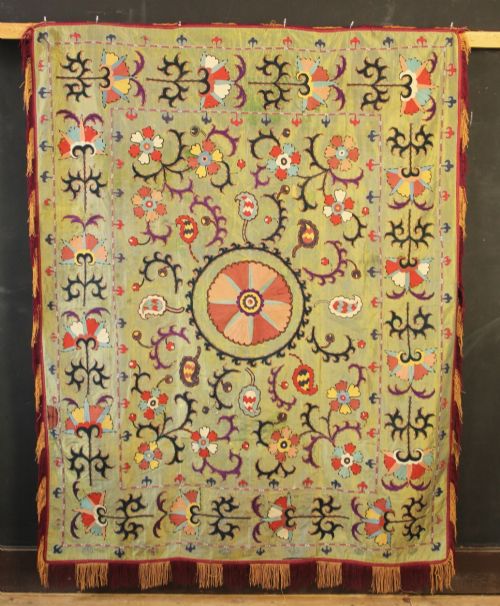
The selection on this page relies heavily on Central Asian origin pieces, particularly Uzbek suzanis and Lakai tribal embroidery worked in silk on cotton or wool grounds. Alongside these sit Georgian and later English needlework panels utilising traditional stitches.
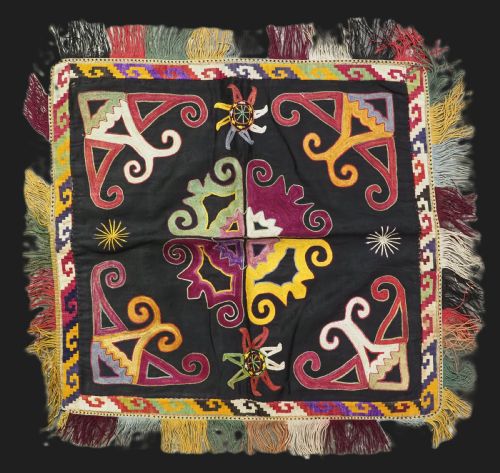
Forms vary from large domestic bedsheet borders and yurt wall hangings down to small mirror covers, torbas, and ceremonial horse covers. Each object represents domestic or tribal handcraft intended for functional use or interior display.
How They Were Made
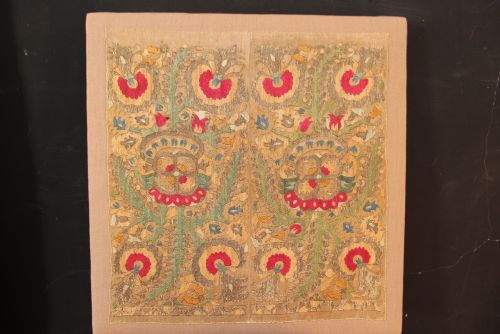
Needleworkers utilised vegetable and natural dyed silk, cotton, wool, and linen threads applied to woven grounds of cotton, felt, or linen. Central Asian pieces frequently employ fine silk thread on cotton or adras silk-cotton foundations.
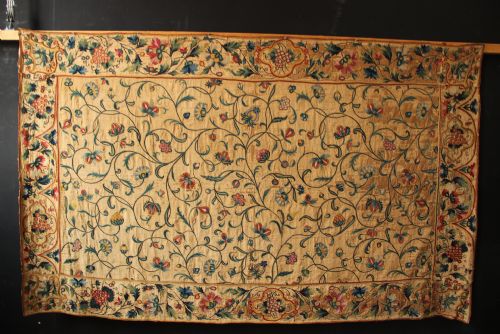
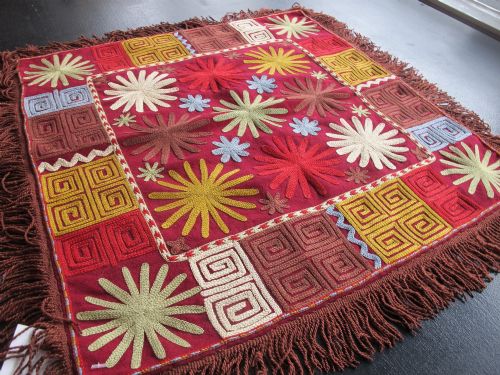
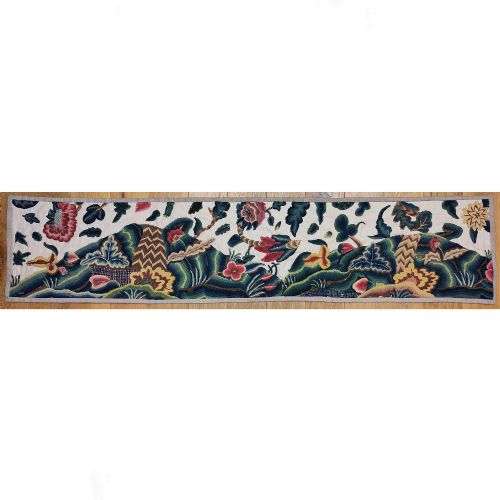
English and European examples demonstrate crewelwork and Berlin wool work techniques using wool and silk threads on heavy linen twill. Felt panels incorporate applied fringes and secondary fabrics to create textured geometric and floral designs.
Ceremonial horse covers ensure that even your walls can dress better for dinner than you do.
What Varies in Quality
The density and precision of the stitchwork dictate the visual richness of the surface, with finer panels showing complex, tightly packed motifs. Natural dye consistency and the preservation of original ground fabrics significantly influence the integrity of the piece.
Design complexity, such as architectural elements in suzanis or intricate figurative compositions, separates standard domestic work from master-produced tribal and regional examples.
The Hand Embroidered Panel Glossary
- Suzani
- A large embroidered tribal wall hanging from Central Asia, typically worked in silk thread on a cotton or linen foundation. These pieces often feature bold floral and medallion designs created for dowries.
- Crewelwork
- Traditional embroidery executed with wool yarn on a heavy linen or cotton twill ground. This technique creates a textured surface popular in English needlework across multiple centuries.
- Lakai
- Pertaining to the Lakai Uzbek tribe known for distinctive small-scale dowry embroideries and horse covers. Their work uses vibrant silks and geometric motifs on felt or cotton grounds.
- Nim Suzani
- A smaller scale version of the traditional Central Asian suzani wall hanging. These compact panels share the same stitch techniques and regional design vocabularies as their larger counterparts.
- Torba
- A small bag face or hanging panel produced by Central Asian nomadic groups. They frequently feature specialised tribal embroidery suitable for interior decoration.
Hand Embroidered Panel: Frequently Asked Questions
How were suzanis used originally?
Central Asian suzanis served primarily as ceremonial dowry items created by brides and female relatives. Families utilised them as wall hangings, bed covers, or decorative wrappers within the home.
Over time, these textiles became central elements of domestic decoration and cultural identity. Today, collectors mount them as wall art to showcase the regional silk embroidery.
What is crewelwork embroidery?
Crewelwork involves stitching heavy wool yarns onto tightly woven linen or twill foundations. English needleworkers employed this technique to create decorative panels, bed furnishings, and pictures.
The method allows for varied stitch types that build heavy, textured patterns. Historic examples survive from the seventeenth century onward as framed panels.
Where do Greek island panels come from?
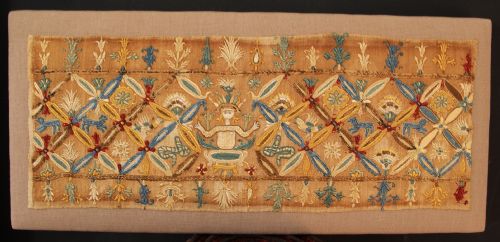
Greek island embroidery originates from regions such as Skyros and Epirus, often taking the form of bedsheet borders or hand towel end panels. These domestic textiles reflect local folk art traditions and traditional costume decoration.
They utilise regional motifs stitched onto linen grounds. Collectors value them as scarce examples of Mediterranean needlework history.