




Hand Decorated Table
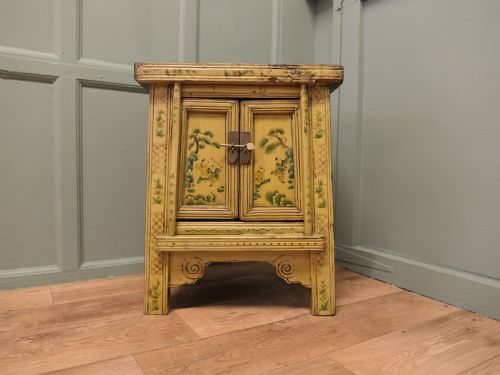
A hand decorated table brings surface pattern into everyday rooms, crossing styles from Regency lacquer to Edwardian Chinoiserie.
Hand Decorated Table
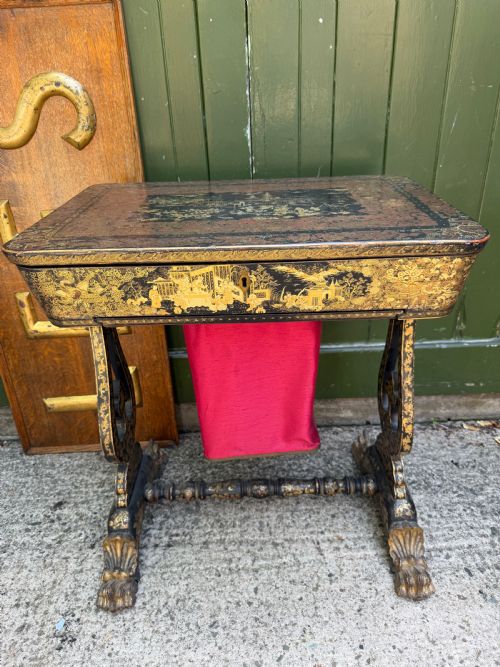
A hand decorated table encompasses occasional tables, side tables, nests of tables, and coffee tables drawn from the nineteenth century, Regency period, and early twentieth century. Buyers seeking this phrase most frequently encounter nineteenth century lacquer pieces alongside Edwardian Chinoiserie tables.
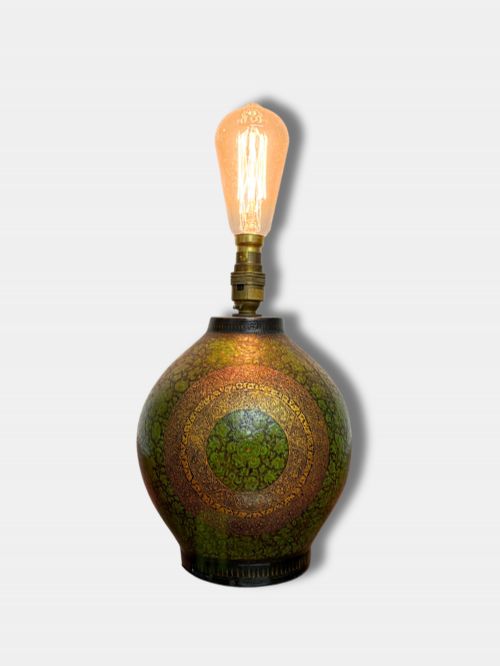
Form and function vary from compact lamp tables and nests of four to larger occasional and dining surfaces, often finished with painted or gilded details. Regional expressions include Kashmiri work alongside Chinese Export lacquer and English satinwood.
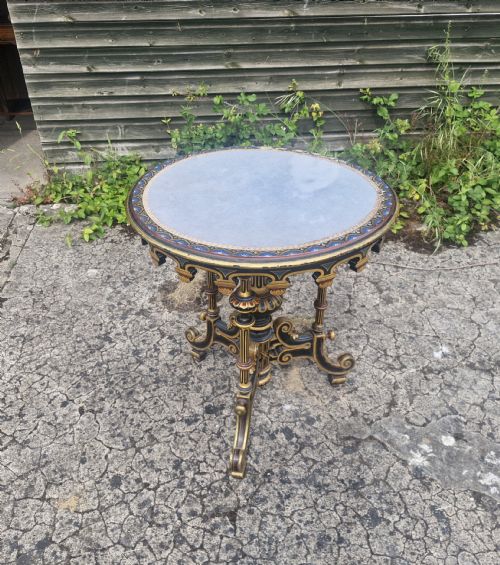
The selection spans distinct stylistic revivals, notably Victorian Gothic, Rococo, and Chinoiserie, alongside independent painted interpretations from the nineteen-twenties and nineteen-thirties.
Materials and Technique
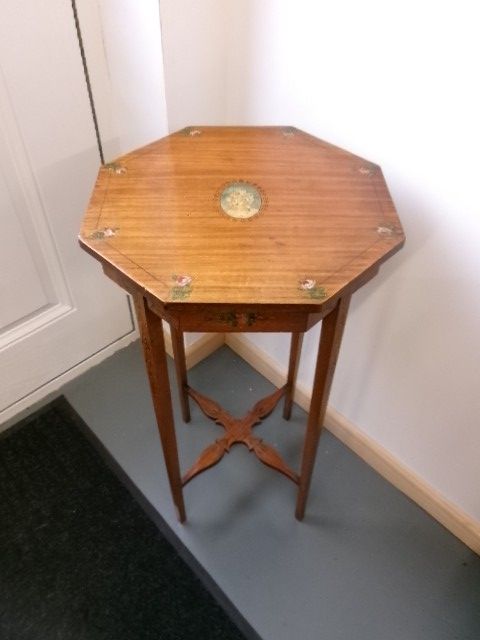
Construction relies upon traditional timbers such as satinwood and various structural woods, frequently serving as a foundation for applied lacquer finishes. Surface decoration employs paint, gold leaf, and enamel work executed by hand.
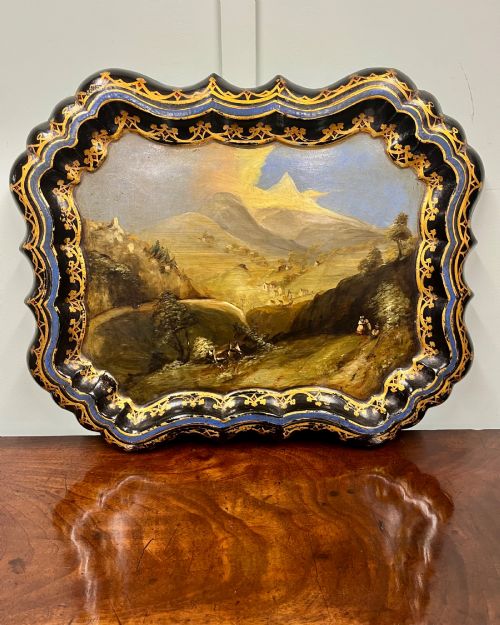
Lacquer surfaces receive multiple coats to achieve a deep ground, upon which artists build pictorial scenes in gold and colour. Painted wooden surfaces use pigments applied directly to prepared timber or over preparatory grounds.
Hand Decorated Table Retail Price Guide 2026
Typical asking prices for hand decorated table among the pieces listed under this phrase on Sellingantiques today, from the lower quarter to the upper quarter. They describe what is for sale here now, not the wider market.
The inventory incorporates periods spanning from the Regency era through the nineteenth century and into the nineteen-thirties.
Quality and Execution
The standard of a hand decorated table rests upon the precision of the surface brushwork and the depth of the lacquer or paint layers. Superior examples display refined draughtsmanship in their decorative motifs rather than purely mechanical repetition.
Material selection dictates foundational worth, with fine timbers like satinwood providing a superior base compared to standard utility woods. The integrity of the original surface finish, free from heavy modern intervention, distinguishes finer pieces.
Flight Barr And Barr·Royal Worcester·Wedgwood·Meissen
The Hand Decorated Table Glossary
- Chinoiserie
- European theatrical interpretation of Chinese artistic motifs and landscapes, popular across furniture and decorative objects. It frequently appears on lacquer cabinets, desks, and occasional tables.
- Lacquer
- A durable resin finish applied in multiple layers and polished to a hard sheen, often decorated with gold leaf or painted scenes. This technique is central to Asian export and European imitation pieces.
- Satinwood
- A durable, lustrous timber native to India and Ceylon, prized for its pale yellow colour and natural sheen. It provides an ideal smooth surface for painted and decorated furniture.
- Tilt-top
- A table mechanism allowing the surface to pivot to a vertical position when not in use, saving space in period interiors. These tops often feature decorated or painted faces designed to be viewed upright.
Hand Decorated Table: Frequently Asked Questions
What is a hand decorated table?
A hand decorated table is any surface featuring painted, lacquered, or gilded ornamentation applied by hand rather than by industrial transfer. These pieces range from nineteenth century lacquer nests to Edwardian occasional tables.
They serve both functional roles in daily rooms and decorative purposes through their intricate surface patterns.
How do I care for lacquer surfaces?
Lacquer surfaces require gentle dusting with a soft, dry cloth and protection from direct sunlight and heat. Moisture should be kept away from antique finishes to prevent lifting or clouding.
Proper placement away from radiators ensures the underlying wood and lacquer remain stable over time.
Are these tables suitable for daily use?
Most occasional and coffee tables handle light daily use, provided coasters are used to protect delicate painted or lacquered surfaces. Nests of tables offer flexible utility for serving and display.
Heavily decorated antique surfaces benefit from careful placement where they avoid heavy wear and tear.
How can I identify Chinoiserie styles?
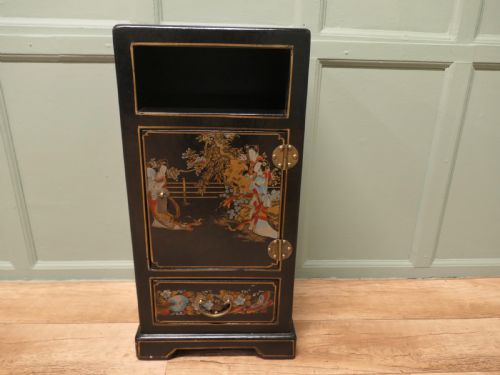
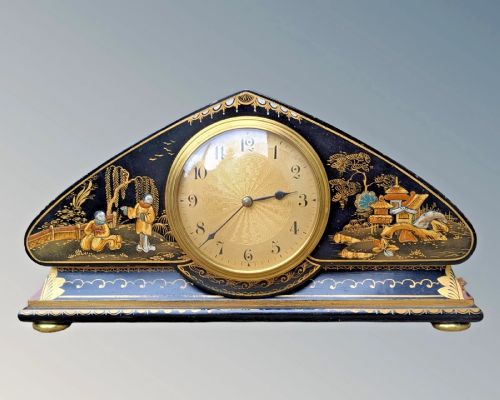
Chinoiserie pieces feature stylised oriental landscapes, figures, pagodas, and floral motifs rendered in gold, black, or coloured lacquer grounds. These designs reflect European fascination with East Asian aesthetic traditions.
Such ornamentation appears frequently on nineteenth and early twentieth century tables and cabinets.