


Hand Carved Wooden Accent Table
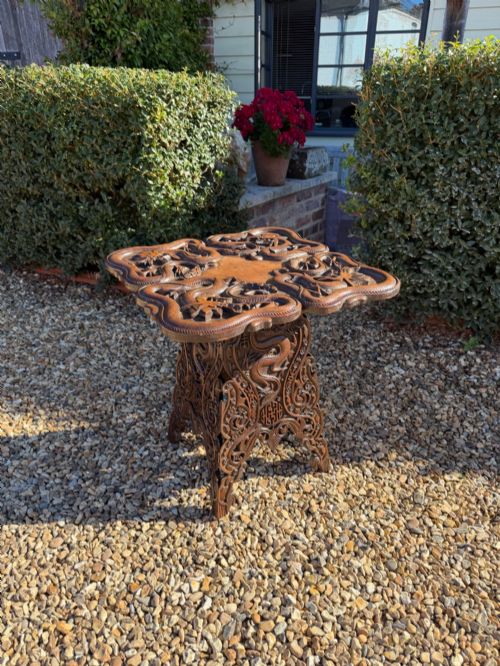
A hand carved wooden accent table brings dense regional carving and dense timber into a room, serving as a low surface or a lamp stand.
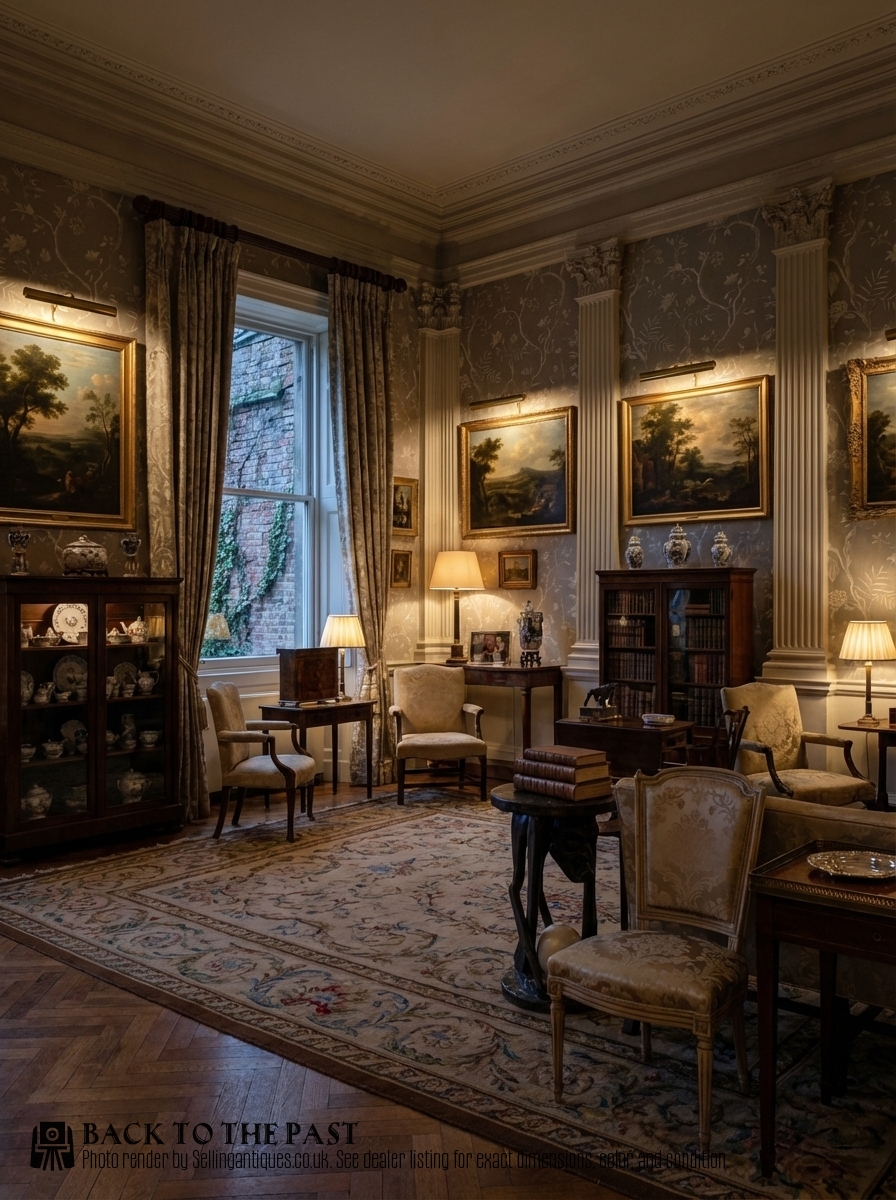
Hand Carved Wooden Accent Table
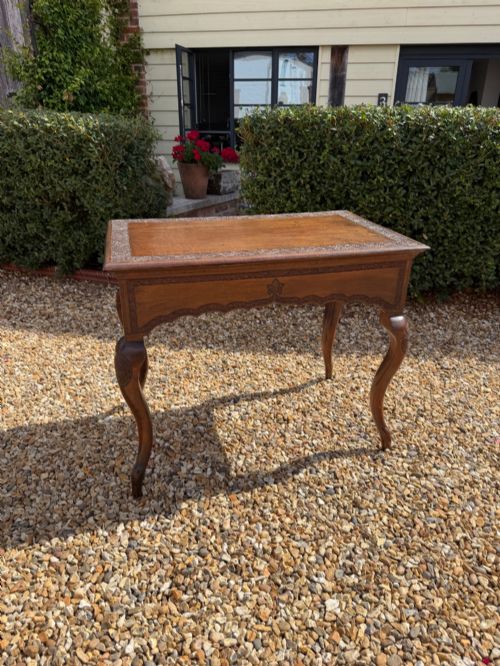
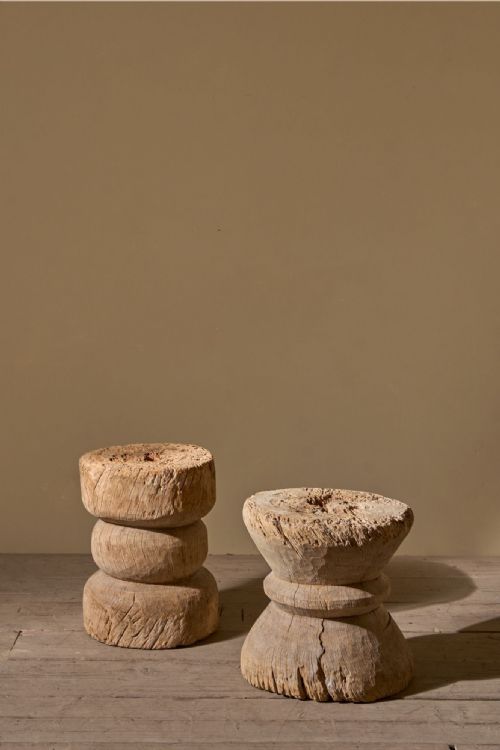
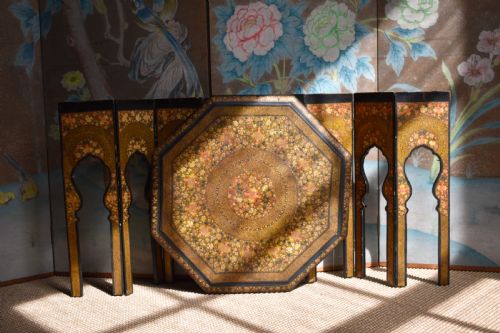
When you search for a hand carved wooden accent table, you encounter portable occasional furniture designed in colonial regions, alongside rustic European pieces and Japanese imports. The selection spans the nineteenth century through the nineteen-thirties, taking the form of side tables, coffee tables, and folding lamp stands.
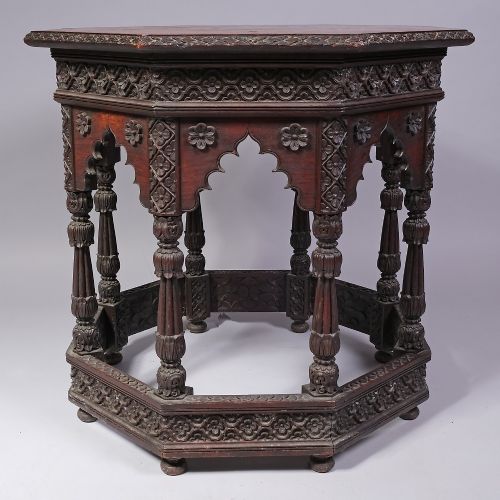
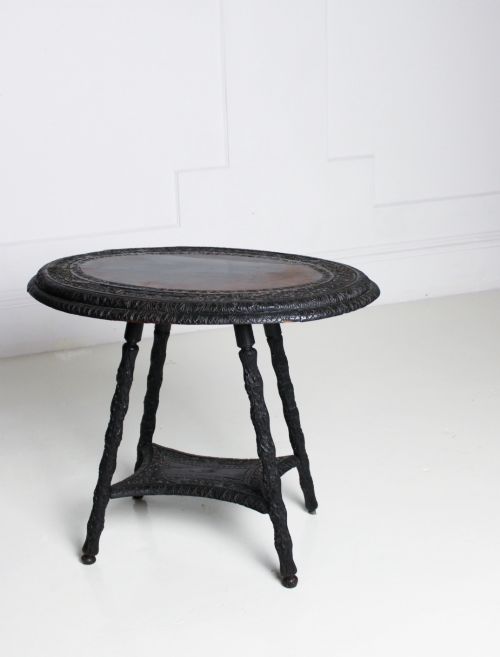
You are most likely to meet Indian hardwood and Anglo-Indian octagonal or elephant tables, alongside Burmese and Chinese carved items. These surfaces perform minor domestic duties, from holding a lamp to resting a cup beside a chair.
How they were made
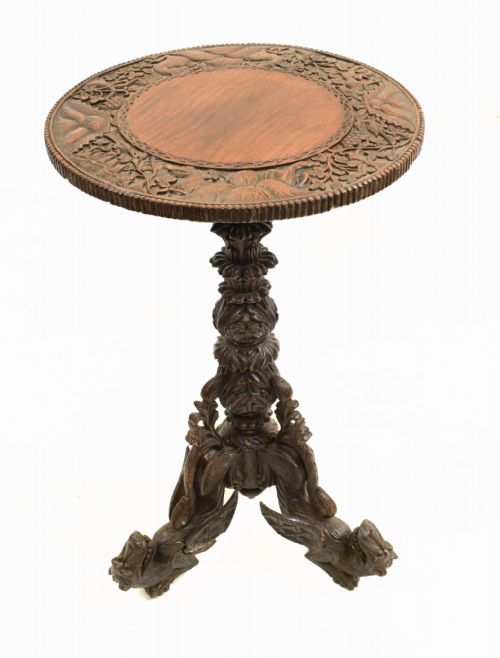
The makers utilised dense timbers such as teak, rosewood, oak, and walnut, providing a stable ground for intricate carving. Surfaces feature detailed foliate motifs, animal figures, and pierced work executed by hand.
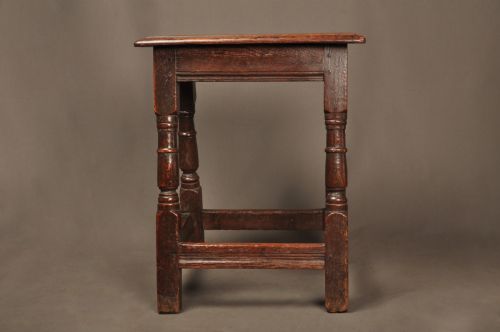
Construction methods range from folding actions on teak lamp tables to rigid joinery on joint stools and pedestal bases. Inlays and painted details sometimes supplement the carved wood.
Listings feature woods including teak, oak, walnut, rosewood, and padauk across the nineteenth and twentieth centuries.
What varies in quality
Depth and crispness of the carving separate standard examples from finer items, particularly where foliage and animal forms show sharp relief rather than blunt edges. The choice of timber also dictates quality, with heavy teak, walnut, and padauk offering superior durability to softer woods.
Integration of design elements, such as symmetrical folding mechanisms and well-fitted octagonal tops, marks out the work of established retailers like Liberty of London against simpler provincial pieces.
Liberty of London
The Hand Carved Wooden Accent Table Glossary
- Anglo-Indian
- Furniture made in India during the British period, combining British forms with local carving traditions. These pieces often utilise teak or rosewood.
- Elephant table
- A small occasional table supported by carved elephant figures beneath the top. They originate primarily from the Indian subcontinent during the nineteenth century.
- Octagonal table
- A table featuring an eight-sided top, commonly found among Anglo-Indian and Middle Eastern imports. This shape accommodates dense surface carving.
- Tilt top
- A table mechanism allowing the surface to pivot to a vertical position when not in use. It is frequently seen on nineteenth-century lamp tables.
- Joint stool
- An early form of wooden seating joined with mortise and tenon framing. They appear in oak from the mid-eighteenth century.
Hand Carved Wooden Accent Table: Frequently Asked Questions
Where do elephant tables come from?
These pieces originate from nineteenth-century India during the colonial period, where local craftsmen carved regional timbers into domestic furniture.
They combine British table forms with figurative supports shaped as elephants.
How do I use a folding side table?
Folding side tables serve as portable surfaces for lamps and drinks, collapsing flat for storage when not needed.
They suit smaller rooms where flexibility of furniture arrangement matters.
How do I date a carved wooden table?
Dating relies on timber choice, construction methods, and stylistic influences recorded across the nineteenth and early twentieth centuries.
Colonial trade routes and retailer labels also help narrow the period.