
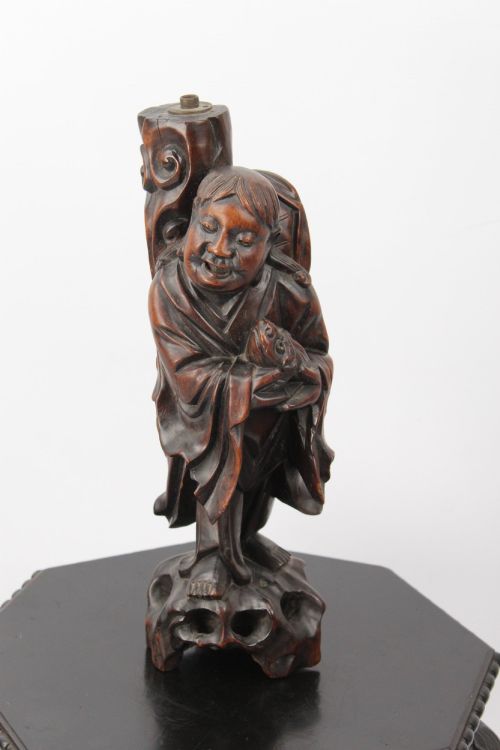


Hand Carved Timber Lamp
A hand carved timber lamp brings warmth and tactile depth to a room through sculpted natural grain and regional artistry.
Hand Carved Timber Lamp
When you search for a hand carved timber lamp, you encounter sculptural domestic lighting shaped from solid wood by regional makers across the nineteenth and twentieth centuries. These pieces translate functional illumination into decorative focal points using organic motifs and regional carving traditions.
You are most likely to meet table lamps and standard lamps fashioned from hardwood, linden, walnut, and root wood. These items emerge from diverse stylistic origins, including Black Forest workshops, Anglo-Indian studios, Chinese craftsmanship, and European folk art traditions.
The selection ranges from compact table models designed for sideboards to taller standard lamp formats. Each piece displays the distinct hand of its maker through unique tool marks and sculptural silhouettes carved directly into the timber.
How they were made
Artisans carved these lamps directly from solid logs, roots, and seasoned planks of hardwood, walnut, linden, and root wood using traditional hand gouges and chisels. The natural contours of the timber frequently dictated the final sculptural form.
Makers integrated brass and metal fittings to support electrical components or candle holders, while occasionally incorporating fabric shades or glass elements. The primary focus remained on the dexterity of the hand carving displayed across the wooden body.
A watchful night guard carved from wood stands ready to oversee your evening illumination.
What varies in quality
The distinction between ordinary and exceptional work lies in the depth and animation of the carving. Superior examples exhibit confident, fluid tool execution that brings figures, animals, or organic foliage to life with distinct anatomical or botanical accuracy.
Material selection also dictates standing, with dense hardwoods and figured root wood achieving greater sculptural definition than softer timbers. The integrity of the original wooden form and the subtlety of the surface finish separate standard production from master craftsmanship.
Liberty of London
The Hand Carved Timber Lamp Glossary
- Root wood
- Timber sourced from the root system of a tree, prized for its gnarled, twisted grain and irregular organic shapes. This material allows carvers to utilise natural knots and burls in sculptural compositions.
- Black Forest
- A nineteenth-century stylistic tradition originating in the wooded mountain region of Central Europe, famous for realistic animal carvings and woodland motifs. Pieces from this tradition often feature bears and forest foliage.
- Hardwood
- Timber derived from broad-leaved deciduous trees, offering high density and durability for intricate carving work. Walnut and linden are notable examples found in these pieces.
- Anglo-Indian
- A style reflecting nineteenth-century design exchanges between British aesthetic preferences and traditional Indian woodcarving techniques. These pieces utilise dense regional timbers carved with intricate floral and geometric patterns.
Hand Carved Timber Lamp: Frequently Asked Questions
How do I date a timber lamp?
Dating relies on examining the tool marks, timber selection, and stylistic markers characteristic of specific periods such as the nineteenth century or the nineteen-twenties. Regional carving techniques also provide strong chronological indicators.
Changes in wiring infrastructure and metal fittings can offer further clues, though electrical components are frequently updated for modern use.
Where should I place a standard lamp?
Standard lamps suit corners of reception rooms or beside reading chairs where their height provides ambient illumination. Their sculptural wooden shafts anchor large spaces and add vertical interest.
Ensure the placement protects the carved wooden surfaces from direct heat sources and excessive sunlight to preserve the timber grain.
Are root wood lamps stable?
Root wood lamps rely on the natural weight and wide base configurations inherent in the root system. Artisans balanced the irregular organic shapes to ensure proper equilibrium on flat surfaces.
Heavier hardwood bases provide additional stability, particularly for taller standard lamp formats carrying larger shades.
How do I clean carved wood?
Dust carved surfaces gently with a dry, soft-bristled brush to reach into recessed areas without disturbing the grain. Avoid chemical polishes that build up within the carved crevices.
Applying a light coat of appropriate furniture wax occasionally helps maintain the natural lustre of the timber.