
Hallway Wall Coat Pegs
Hallway wall coat pegs are functional domestic fixtures designed for entryways, combining timber backboards with durable metal and ceramic hooks.
Hallway Wall Coat Pegs
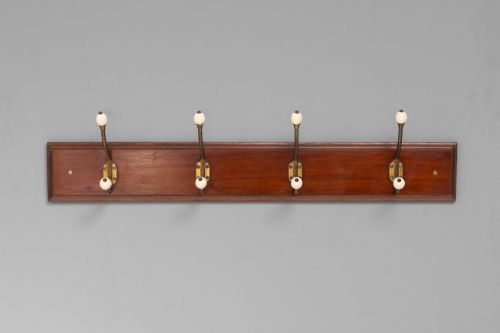
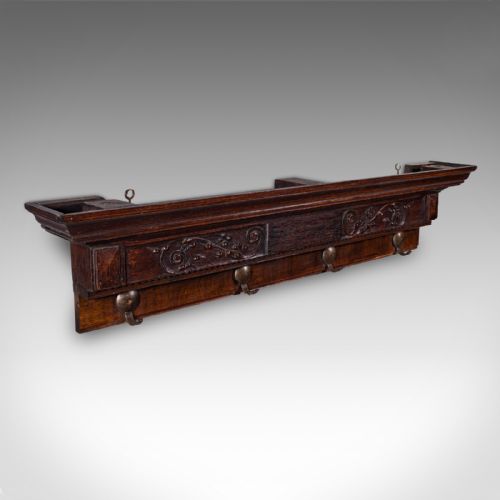
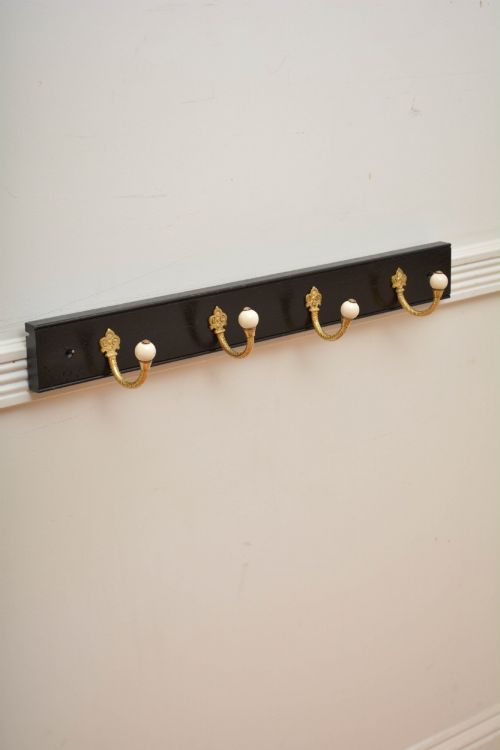
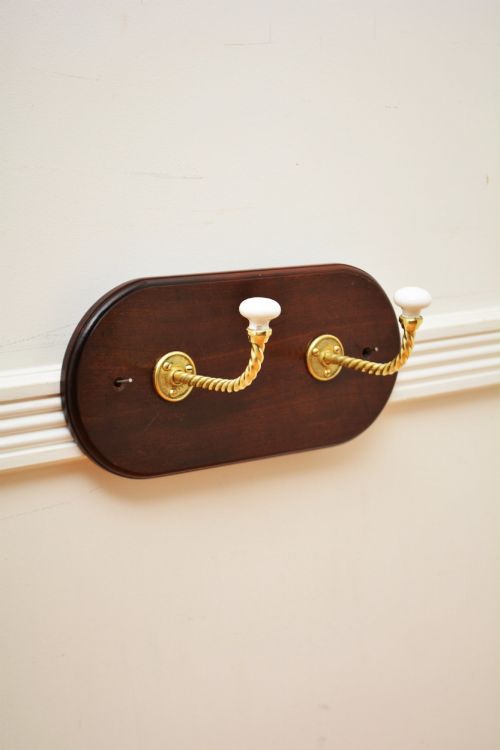
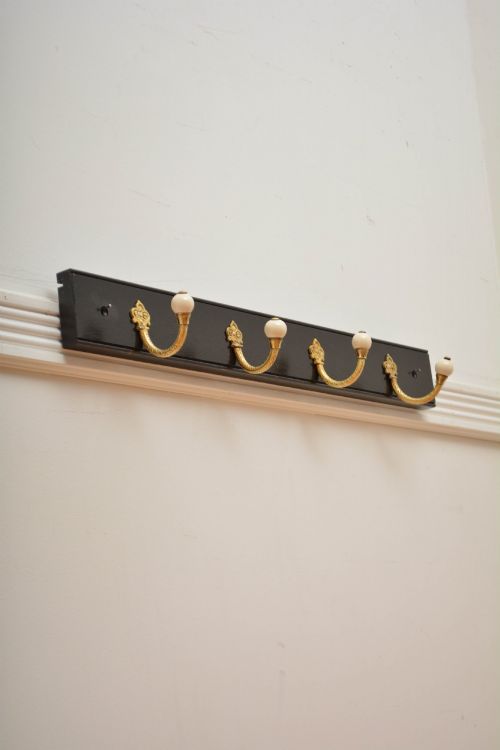
When searching for hallway wall coat pegs, a buyer encounters wall-mounted configurations spanning the Victorian and Edwardian periods, alongside turn of the century examples. These pieces typically take the form of timber backboards fitted with multiple brass, bronze, or ceramic hooks for garments.
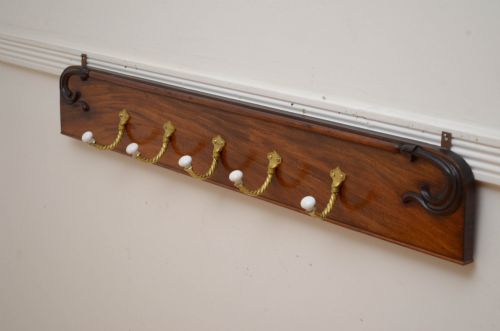
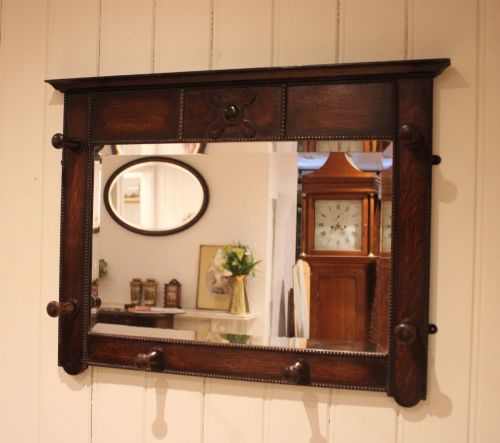
The version most frequently met on this page is the mounted coat rack or row of hooks, often constructed from oak or mahogany. Simpler individual pairs of hooks also appear, alongside variants incorporating mirrors or small shelves.
Origins stretch from English cloakroom fixtures to French provincial and art nouveau designs. The overarching purpose remains the organisation of hallway spaces using robust period hardware.
Materials and construction
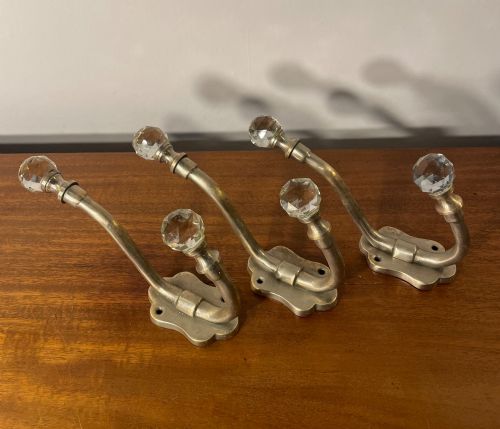
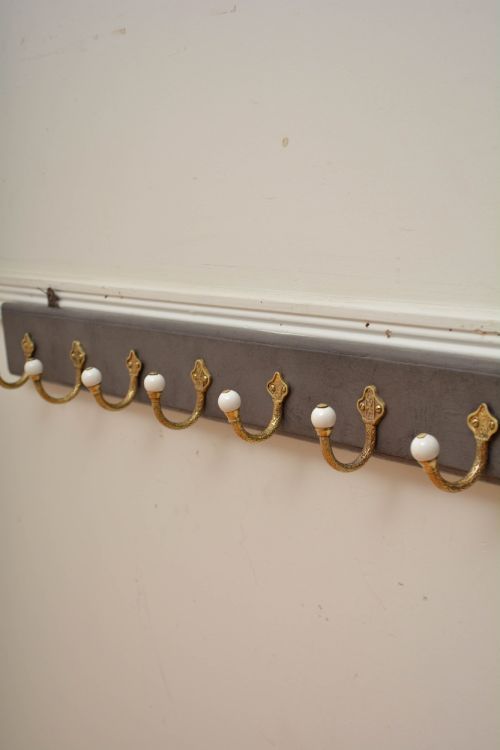
The metal components rely on cast brass, bronze, and chrysoberyl or similar alloys, often paired with ceramic, porcelain, or glass knobs. These materials were secured to wooden mounting plates designed to withstand heavy daily use.
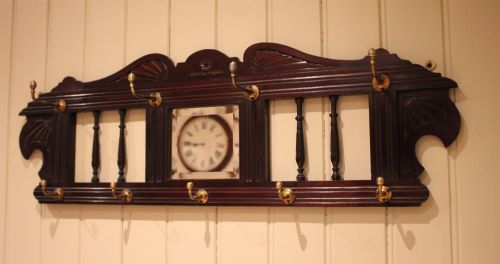
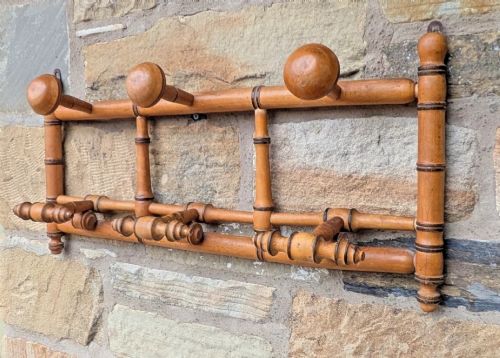
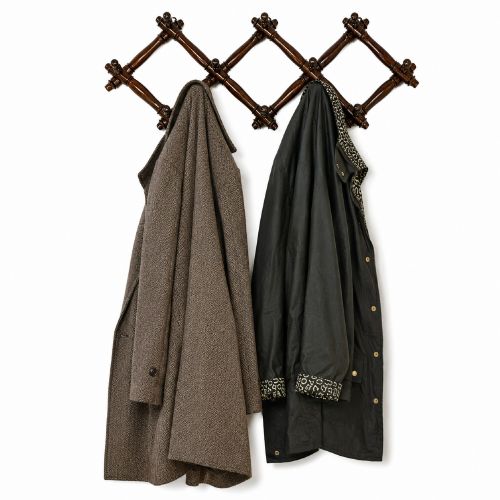
Several pieces incorporate functional additions such as mirrors, barometer inserts, or extending wooden lattice mechanisms alongside standard rows of hooks.
Factors of quality
The standard of a piece rests upon the casting quality of the metal hooks and the preservation of the timber backboard. Finer examples display crisply chased brass details and well-turned wooden supports that remain firmly attached to their original mounting plates.
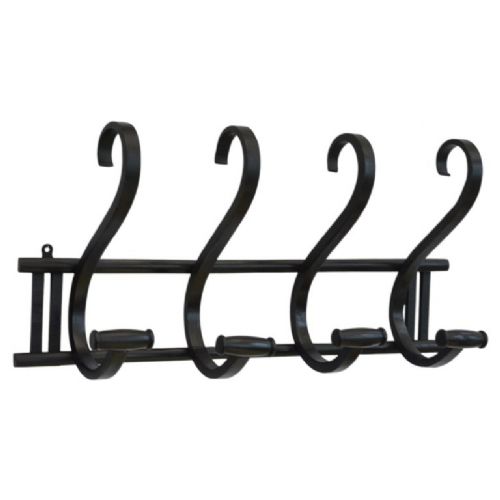
Workmanship shows in the integration of ceramic or porcelain elements without hairline cracks and the solidity of the joints on extending or bentwood frames. Greater refinement is found where the timber grain and the metal hardware complement one another harmoniously.
The Hallway Wall Coat Pegs Glossary
- Backboard
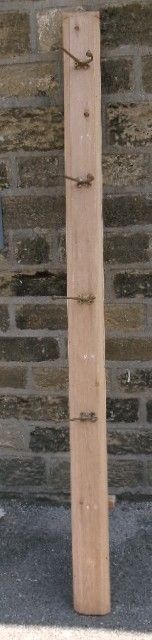
- The horizontal or vertical timber plank that supports the mounted hooks. It anchors the hardware securely to the wall.
- Ebonised
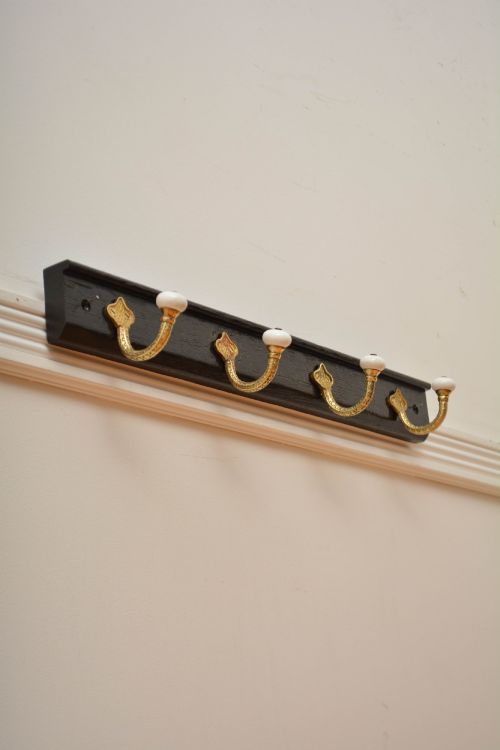
- Wood treated with a dark stain or finish to imitate ebony. This treatment was common on Victorian and later hall fittings.
- Bentwood
- Timber shaped by steaming and bending into curves, famously utilised by makers such as Thonet. It provides lightweight strength.
- Cloakroom
- A dedicated space or vestibule for hanging outdoor garments. Fixtures from these areas often feature robust multi-hook arrangements.
- Chased
- Metalwork decorated with sunken relief patterns created by hammering or punching the surface. This adds texture to brass and bronze hooks.
Hallway Wall Coat Pegs: Frequently Asked Questions
How do I secure a coat rack to the wall?
Most wall-mounted racks utilise pre-drilled screw holes positioned at either end of the wooden backboard for direct attachment to wall studs or masonry.
Ensuring correct fixings are used will support the weight of heavy winter garments placed upon the brass or iron hooks.
Are these coat pegs suitable for modern hallways?
Period wall hooks integrate well into contemporary entranceways by providing practical vertical storage while introducing tactile wooden and brass textures.
Their compact footprint makes them appropriate for narrow corridors and smaller utility spaces.
What is the difference between Victorian and Edwardian racks?
Victorian coat racks often feature heavier ebonised oak or mahogany backboards paired with robust cast brass and ceramic hardware.
Edwardian and later examples tend toward lighter timbers, simpler lines, and occasional combinations with mirrors or small storage ledges.
Can individual hooks be mounted separately?
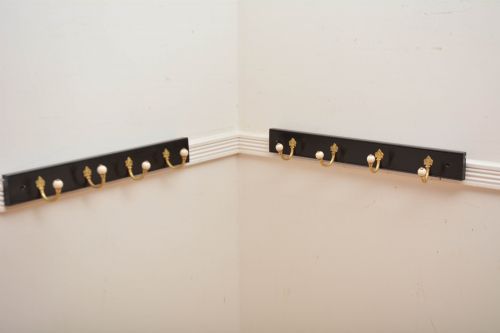
Many listings include pairs or sets of individual brass and ceramic hooks that can be arranged according to wall space requirements.
This modular approach allows for flexible placement at varying heights for hats, coats, and accessories.