


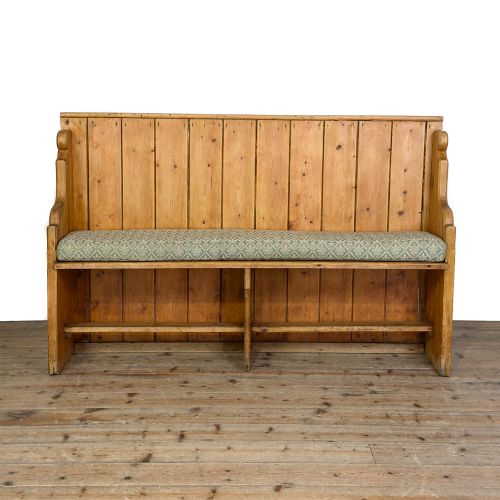
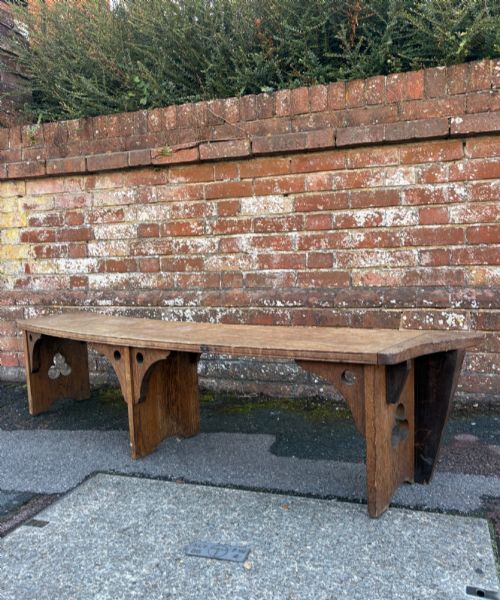
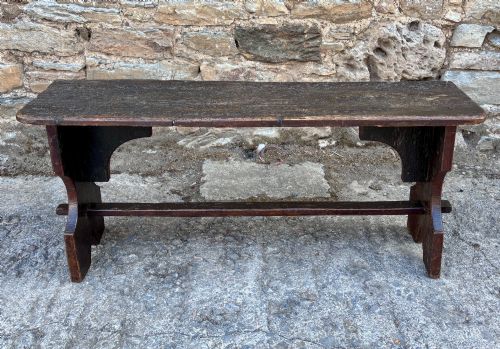
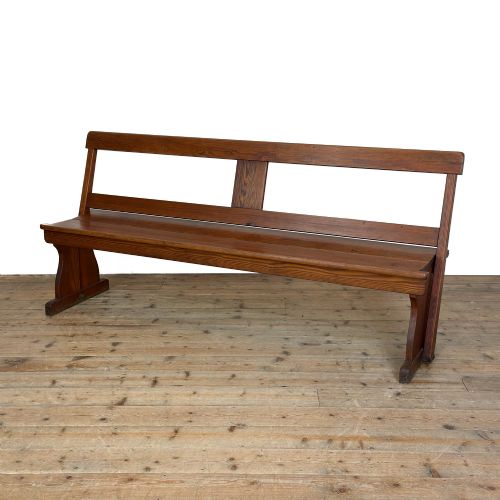
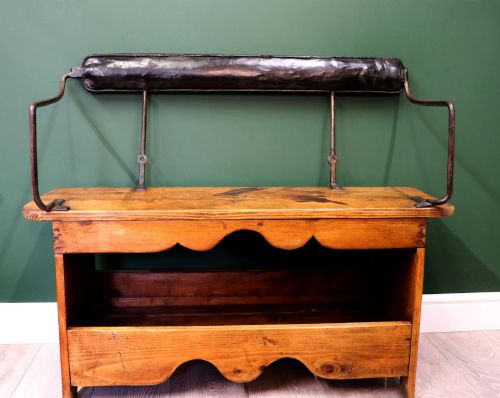
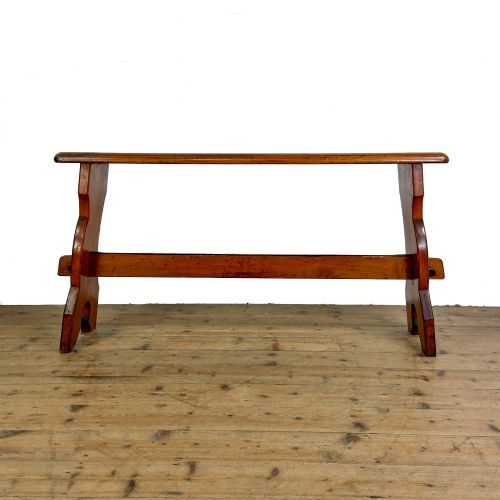
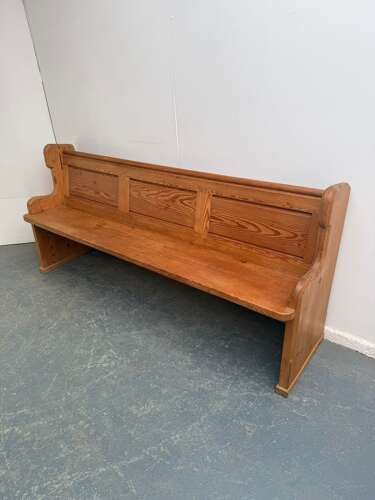
Hallway Church Bench
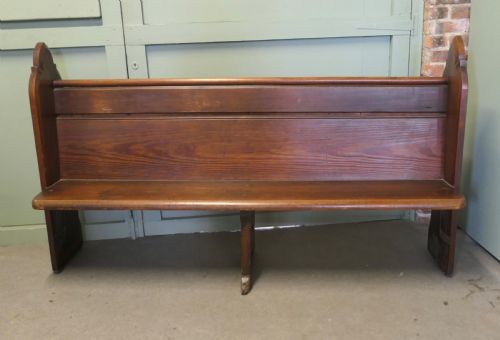
A hallway church bench brings ecclesiastical character and narrow seating into a corridor, offering solid timber construction shaped by daily use.
Hallway Church Bench
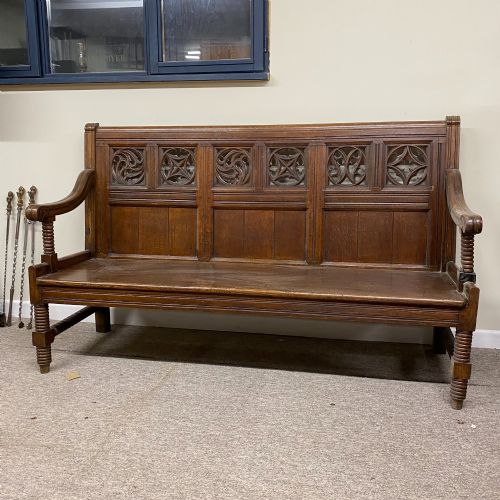
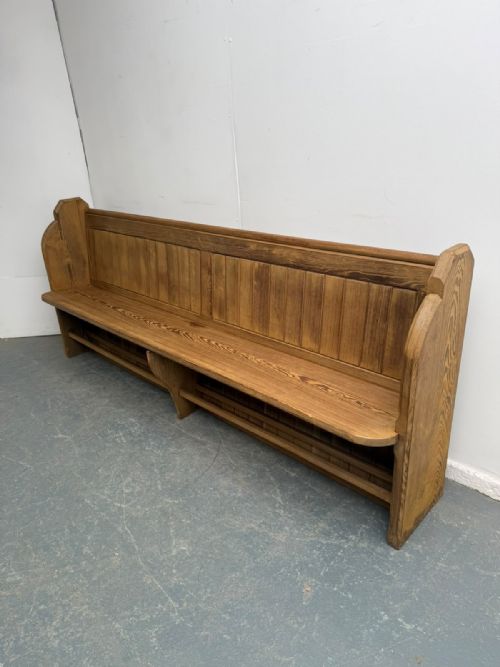
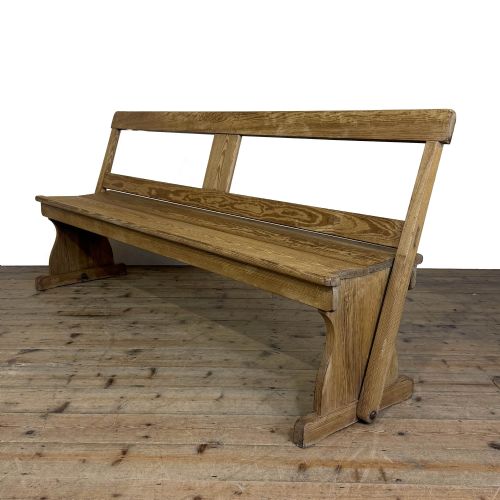
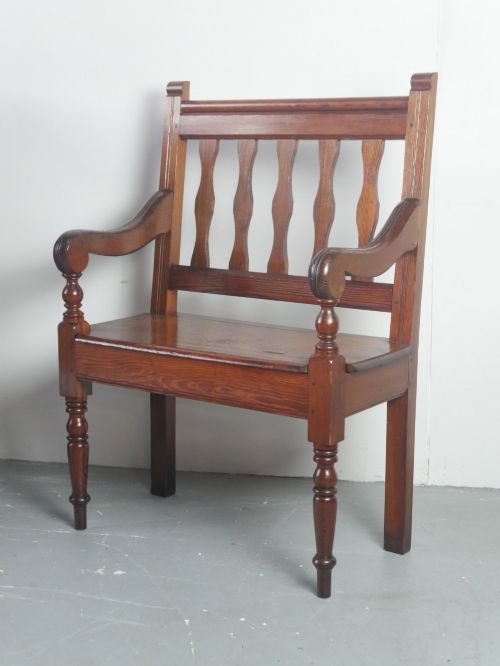
A hallway church bench bridges domestic corridors and ecclesiastical seating, combining the narrow footprint of a pew with the utility of a hall seat. Buyers seeking a hallway church bench most commonly encounter 19th-century pine and oak examples originating from churches, chapels, and country houses.
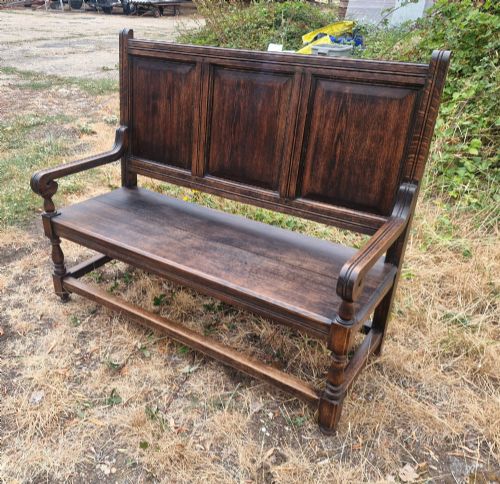
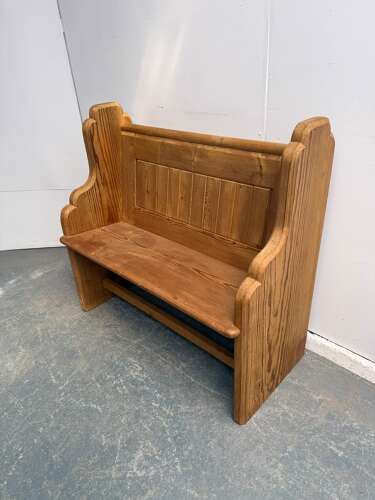
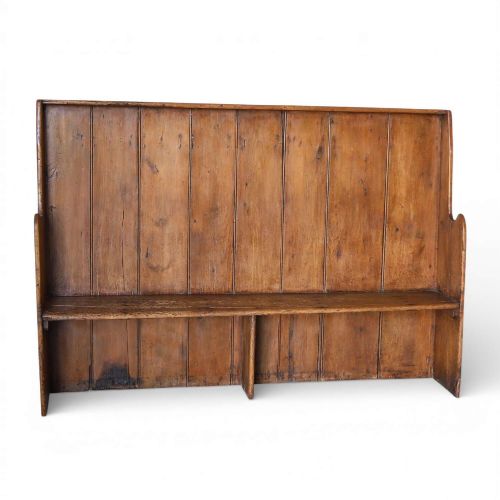
The inventory ranges from simple chapel benches and pews to high-back settles, Gothic revival forms, and painted village seating. These pieces serve narrow spaces precisely because their original environments demanded compact, sturdy benches for congregations and communal halls.
Origins span English country workshops, Welsh farmhouses, and continental spaces, utilising durable timbers intended for heavy daily traffic. Each format adapts religious or tavern seating into functional corridor furniture.
Materials and construction
Makers relied primarily on solid pine, pitch pine, and oak, selecting dense timbers capable of enduring decades of heavy sitting. Construction often involves pegged joints, panelled backs, and trestle supports designed to withstand constant movement in public and domestic spaces.
Surfaces exhibit varying finishes, including wax polish that develops a deep patina, original painted schemes in blue or muted tones, and raw timber left from rural use. Iron brackets and trefoil carved supports occasionally reinforce the structural framework.
Joinery methods reflect the period, from robust 18th-century Flemish and Welsh framing to standard 19th-century church joinery with integrated flip-over mechanisms and organ benches.
Hallway Church Bench Retail Price Guide 2026
Typical asking prices for hallway church bench among the pieces listed under this phrase on Sellingantiques today, from the lower quarter to the upper quarter. They describe what is for sale here now, not the wider market.
Materials span native pine, pitch pine, heavy Welsh and Flemish oak, alongside occasional painted blue and waxed finishes.
Distinctions in quality
Quality rests in the integrity of the timber, the presence of original painted or waxed surfaces, and the subtlety of carved details like trefoil supports. Superior examples retain their structural proportions without heavy timber replacement or unsympathetic alterations.
The distinction between a standard utility pew and a finer hall bench lies in regional craftsmanship, such as carved panels or specific provenance linked to named chapels and palaces. Honest patination accumulated from decades of handling separates untouched period pieces from over-restored items.
The Hallway Church Bench Glossary
- Settle
- A wooden bench with a high back, solid arms, and often a storage box beneath the seat. This form protected occupants from drafts in domestic halls and taverns.
- Pew
- A long wooden bench utilised in churches and chapels for communal seating. These typically feature straight or panelled backs suited to narrow layouts.
- Pitch pine
- A resinous North American pine variety known for its durability and distinctive grain pattern. Victorian makers favoured it for institutional and ecclesiastical seating.
- Patina
- The surface sheen and colour acquired by wood through age, wear, and waxing. This characteristic indicates genuine period use.
- Trefoil
- A three-lobed decorative carving resembling clover leaves, frequently found in Gothic revival furniture and architectural woodwork.
Hallway Church Bench: Frequently Asked Questions
How do I fit a church bench in a narrow hallway?
Measure the corridor width carefully, noting that church pews and chapel benches are specifically built with shallow depths to maximise walk space. Their straight backs allow them to sit flush against hallway walls.
Account for protruding arms, upright bench ends, or high-backed settles when planning clearance for front doors and interior pathways.
What is the difference between a pew and a settle?
Pews generally feature open or partially panelled ends designed for rows in religious buildings, focusing on simple linear seating. Settles incorporate high wooden backs and solid arms intended to block cold draughts in domestic hallways and pubs.
Both serve similar spatial functions today, but settles often provide a more enclosed, architectural presence against a corridor wall.
Are these benches comfortable for daily use?
Period church benches and pews were built for communal utility rather than lounging, meaning their wooden seats are firm and upright. Many owners soften them by adding custom fabric seat cushions or squabs.
The upright posture encouraged by high-backed pews and settles makes them practical for putting on shoes in an entryway.
How do I care for waxed pine and oak benches?
Maintain waxed timber surfaces by applying a traditional beeswax polish periodically to nourish the grain and preserve the honey brown patina. Avoid placing these benches near direct heat sources or damp exterior walls to prevent wood splitting.
Dust regularly with a soft cloth to protect the historic finish without stripping the character accumulated over the centuries.