
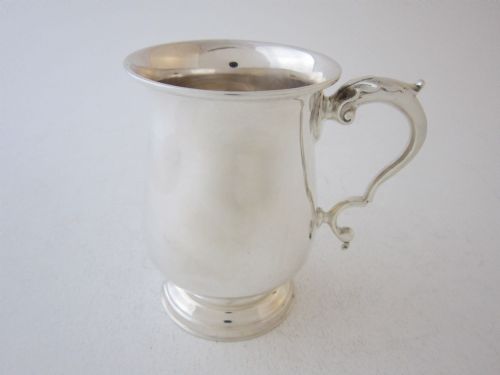
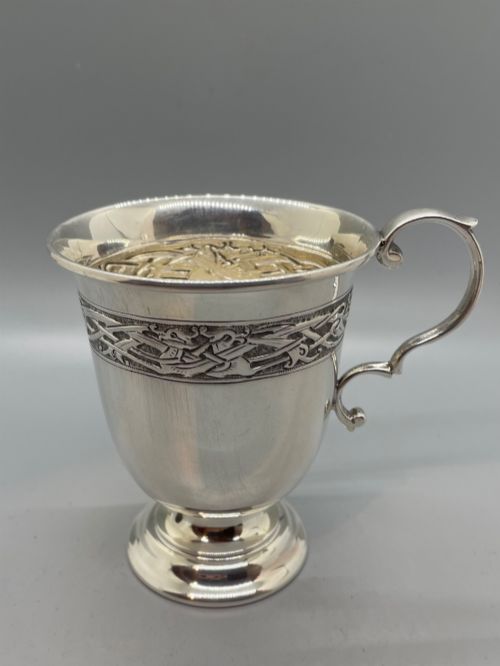
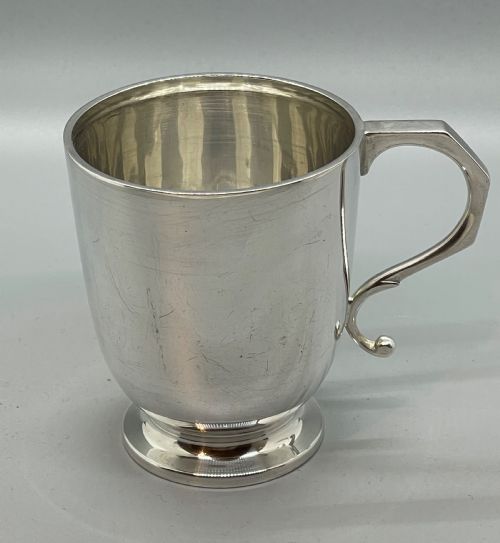
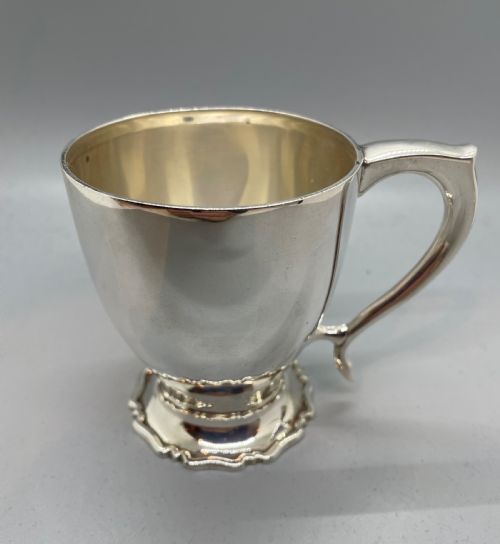






Hallmarked Sterling Mug
A hallmarked sterling mug is a drinking vessel in sterling silver bearing official assay office stamps, prized for its enduring metal and historical character.
Hallmarked Sterling Mug
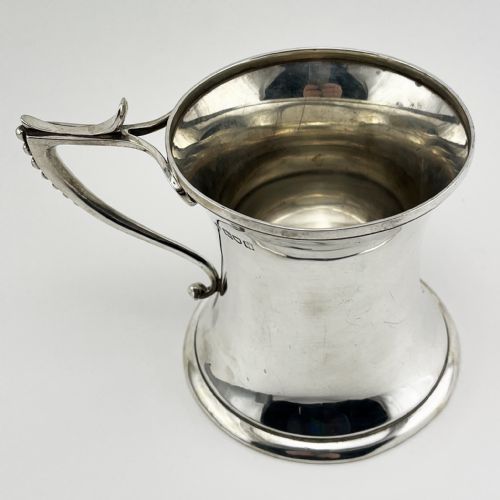
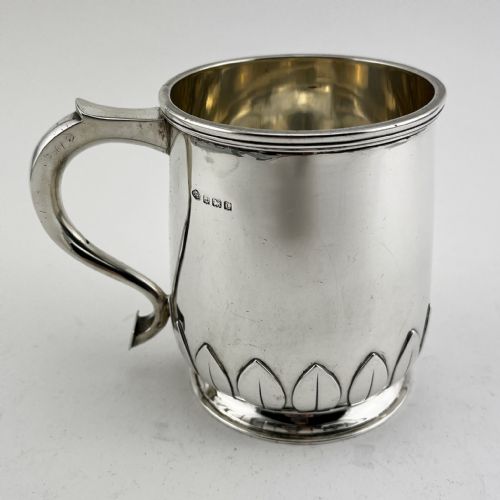
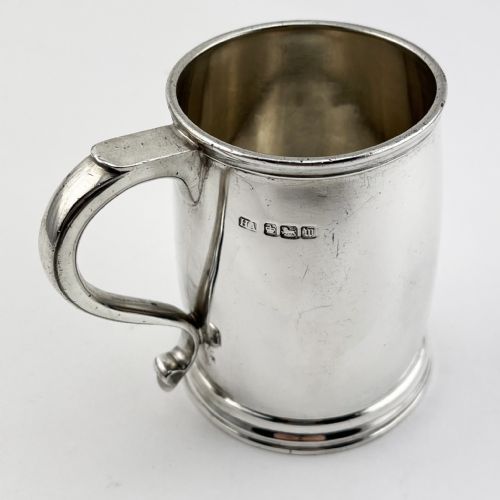
When you search for a hallmarked sterling mug, you encounter solid silver drinking vessels spanning multiple centuries from the Georgian era through to the mid-twentieth century. The selection ranges from small christening cups intended for children to larger pint mugs and tankards.
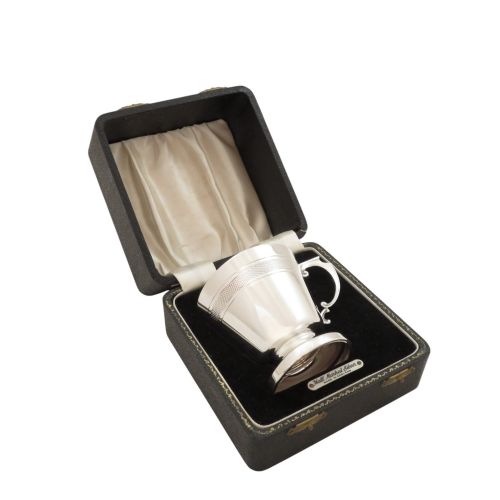
You are most likely to meet Victorian and George V examples on this page, alongside earlier eighteenth-century specimens and mid-century modern pieces. These objects frequently double as tankards or christening mugs, sometimes accompanied by leather or silk presentations.
How they were made
Silversmiths constructed these pieces from solid sterling silver, shaping the metal into cylindrical or unusual forms with dedicated scroll handles. Master makers applied techniques such as surface engraving and embossing to decorate the bodies.
Makers stamped official hallmarks into the silver to certify the metal standard and the year of production at various assay offices including London, Birmingham, Sheffield, and Chester.
Materials extend beyond bare silver to include occasional examples incorporating leather or silk components alongside the metal bodies.
What varies in quality
The distinction between ordinary production and superior work rests on the clarity and completeness of the hallmarks alongside the crispness of any engraved or embossed decoration. Pieces featuring substantial metal weight and careful hand-finishing stand apart from simpler utilitarian vessels.
The reputation of the silversmith and the preservation of the original surface shape influence the standing of an individual mug within its period.
William Bateman·Tiffany and Co·Edward and John Barnard·Charles Fox
The Hallmarked Sterling Mug Glossary
- Hallmark
- A series of official marks stamped onto silver items to guarantee the metal purity, the assay office, and the date of manufacture. These symbols provide the primary evidence for dating an antique piece.
- Tankard
- A tall drinking vessel, typically featuring a single handle and sometimes a lid. They appear in both small christening sizes and larger pint capacities.
- Christening mug
- A small silver cup traditionally presented to an infant to mark a baptism or naming ceremony. They often carry engraved presentation inscriptions or decorative floral motifs.
- Sterling silver
- An alloy comprising a high proportion of pure silver combined with other metals to ensure durability. It serves as the principal material for the items found in this category.
- Assay office
- An official organisation charged with testing the purity of precious metals and stamping the correct hallmarks. Cities such as London, Birmingham, Sheffield, and Chester maintained active offices.
Hallmarked Sterling Mug: Frequently Asked Questions
What is a hallmarked sterling mug?
A hallmarked sterling mug is a drinking vessel made from solid sterling silver that bears official assay office marks denoting its standard and age.
These pieces encompass both smaller christening cups and larger pint tankards produced across the Georgian, Victorian, and twentieth-century periods.
How do I know the date of a silver mug?
The date letter stamped within the official hallmark sequence reveals the specific year the silver mug was tested and certified at the assay office.
Matching this letter against regional assay office charts establishes the exact year of manufacture.
Were christening mugs used for drinking?
Christening mugs served primarily as ceremonial gifts or keepsakes to mark a child's birth or baptism rather than everyday tableware.
Many remain in clean condition because families preserved them in presentation boxes or displayed them on shelves.
What is the difference between a mug and a tankard?
A mug generally refers to an open drinking vessel with a handle, while a tankard historically denotes a larger vessel that can include a hinged lid.
In silver collections, the terms frequently overlap depending on the capacity and the presence of a cover.