




Hallmarked Silver Decanter
When you search for a hallmarked silver decanter, you are looking at vessels that combine solid metal mounts with heavy cut glass for serving fine spirits.

Hallmarked Silver Decanter
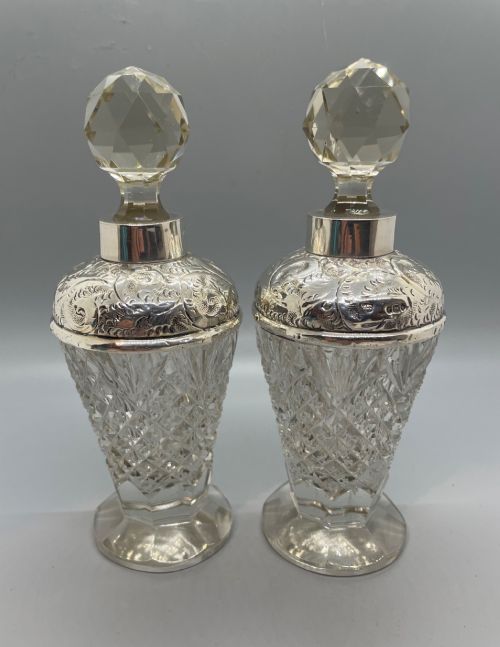
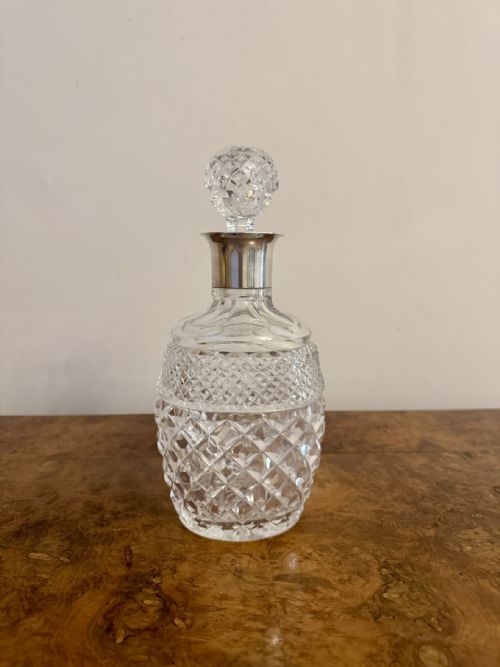
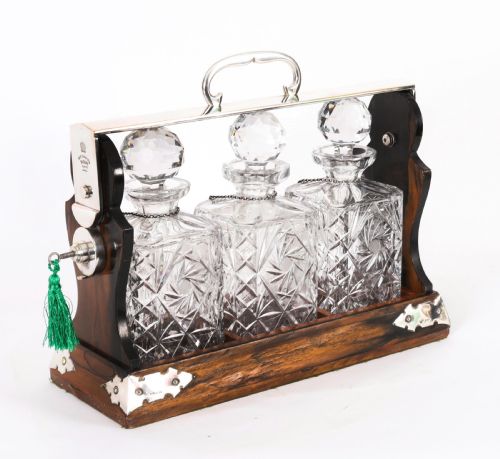
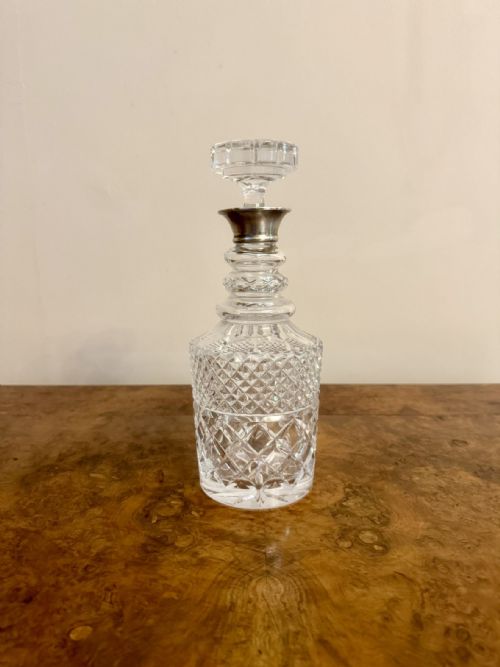
A hallmarked silver decanter brings together precision metalwork and heavy glassware, designed to hold and serve spirits like whisky, brandy, and wine. You will frequently encounter Edwardian and Victorian examples featuring cut crystal bodies paired with stamped sterling silver collars, mounts, or hinged lids.
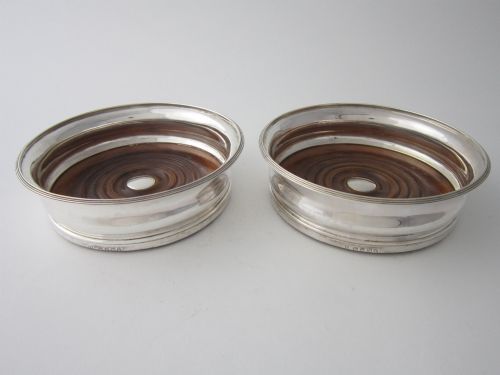
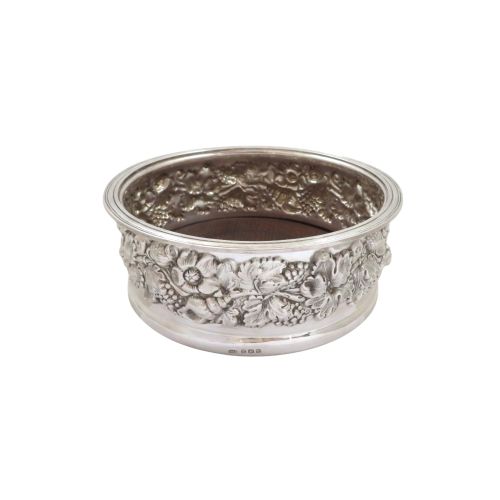
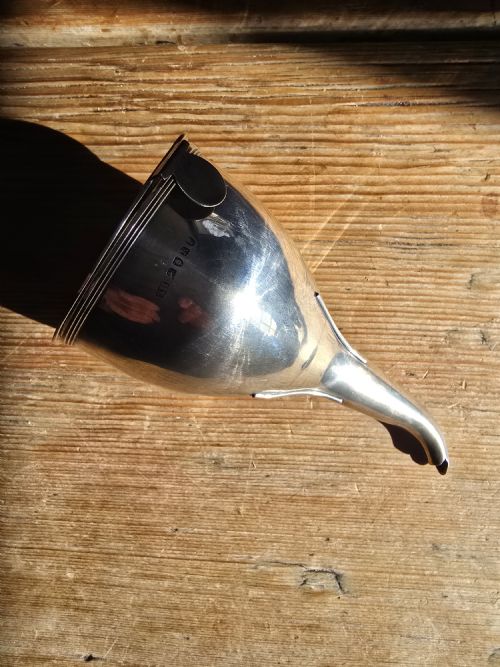
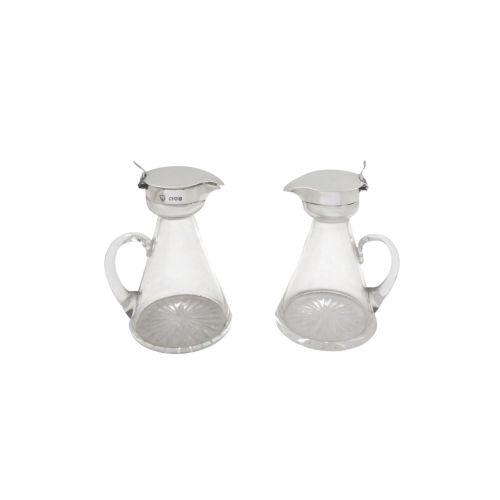
The category extends beyond standalone bottles to include related barware such as claret jugs, wine coasters, spirit flasks, and individual decanter labels hung by chains. Georgian pieces often lean toward functional wine funnels and engraved silver tags, while later decades introduce locking tantalus frames and geometric Art Deco silhouettes.
Originating mostly from British workshops, these pieces reflect changing domestic rituals around dining and entertaining across the nineteenth and twentieth centuries. The surviving examples range from modest single noggins to large, heavy water jugs and multi-bottle tantalus sets.
How They Were Made
Makers combined heavy-blown glass with sterling silver components shaped by casting, spinning, and hand-engraving. Glass bodies often received deep hobnail or geometric cutting to catch the light, while the metal mounts were secured around the neck with specialised adhesives or mechanical collars.
Silversmiths stamped their work with official town marks, date letters, and maker initials to guarantee purity and origin. Hinged lids on claret jugs and spirit decanters required precise thumb-pieces and internal springs to ensure a tight seal against the glass rim.
Hallmarked Silver Decanter Retail Price Guide 2026
Typical asking prices for hallmarked silver decanter among the pieces listed under this phrase on Sellingantiques today, from the lower quarter to the upper quarter. They describe what is for sale here now, not the wider market.
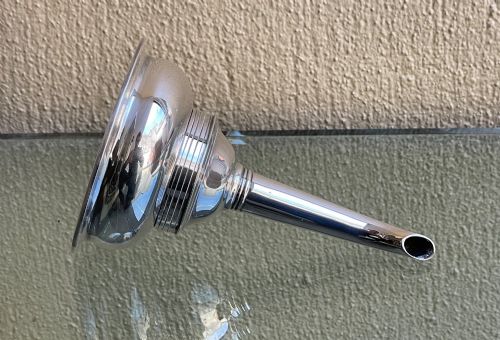
Early wine funnels included clever three-part designs with removable strainers to catch stubborn cork fragments before they ruined the vintage.
What Varies in Quality
The distinction between standard utility vessels and superior examples rests on the depth of the glass cutting and the weight of the silver mount. Heavy crystal bodies with crisp, hand-polished facets indicate superior glassmaking, while thick-gauge silver resists denting and maintains structural integrity around the collar.
Artistic ambition also separates the output, visible in cast figural finials, intricate repoussé grape and vine motifs on coasters, and complex locking mechanisms found in multi-bottle tantalus frames. Maker reputation plays a role, with established firms like Hukin and Heath or Asprey delivering sharper detailing in both metal and glass assembly.
Digby Scott Benjamin Smith·Solomon Hougham·Charles Thomas Fox·Hukin & Heath·Asprey·Thomas Phipps Edward Robinson·Harry Atkin
The Hallmarked Silver Decanter Glossary
- Hallmark
- A series of official stamps applied to precious metals indicating the standard of purity, the assay office, and the date of manufacture. These marks allow collectors to trace the exact year and city of production.
- Tantalus
- A locked wooden frame holding glass decanters with silver collars, designed to prevent servants or guests from accessing the spirits without a key. The frame secures the stoppers in place until unlocked.
- Noggin
- A small vessel or mug used for serving a single portion of spirits, frequently fitted with a silver collar and a matching label. They appear often in twentieth-century barware collections.
- Claret Jug
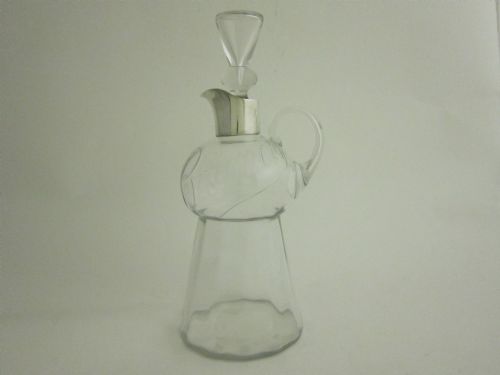
- A tall pouring vessel specifically designed for red wine, featuring a glass body mounted with a hinged silver lid and handle. Victorian iterations often showcase elaborate botanical engraving.
- Wine Funnel
- A multi-part device placed in the neck of a decanter to strain sediment from older wines during pouring. Georgian examples often feature removable pierced insert bowls.
Hallmarked Silver Decanter: Frequently Asked Questions
How do I date a silver collar?
You read the stamped hallmarks on the metal mount, which include a date letter corresponding to the assay office records of London, Birmingham, Sheffield, or Chester.
Additional stamps such as the lion passant confirm the sterling silver standard, allowing you to narrow the production year down to a specific twelve-month window.
Can I use these for daily serving?
Most antique glass decanters and jugs remain fully functional for holding and pouring spirits during meals or gatherings.
Care must be taken when washing heavy cut crystal to protect the silver mounts from prolonged moisture exposure and harsh detergents.
What is a decanter label used for?
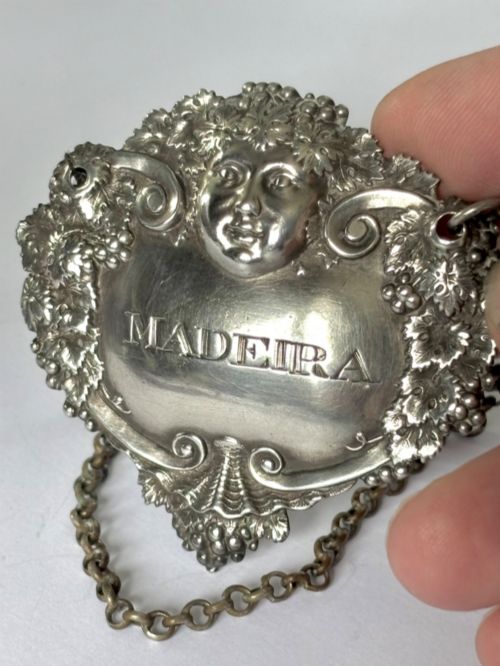
Silver labels hang by chains around the necks of bottles to identify specific contents such as port, sherry, madeira, or gin.
These small tags were widely adopted in the Georgian and Victorian periods when decanters lacked etched lettering on the glass itself.
Why do some decanters have locks?
Locked frames, known as tantalus sets, were introduced to secure expensive imported spirits away from household staff in large country homes.
The metal bar locks over the stoppers so the bottles cannot be removed or opened without the matching key.