







Hallmarked Novelty Pincushion
A hallmarked novelty pincushion brings miniature silver animal and object forms to the dressing table, combining practical sewing utility with playful Edwardian and Victorian design.
Hallmarked Novelty Pincushion
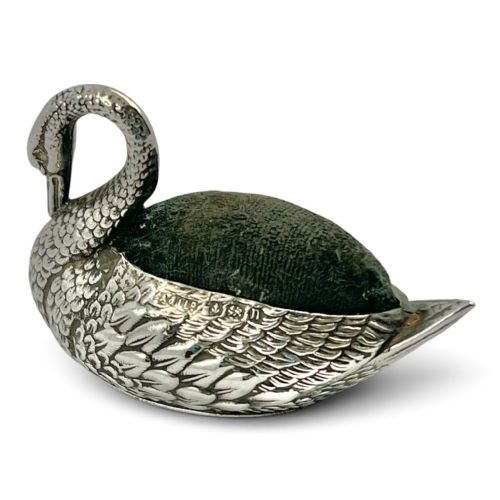
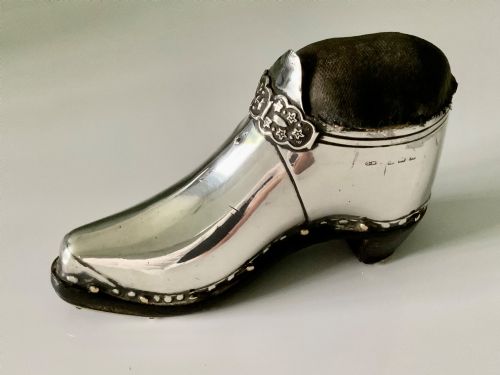
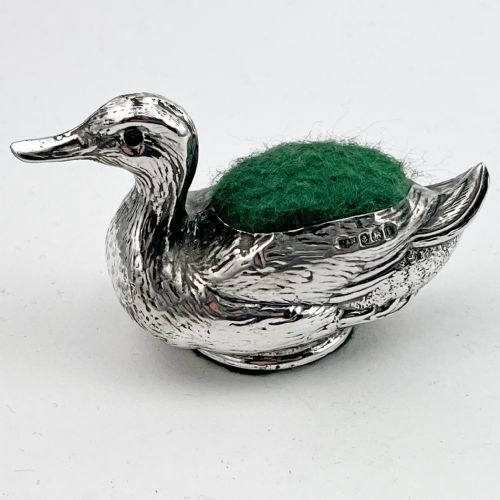
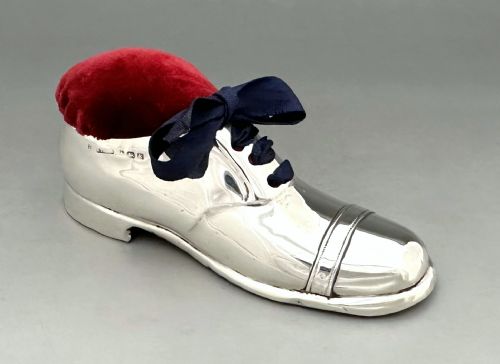
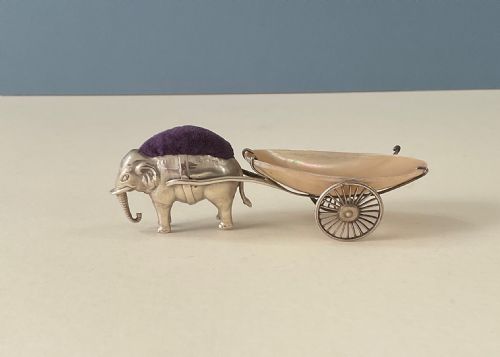
A hallmarked novelty pincushion takes the form of an animal, bird, or everyday object fashioned from silver to hold pins and needles. The listings here centre primarily on Edwardian and Victorian examples, spanning the early decades of the twentieth century.
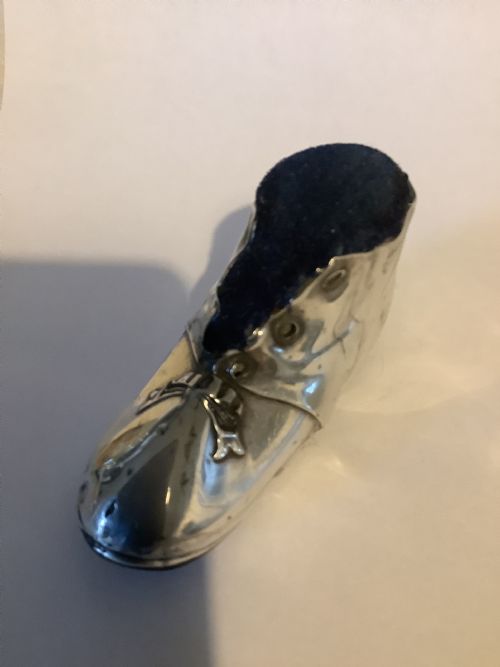
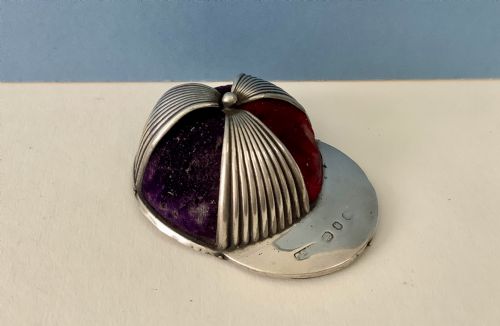
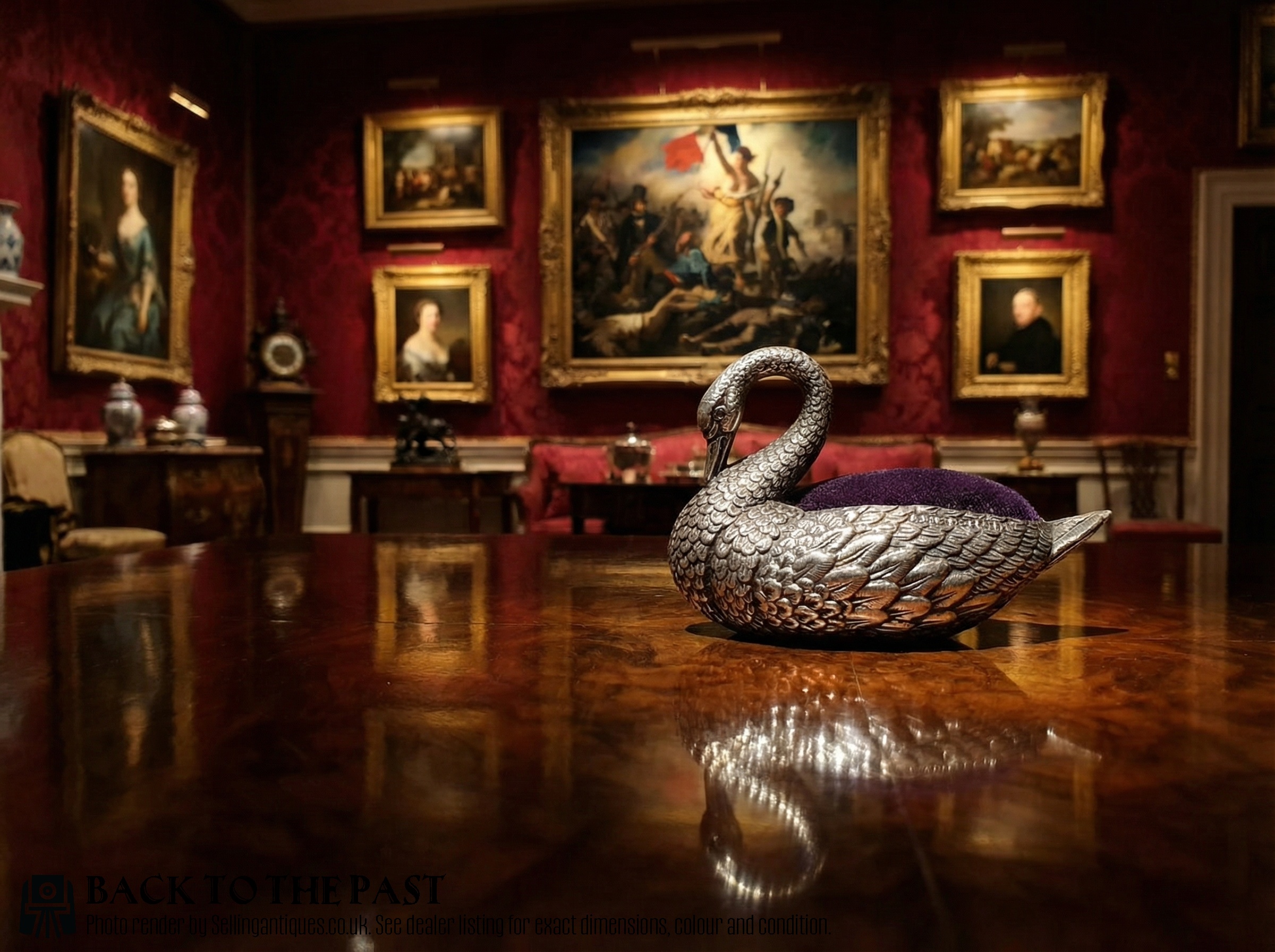
Buyers meet figural subjects ranging from swans, pigs, ducks, and chicks to goats, stags, kangaroos, camels, and a WWI Red Cross motif. Alongside fauna appear practical items rendered in miniature, such as clogs, boots, shoes, bellows, and jockey caps.
Most pieces date from the Edwardian period with specific assay years noted around nineteen hundred to nineteen twelve, alongside Victorian items. These small silver items served as charming desk or dressing table accessories that combined decorative novelty with utilitarian function.
How they were made
Silversmiths constructed these novelty items using sterling silver and solid silver, shaped through pressing, casting, and hand-chasing to render the anatomical details of animals or the textures of footwear and clothing. Maker marks and city hallmarks, notably from Birmingham, were stamped directly into the metal.
The interior padding consists of velvet, fabric, or felt held securely within the silver mount to receive pins. These textile inserts provide the contrasting colour and soft surface necessary for the practical storage of sewing pins.
A tiny silver camel waits quietly on the dressing table to guard your sewing pins.
What varies in quality
Quality rests in the crispness of the chasing and the fidelity of the miniature form, distinguishing finely modelled animals and objects from simpler castings. The weight and gauge of the silver also differentiate standard production items from more substantial pieces.
The survival and originality of the internal velvet, fabric, or felt pad affect desirability, as do clear, legible hallmarks on the silver body. Natural patination and the preservation of the original surface finish without excessive polishing complete the measure of quality.
The Hallmarked Novelty Pincushion Glossary
- Hallmark
- An official stamp applied by an assay office to indicate the purity of the silver, the maker, and the year of manufacture.
- Chasing
- A metalsmithing technique where the silver is worked from the front with punches to create surface decoration and texture.
- Sterling silver
- An alloy consisting of ninety-two point five percent silver and seven point five percent other metals, primarily copper.
- Figural
- Representing the form of a human, animal, or recognizable object rather than abstract or geometric shapes.
Hallmarked Novelty Pincushion: Frequently Asked Questions
What animals appear most often?
Swans, pigs, ducks, and chicks dominate the figural subjects found in these silver pieces.
Stags, goats, kangaroos, and camels also appear among the various animal forms.
Where were they made?
Many examples carry hallmarks associated with Birmingham from the Edwardian and Victorian eras.
These city marks and date letters confirm the British origin of the silver mounts.
What materials fill the silver bodies?
Velvet, fabric, and felt provide the traditional soft insert required to hold pins securely.
These textiles sit tightly inside the hollow silver casting of the animal or object.
How do I spot a Victorian piece from an Edwardian one?
Assay office date letters stamped on the silver provide the exact year of manufacture.
Stylistic conventions and hallmarking stamps guide the distinction between late nineteenth century and early twentieth century items.