
Hallmarked Gold Dress Ring
A hallmarked gold dress ring brings together precious metal and gemstones with official assay marks that record British office locations and dates of testing.
Hallmarked Gold Dress Ring
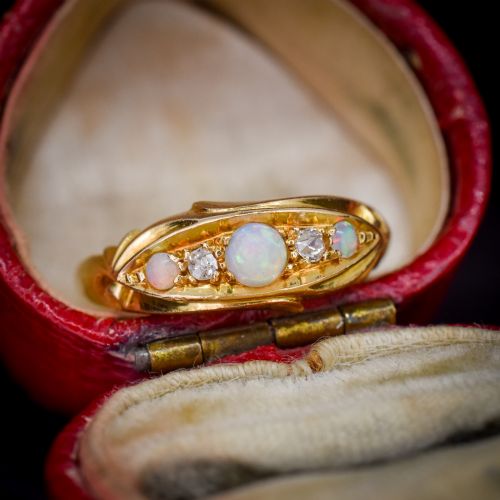
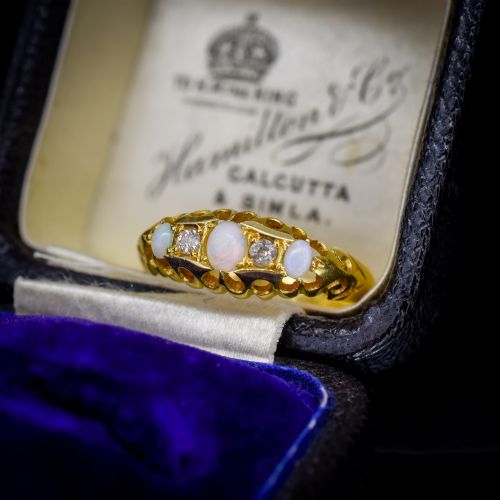
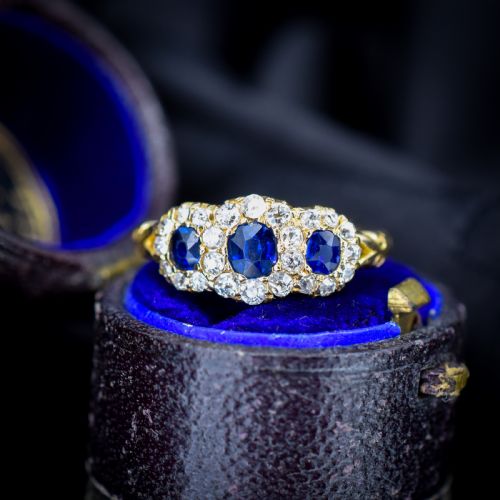
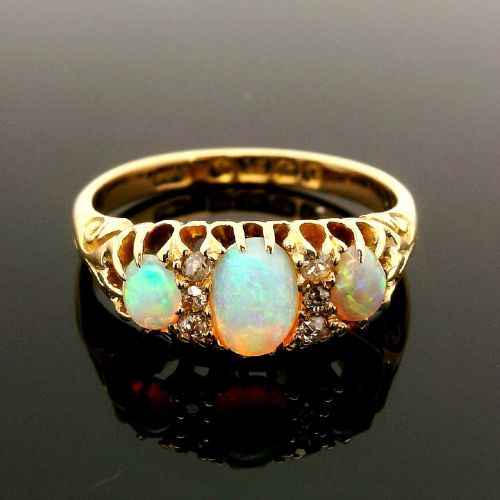
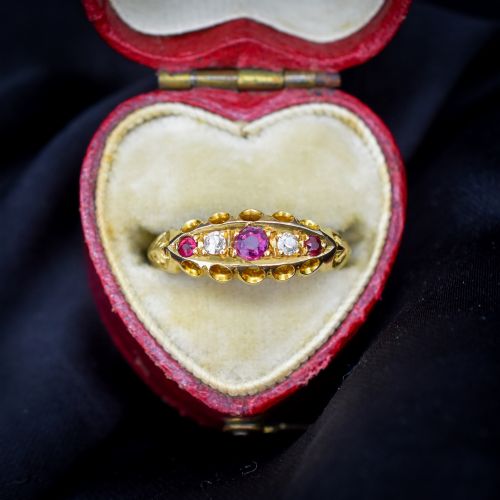
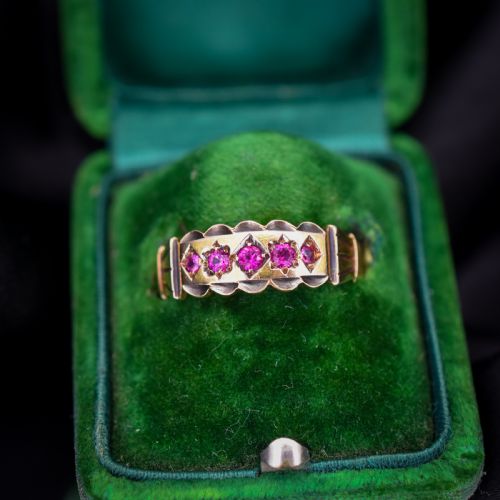
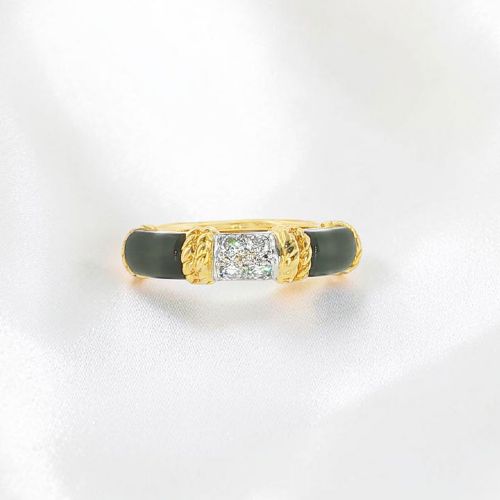
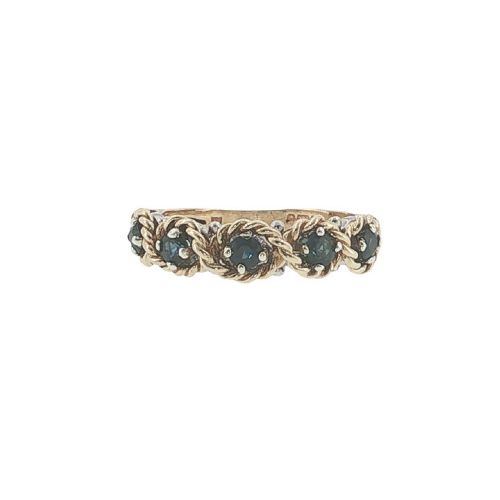
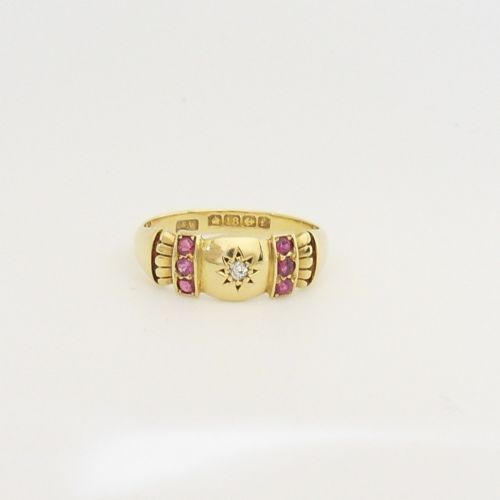
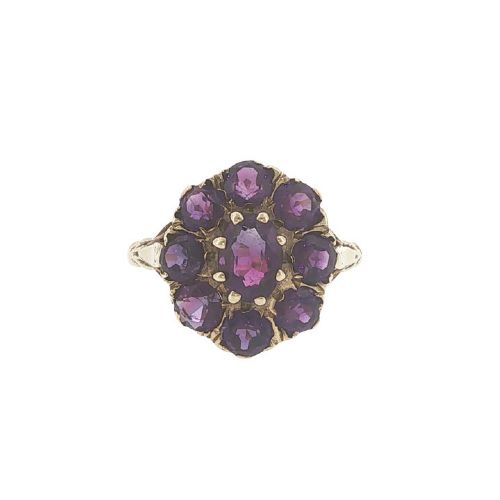
A hallmarked gold dress ring is an ornamental finger ornament created to be worn for decoration, drawing upon periods ranging from the late nineteenth century through the Edwardian era and into mid-century modernism. These pieces frequently take the form of boat rings, cluster formations, trilogy settings, and five-stone bands that showcase gemstones set within substantial precious metal bands.
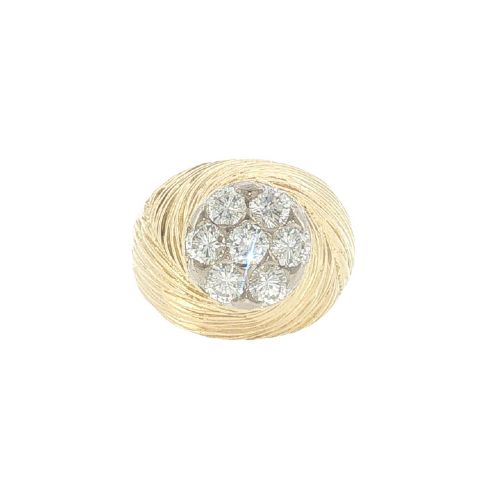
The selections available include both antique examples stamped with Victorian and Edwardian dates and vintage pieces originating from the nineteen-sixties and nineteen-seventies. Buyers encounter designs incorporating traditional configurations alongside bolder modernist styles, often accompanied by legible town marks and date letters stamped directly into the inner shank.
Materials and construction
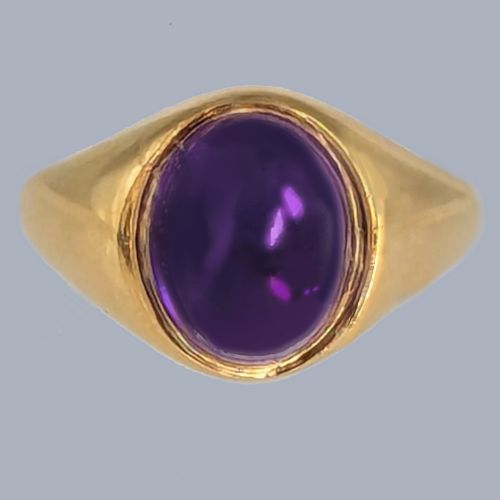
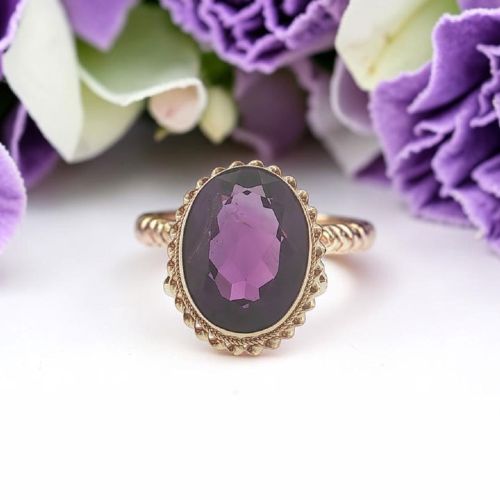
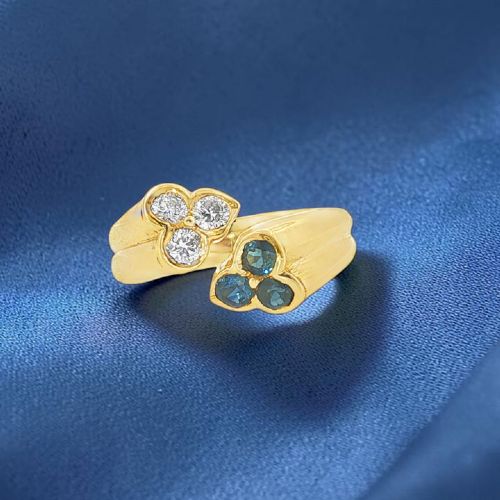
These rings are constructed primarily from yellow gold, commonly encountered in eighteen carat and nine carat purities, shaped into bands, boat mounts, and claw or bezel settings. Goldsmiths incorporate diamonds alongside coloured stones including rubies, sapphires, amethysts, opals, turquoises, and garnets, securing them individually by hand.
The fabrication relies upon traditional bench techniques such as casting, piercing, and hand-setting, followed by the application of punches at official assay offices in cities like London, Birmingham, Chester, and Glasgow to stamp the metal fineness and year of testing.
Gemstones recorded on this page include diamonds, rubies, sapphires, amethysts, opals, turquoise, garnets, and pearls set in gold.
Variations in quality
Quality rests upon the precision of the stone setting and the structural integrity of the gold band, where heavier gauge metal resists thinning over decades of wear. The selection of matching, well-cut gemstones with strong saturation and lively light return elevates a piece above standard production.
The legibility and completeness of the official hallmarks provide a clear record of origin, while refined claw work and balanced proportions distinguish finer workshop output from simpler commercial items.
Kutchinsky
The Hallmarked Gold Dress Ring Glossary
- Hallmark
- An official stamp applied by an assay office confirming the precious metal purity, the maker, and the year of testing. These marks provide a reliable anchor for dating British jewellery.
- Boat ring
- A ring setting shaped like a narrow boat, curving gently along the finger to house a central cluster of graduated stones. This configuration is strongly associated with Edwardian and late Victorian designs.
- Trilogy ring
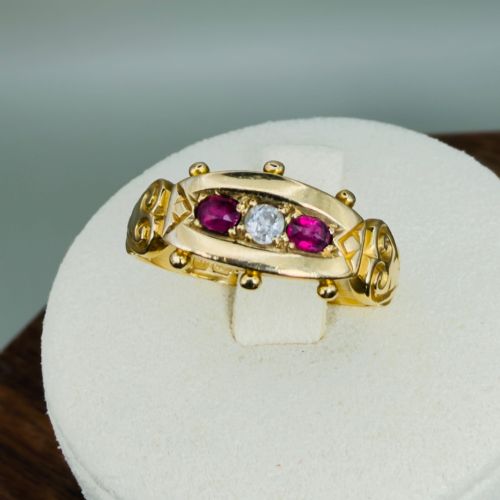
- A ring featuring three principal gemstones arranged in a row, often interpreted symbolically. They appear frequently in eighteen carat gold settings from the early twentieth century.
- Cluster ring
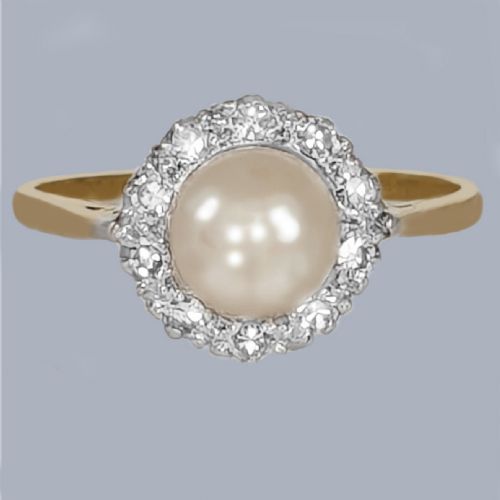
- A design grouping a central gemstone surrounded by a tight halo of smaller stones, typically diamonds. This arrangement maximises surface brilliance upon the hand.
- Navette ring
- A ring featuring an elongated, pointed boat-shaped face resembling the hull of a small ship. The silhouette stretches gracefully across the finger.
- Assay office
- An official institution empowered to test precious metal items and stamp them with statutory marks. Offices in London, Birmingham, Chester, and Glasgow feature prominently on these rings.
Hallmarked Gold Dress Ring: Frequently Asked Questions
How do I read a British gold hallmark?
A complete British hallmark typically consists of a maker mark, a standard fineness mark indicating gold purity such as eighteen or nine carats, an assay office symbol, and a specific date letter.
Matching these individual punches against official assay office tables reveals the exact year and location where the gold was tested and verified.
How should I care for an antique opal ring?
Opals contain natural water content and possess a softer mineral structure than diamonds, requiring gentle handling and protection from sudden temperature extremes and harsh chemicals.
Removing the ring during manual tasks and cleaning it simply with a soft, damp cloth preserves the integrity of both the stone and the gold setting.
What distinguishes Victorian from Edwardian rings?
Victorian rings often display heavier gold work, deep chasing, and romantic motifs such as serpents or gypsy settings housing old-cut diamonds and rich rubies or sapphires.
Edwardian pieces shift towards lighter, airier platinum-topped or delicate yellow gold constructions like boat settings and garland motifs that emphasise fine lace-like openwork.