


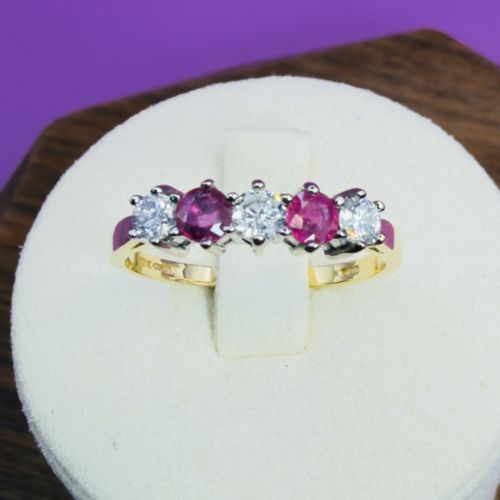
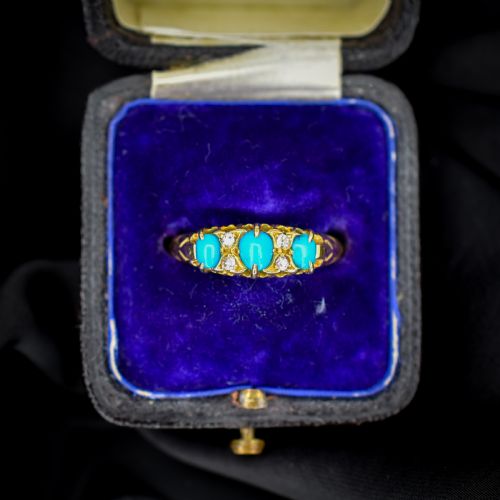
Edwardian Five Stone Band
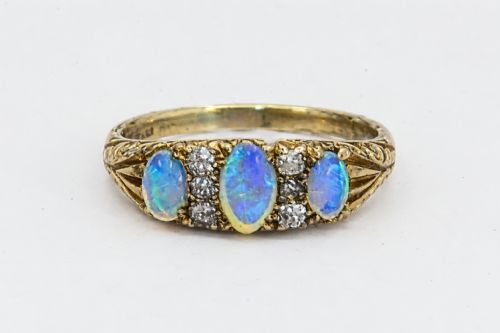
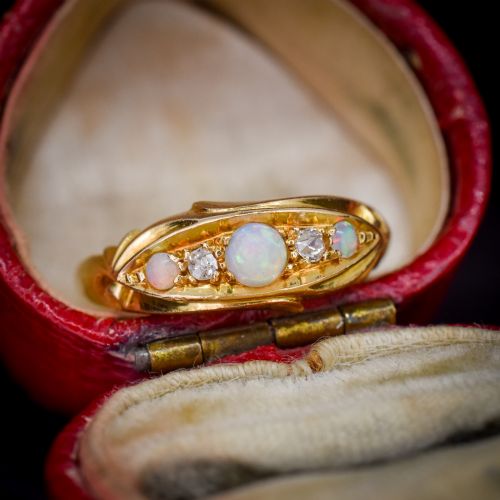
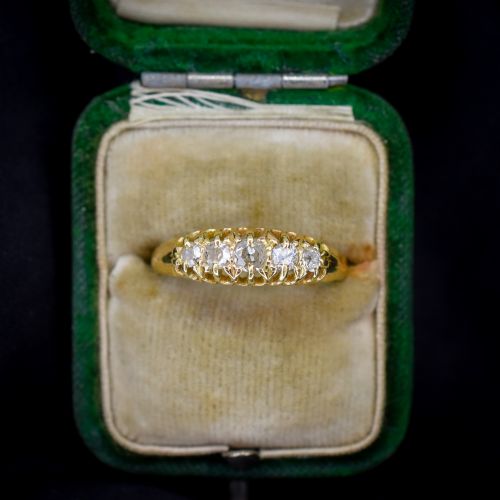
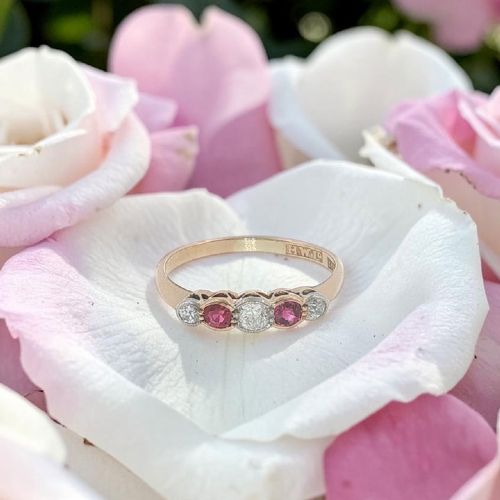
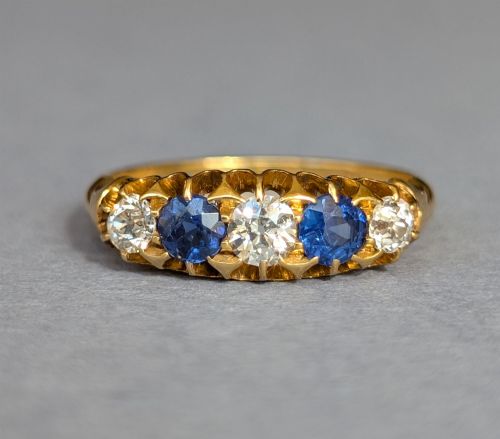
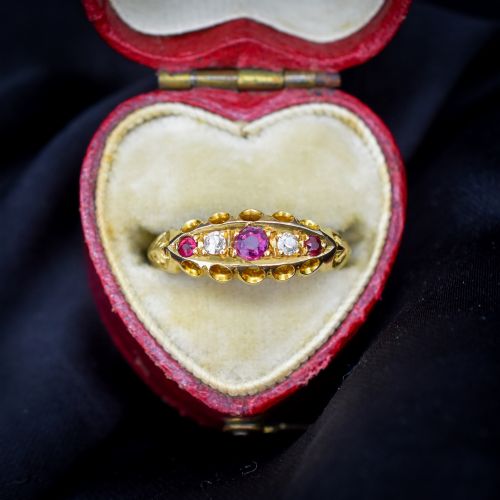
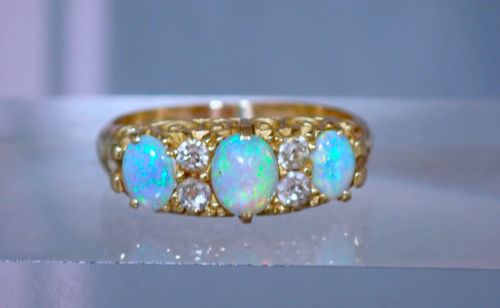
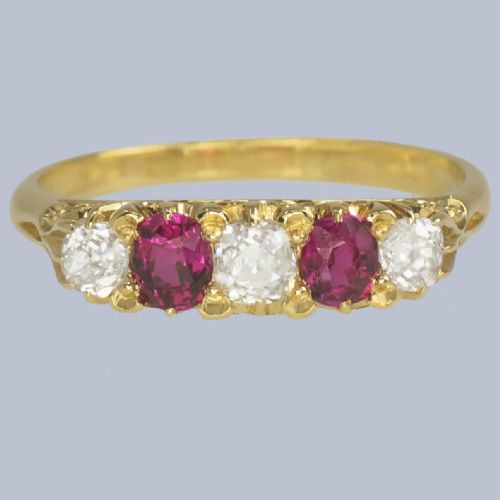
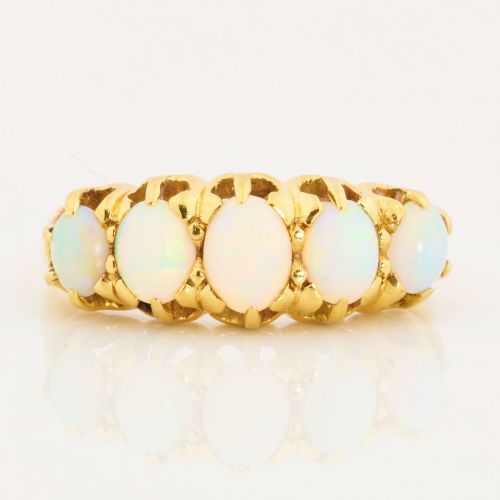
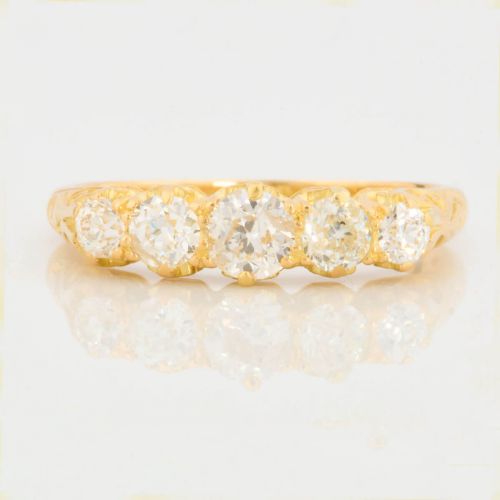
An edwardian five stone band brings together old cut diamonds, glowing opals and rich rubies in classic 18ct gold settings.
Edwardian Five Stone Band
The materials seen across these rings include 18ct yellow gold paired with diamonds, sapphires, rubies, opals, and emeralds. Many pieces date from the Edwardian period itself, alongside related examples from late Victorian, George V, and early twentieth-century decades.
How they were made
These rings were constructed primarily using 18ct yellow gold, fashioned into bands and secure settings to hold the central stones. Goldsmiths utilised traditional techniques such as claw settings, boat shapes and navette mounts.
Gemstones were cut by hand, featuring old mine cuts and rose-cut diamonds alongside natural opals, sapphires, and rubies. Hallmarks stamped inside the shanks often record assay offices in towns such as Chester, Birmingham, and London.
Listings feature 18ct yellow gold combined with diamonds, sapphires, rubies, opals, and amethysts across the Edwardian, Victorian, and early twentieth-century periods.
What varies in quality
Quality in these rings is defined by the match and presence of the central gemstones, whether diamonds, opals, or coloured stones. Finer examples display well-matched gems with lively light return from old cut diamonds or strong play-of-colour in natural opals.
The weight and crispness of the 18ct gold mount also differentiate pieces, with heavier bands and clear, legible hallmarks indicating superior workshop standards.
The Edwardian Five Stone Band Glossary
- Old cut
- A diamond facet style cut by hand before modern machinery, featuring a smaller table and high crown that produces a soft candlelight sparkle. These stones are characteristic of late Victorian and Edwardian jewellery.
- Boat ring
- A ring setting shaped like the hull of a boat, curving upwards towards the centre to cradle a row of gems. This form was widely utilised during the Edwardian era.
- Navette
- A boat-shaped or eye-shaped setting that tapers to points at either end. The term derives from the French word for a small ship.
- Half hoop
- A ring design where stones are set in a continuous curved row across the top half of the band. It remains a classic configuration for multi-stone rings.
- Hallmark
- A stamp impressed into the metal indicating the purity standard, maker, and assay office. These marks help verify the age and origin of antique gold.
Edwardian Five Stone Band: Frequently Asked Questions
What is an edwardian five stone band?
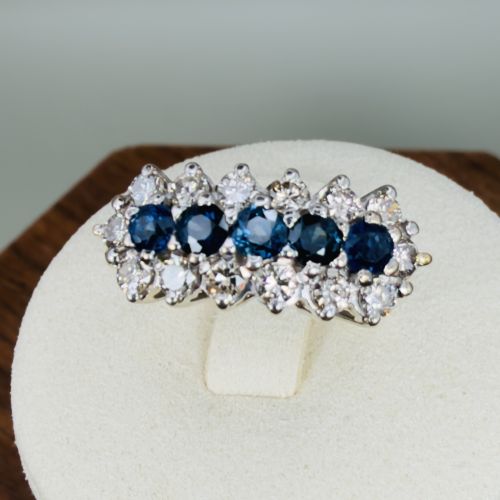
An edwardian five stone band is a ring featuring five gems arranged in a horizontal row across the finger. These pieces typically date from the early 1900s and showcase stones like diamonds, rubies, and opals.
They reflect the refined aesthetic of the period, often utilising 18ct yellow gold in boat or half hoop settings designed to sit comfortably on the hand.
How were these rings worn originally?
These rings were worn as daily adornments, engagement rings, or commemorative bands during the Edwardian era. Their linear design allowed them to sit smoothly alongside wedding bands.
Today, they continue to be worn as dress rings or alternative engagement rings, pairing easily with modern or antique jewellery.
What gems are found in these bands?
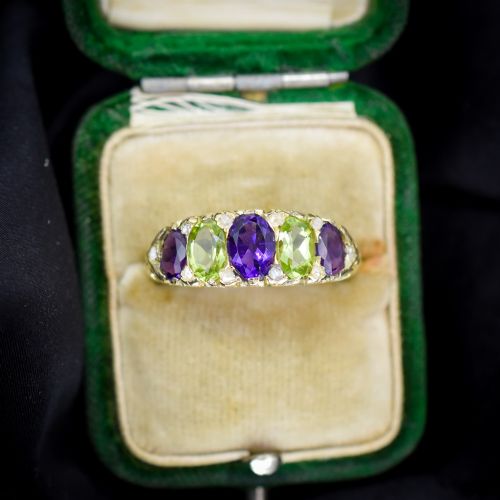
Diamonds are the most frequent choice, often combined with rubies, sapphires, opals, amethysts, or pearls. Natural opals display vibrant play-of-colour, while old cut diamonds offer a distinct historic charm.
Coloured gemstones were frequently used in traditional arrangements, sometimes reflecting specific historical events or sentimental meanings.
How do I care for an antique gold ring?
Care involves gentle cleaning with soft cloths and mild soapy water, avoiding harsh chemical dips that can damage softer stones like opals or pearls. Storing the ring in a dedicated box prevents scratches from other items.
Regular checks by a jeweller ensure the gold claws holding the stones remain secure and robust.