


Hall Tree Furniture
Hall tree furniture organises the entrance with hooks, mirrors and umbrella trays, bringing practical nineteenth-century utility directly into the modern hallway.
Hall Tree Furniture
Hall tree furniture encompasses diverse hall stands, coat stands and umbrella holders designed to furnish entranceways from the Victorian and Edwardian periods. Buyers exploring this category encounter sturdy oak, mahogany and bentwood forms that combine hanging hooks with seat benches and drip trays.
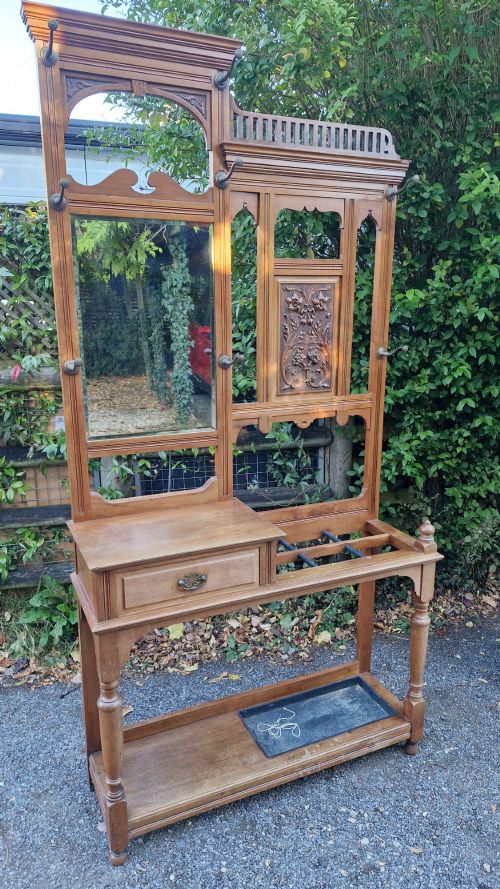
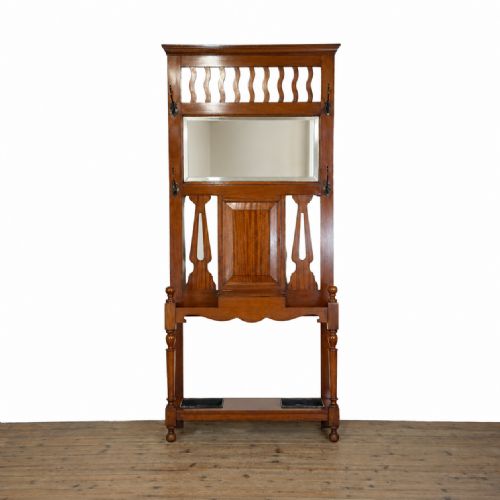
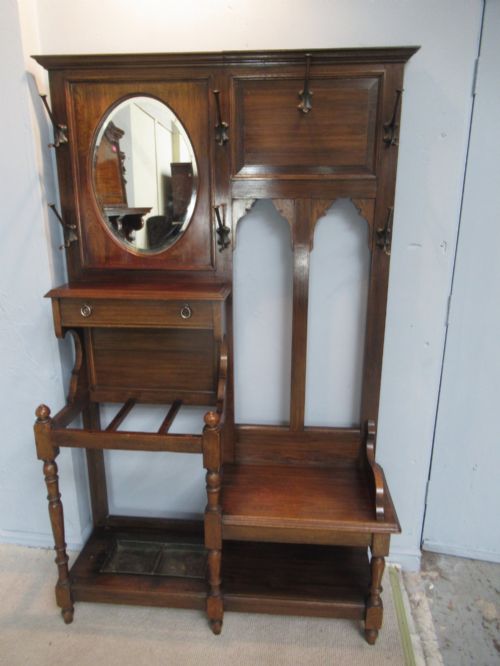
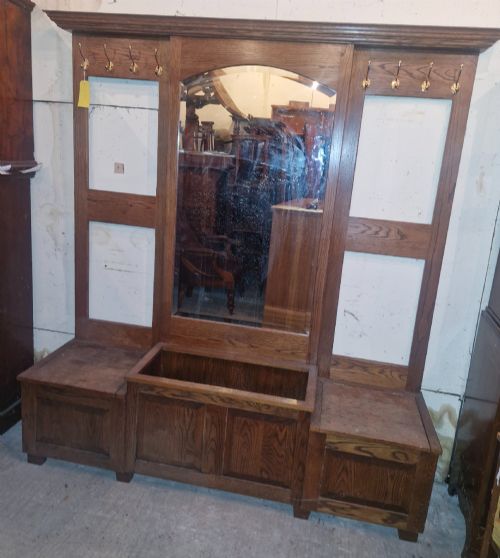
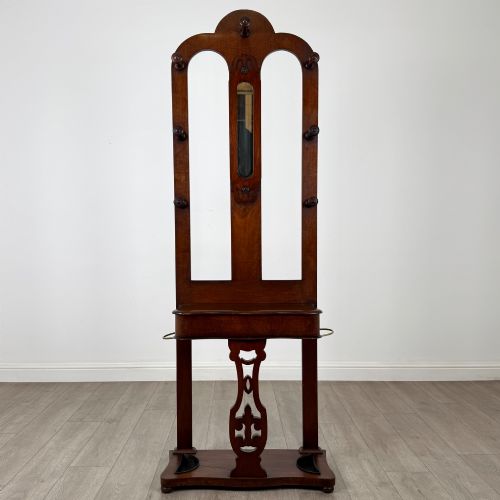
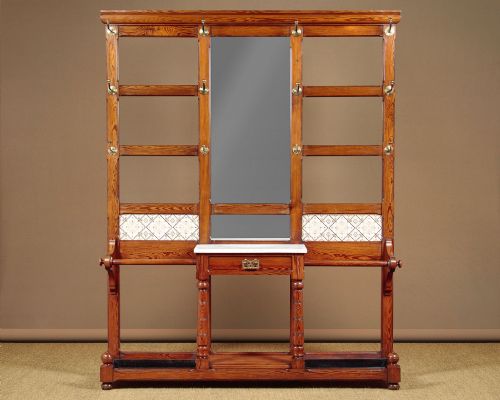
The most common pieces on this page are upright hallstands dating from the nineteenth and early twentieth centuries. These functional items typically integrate timber frameworks, mirrors, coat hooks and lower compartments for sticks and umbrellas.
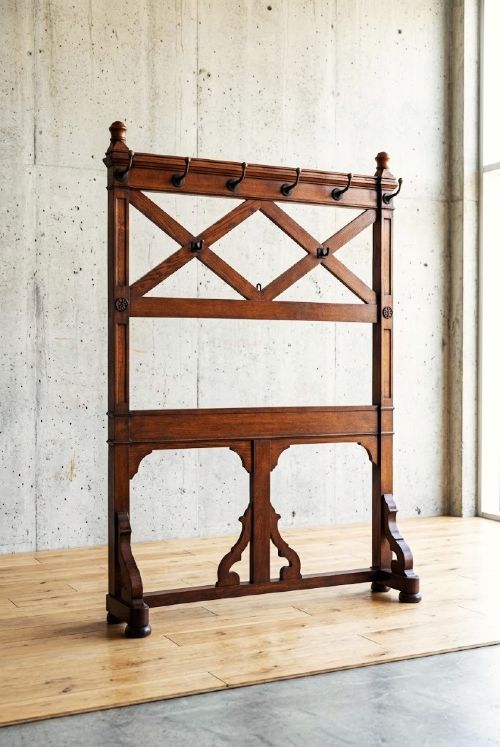
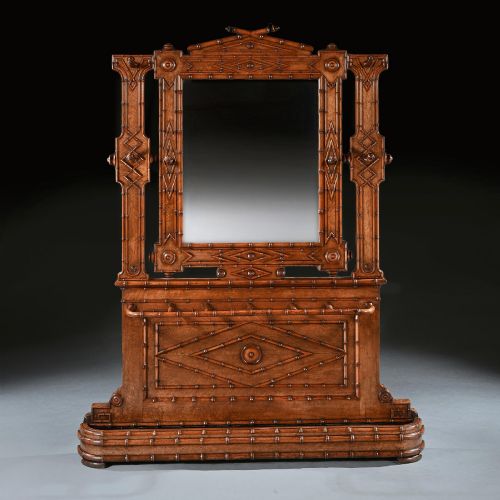
Makers produced these entrance pieces in styles ranging from plain utilitarian pine to elaborate Gothic Revival, Aesthetic Movement bamboo, and carved Arts and Crafts designs. Each piece reflects the domestic priorities of its era, offering visitors a designated place for hats, coats and wet umbrellas.
How they were made
Makers utilised solid timbers such as oak, mahogany, beech and pine to construct the main load-bearing frames. Joinery methods included mortise and tenon construction to ensure stability under the weight of heavy winter garments.
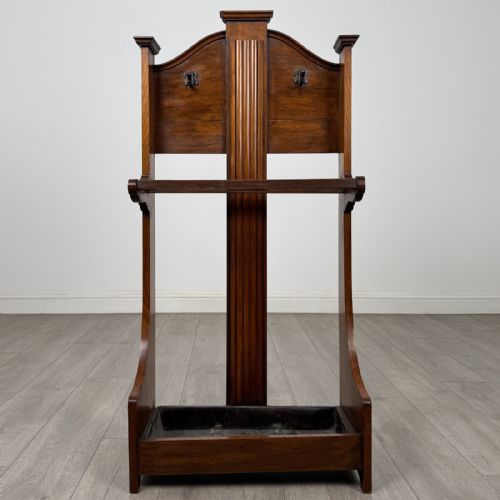
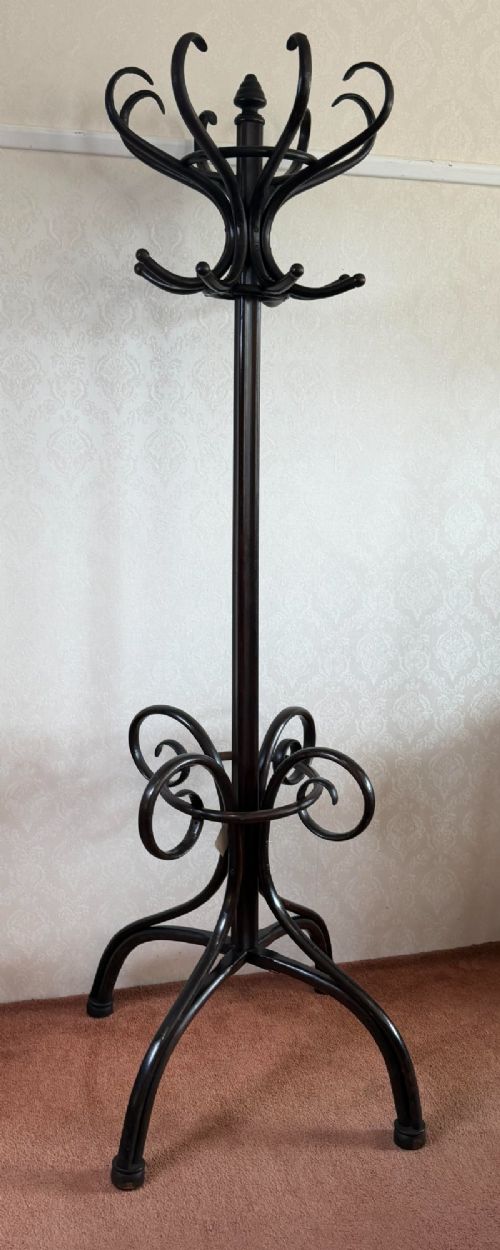
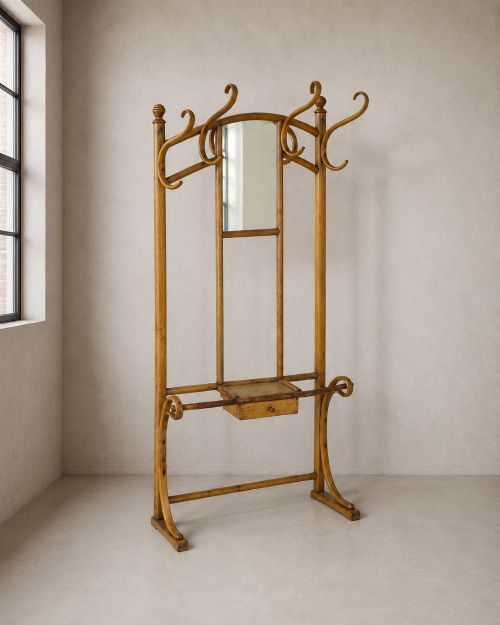
Metal components played a structural and decorative role, with brass hooks, cast iron frames, and zinc drip trays incorporated to manage moisture from wet umbrellas. Bentwood techniques utilised steam to shape beech into curved components.
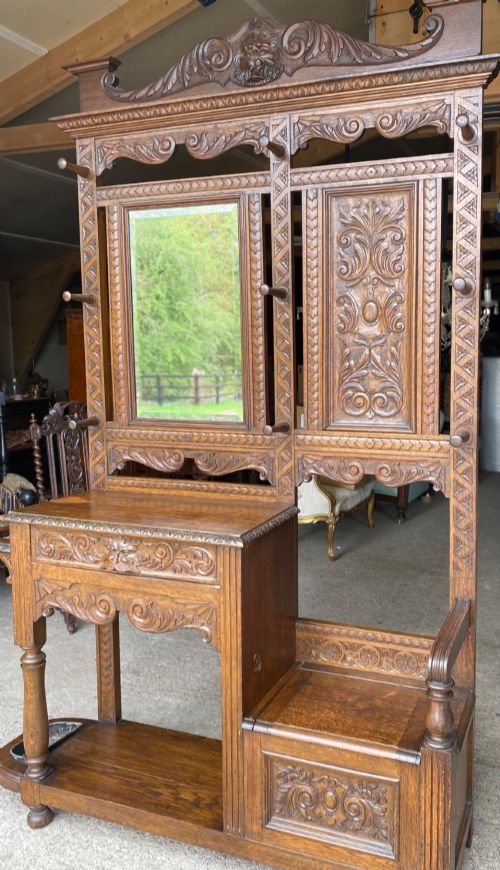
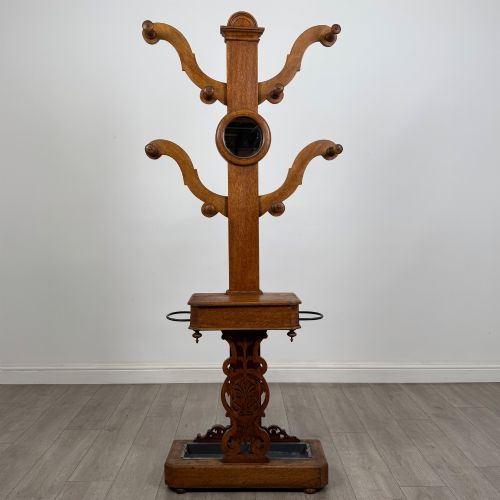
Surfaces frequently featured carved ornamentation, including Green Man motifs or floral patterns, alongside fitted mirrors and ceramic or metal tiles.
Listings feature oak, mahogany, bamboo, cast iron, and bentwood across Victorian and Edwardian periods.
What varies in quality
Quality rests upon the selection of timber and the ambition of the carving. Dense golden oak, figured mahogany and intricate hand-carved details elevate a piece above standard utility furniture.
Construction integrity defines the superior examples. Original brass hooks, secure mirror plates and intact metal drip trays indicate better craftsmanship and careful preservation over time.
Stylistic cohesion separates mass production from finer workshops. Pieces reflecting distinct movements like Art Nouveau, Arts and Crafts or the Aesthetic style display more considered design and proportion.
Thonet·Coalbrookdale
The Hall Tree Furniture Glossary
- Hallstand
- A piece of entrance furniture incorporating coat hooks, a mirror, and provisions for sticks and umbrellas. Many also include a small bench seat with storage beneath.
- Bentwood
- Wood that has been rendered pliable by steam and bent into curved shapes. This technique created lightweight coat and hat stands.
- Drip tray
- A metal tray placed at the base of a stand to catch water from wet umbrellas. These are frequently removable for emptying.
- Aesthetic Movement
- A late nineteenth-century design style emphasising visual beauty over narrative content. Pieces in this style often utilise bamboo or faux bamboo.
- Arts and Crafts
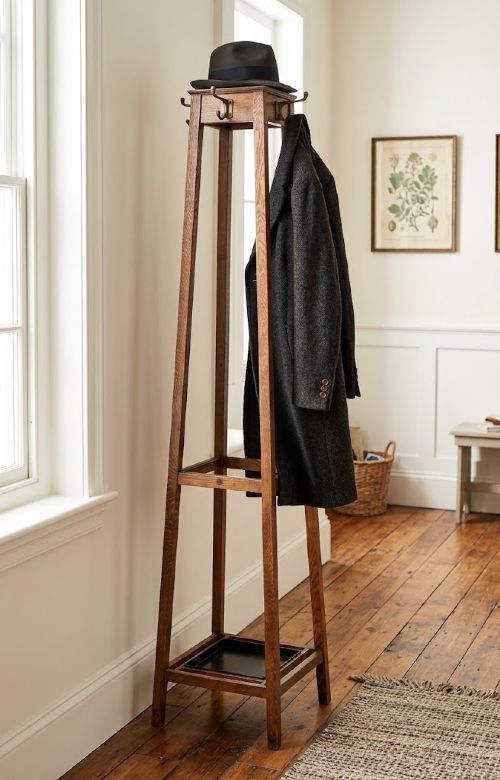
- A design movement valuing traditional craftsmanship and simple forms. Furniture from this period highlights the natural grain of solid oak.
Hall Tree Furniture: Frequently Asked Questions
What is hall tree furniture?
Hall tree furniture refers to upright entranceway pieces designed to hold coats, hats, and umbrellas. They combine multiple domestic functions into a single wooden or metal frame.
These items usually feature a tall backboard with hanging hooks, a central mirror, and a lower stand with compartments or trays for walking sticks.
How do I identify the period?
Period identification relies on observing the timber choice, decorative style, and structural hardware. Heavy carved oak often indicates Victorian or Arts and Crafts origins while steam-bent beech points toward the late nineteenth or early twentieth century.
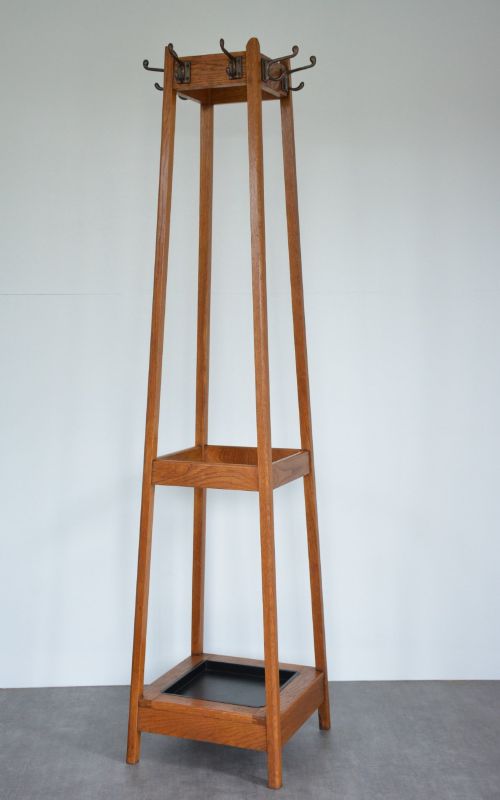
Stylistic cues such as bamboo frames suggest the Aesthetic Movement, whereas clean linear oak often points to Edwardian production.
How do I live with one?
Living with hall tree furniture involves placing the piece in a generous hallway where its height and footprint can be appreciated. The integrated hooks and trays remain as useful today for everyday coats and bags as they were in the past.
Care simply requires occasional dusting and conditioning of the timber surfaces to preserve the finish.