

Hall Table with Marble Top
A hall table with marble top brings stone and timber together to anchor an entranceway.
Hall Table with Marble Top
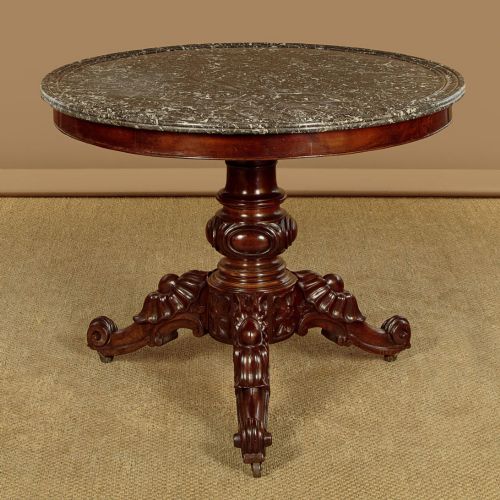
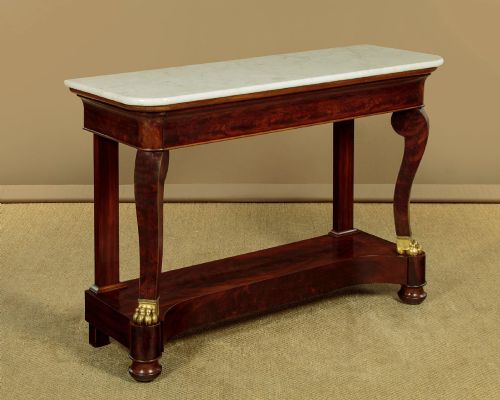
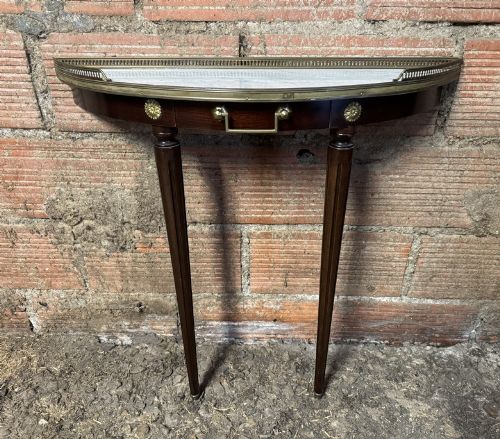
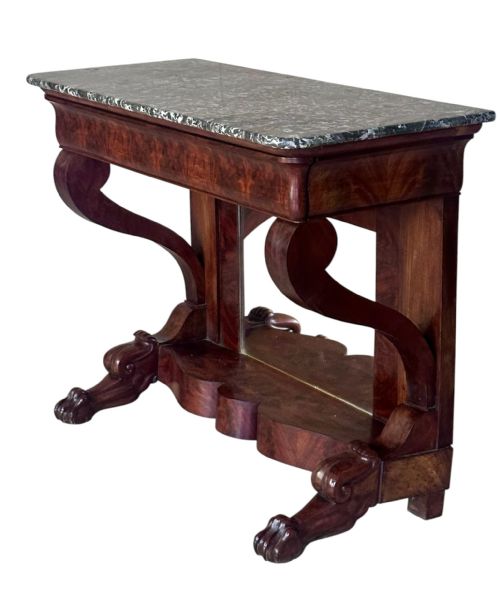
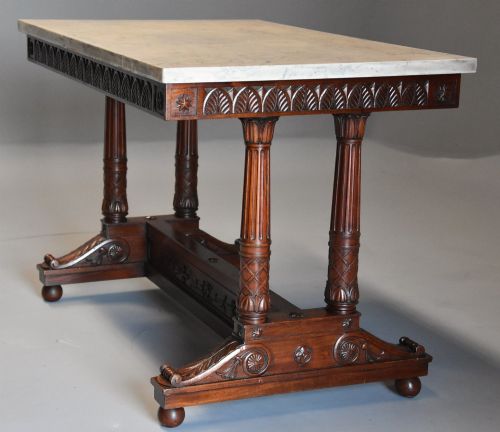
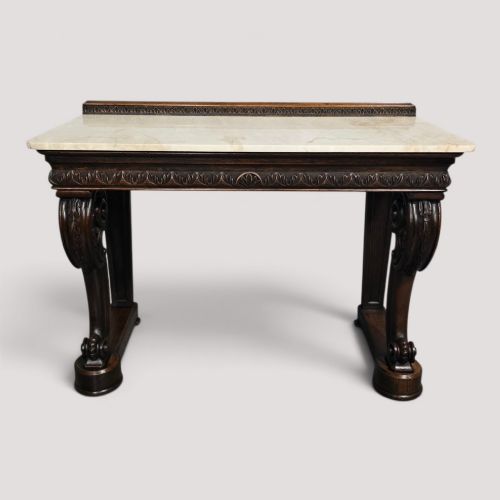
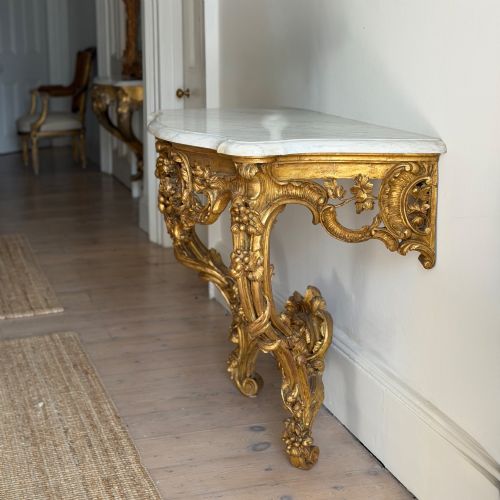
A hall table with marble top appears most often as a console or pier table designed to stand against an entrance wall. These pieces combine heavy stone surfaces with timber or gilded frames originating predominantly in the nineteenth century.
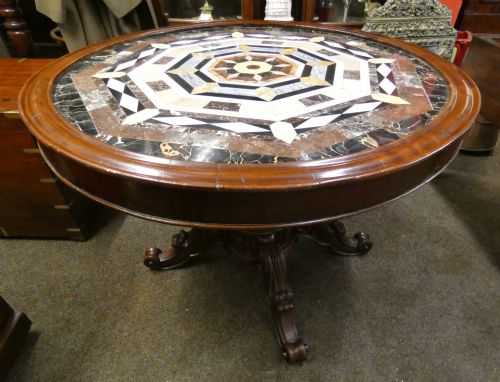
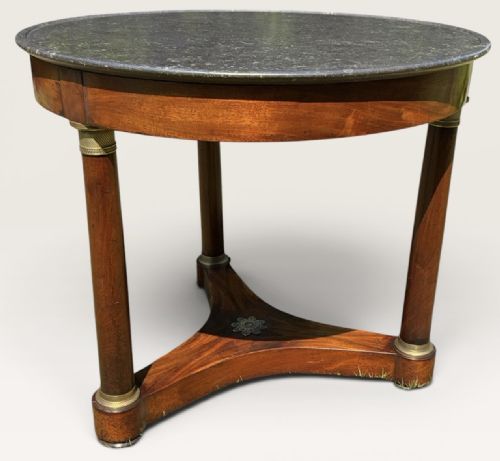
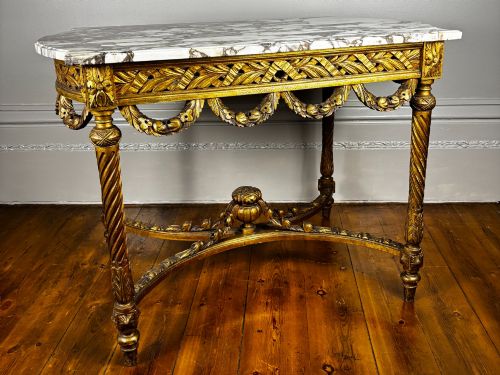
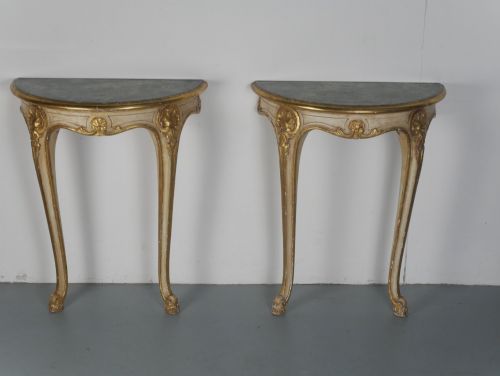
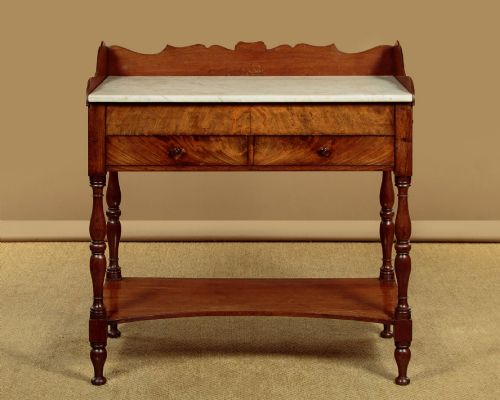
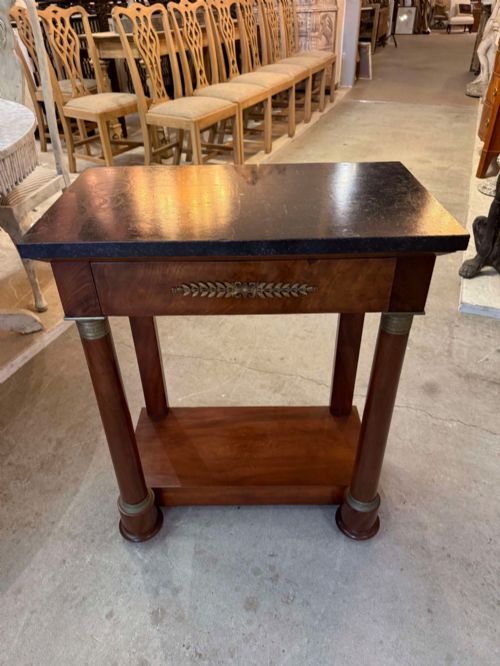
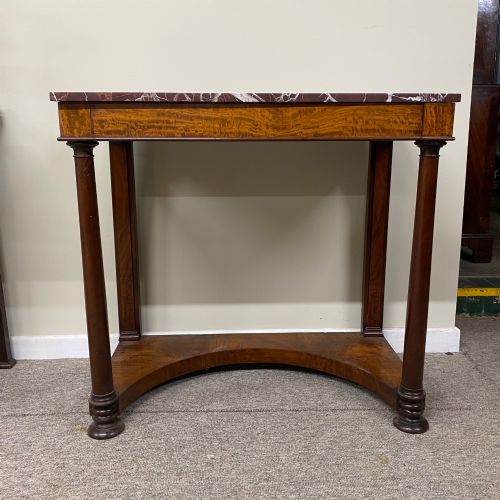
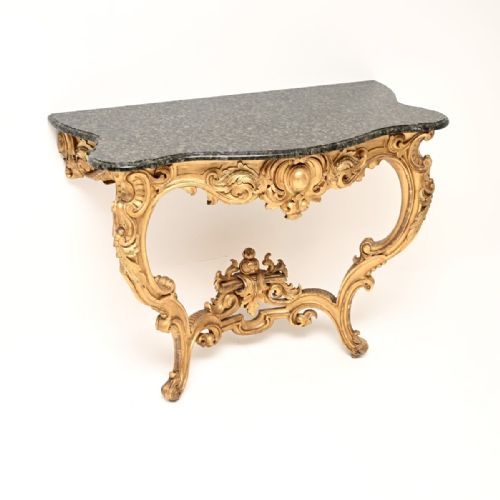
The selection ranges from French Empire and Charles X mahogany consoles to Italian giltwood and Edwardian pine washstands adapted for display. Buyers encounter console tables, centre tables, and pier tables featuring inset marble slabs.
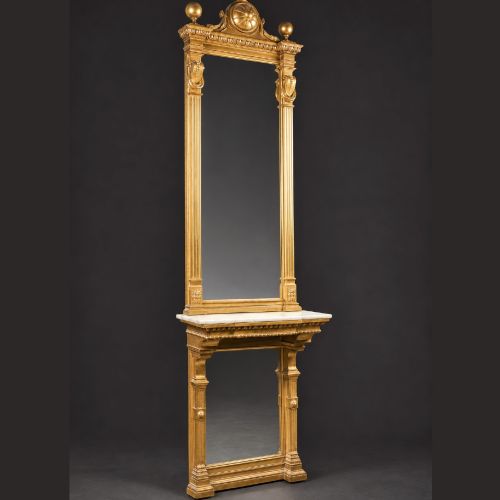
Many examples incorporate architectural details such as mirror backs, carved giltwood supports, and bronze mounts. The form serves primarily as a formal surface in hallways and reception rooms.
Materials and construction
Cabinetmakers constructed the foundational frames using dense timbers like mahogany, walnut, rosewood, and pine. Artisans applied flame veneers, hand-painted finishes, or applied giltwood and ormolu mounts to the wooden structures.
The stone surfaces utilise various marbles, including carrara, rouge, breccia, and onyx, cut and polished to fit the table profile. Stonemasons and cabinetmakers worked in tandem to mount heavy stone slabs securely onto wooden aprons and bases.
Hall Table with Marble Top Retail Price Guide 2026
Typical asking prices for hall table with marble top among the pieces listed under this phrase on Sellingantiques today, from the lower quarter to the upper quarter. They describe what is for sale here now, not the wider market.
Listings feature 19th-century, Victorian, Edwardian, and Regency periods alongside French Empire, Neoclassical, and Rococo Revival styles.
Factors determining quality
The sophistication of the timber carving and the richness of the gilding separate standard production from masterwork pieces. Deeply carved giltwood frames with figural elements or detailed neoclassical motifs demonstrate superior craftsmanship.
The grade and variety of the marble slab strongly influence the distinction of the piece. Selected coloured marbles, specimen stones, and thick, well-polished carrara or breccia slabs indicate higher status manufacture.
Amleto Bertoni
The Hall Table with Marble Top Glossary
- Console table
- A table supported by wall brackets or front legs, designed to stand flat against a wall. These pieces frequently feature decorative aprons matching interior architectural mouldings.
- Giltwood
- Timber coated with a thin layer of gold leaf over a prepared gesso ground. This technique creates a brilliant reflective surface popular in neoclassical and baroque furniture.
- Pier table
- A low table designed to sit specifically beneath a wall pier or mirror. They share close similarities with console tables in eighteenth and nineteenth-century interiors.
- Gueridon
- A small circular table supported by a central pillar or multiple legs. French examples from the nineteenth century often pair these round forms with inset marble tops.
- Ormolu
- Gilded bronze mounts applied to furniture for decorative accent. The technique involves mercury gilding cast bronze elements.
Hall Table with Marble Top: Frequently Asked Questions
Where should I place a marble-top table?
These tables suit entrance halls, living rooms, and narrow reception spaces where a shallow profile keeps pathways clear. Their stable stone surfaces handle daily placement of keys, letters, and decorative objects.
Because many examples were designed as console or pier tables, they often rely on a wall for stability or feature flat backs intended to sit flush against plaster.
How do I care for the marble surface?
Clean the stone using a soft, damp cloth and neutral soap, avoiding acidic cleaning agents that etch polished calcium-based marbles. Prompt wiping prevents staining from liquids left on porous stone varieties.
Support the timber frame and marble top evenly when moving the piece, as heavy stone slabs are typically unattached or drop into wooden rebates.
How do I identify a 19th-century piece?
Examine the timber construction, joinery methods, and the specific marble type used in the top. Nineteenth-century examples frequently employ dense old-growth mahogany or walnut alongside hand-cut dovetails and traditional gesso gilding.
Stylistic cues such as French Empire, Charles X, and Italian Baroque Revival forms provide reliable chronological markers when compared against known period designs.
Did these tables always have mirrors?
Certain console and pier tables incorporated mirror backs to reflect light and amplify interior space. These mirror-backed pieces were specifically fashioned for formal nineteenth-century reception rooms.
Standard console tables and washstands functioned without mirrors, serving purely as flat display surfaces or functional stands.