

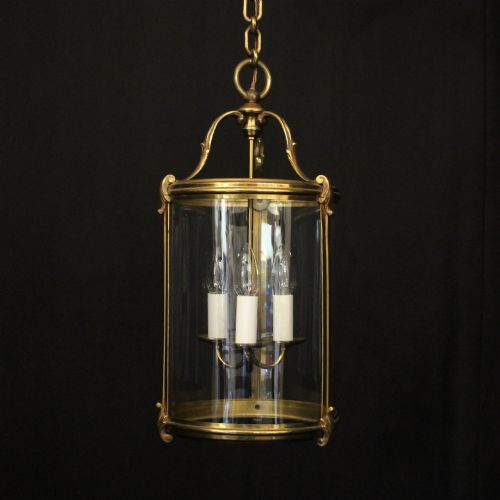
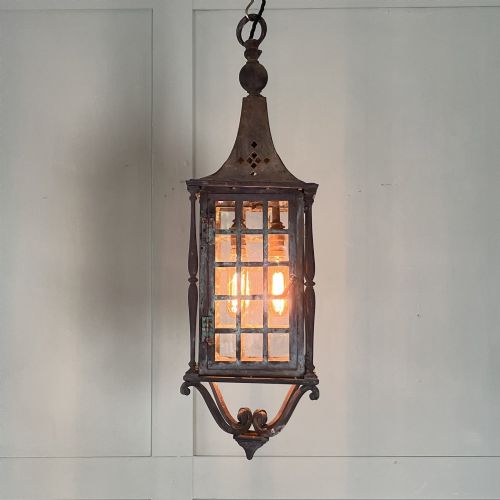
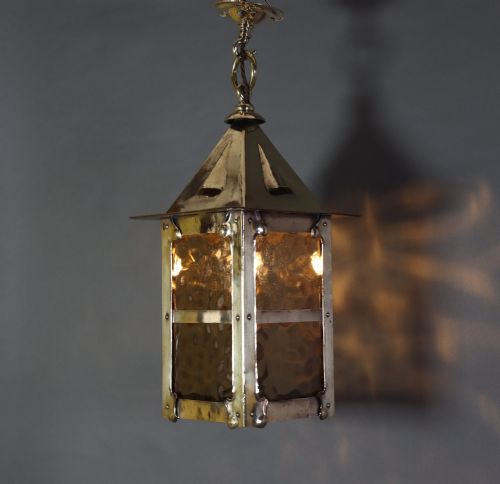
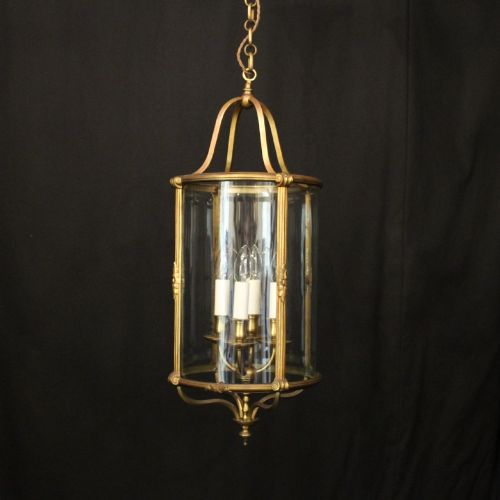
Hall Lantern Pendant
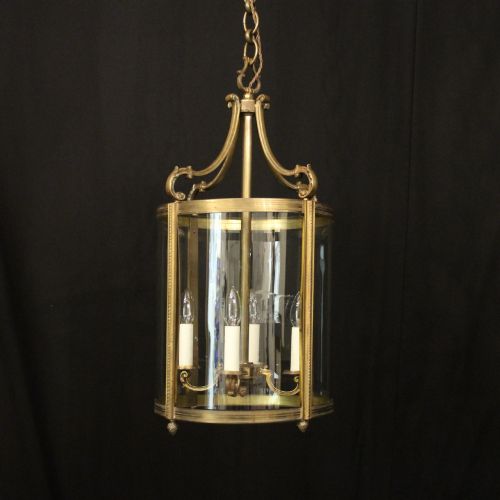
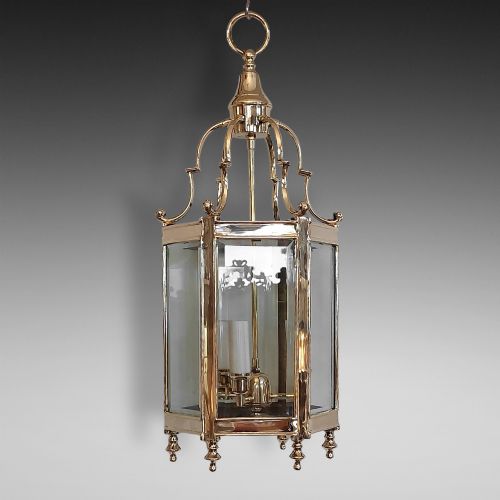
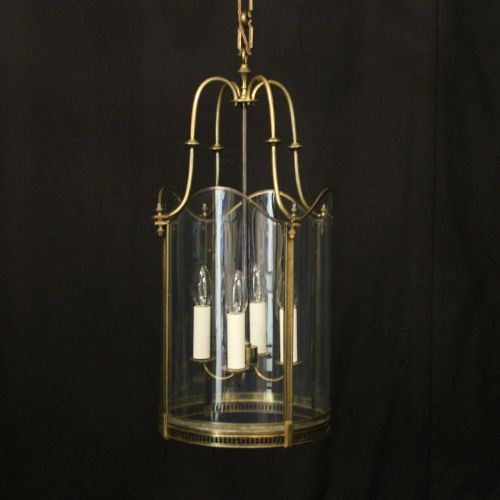
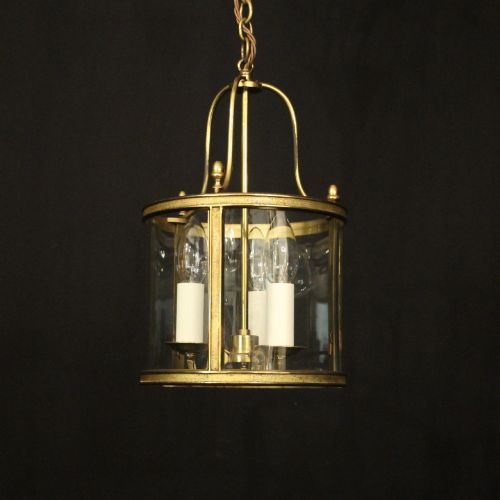
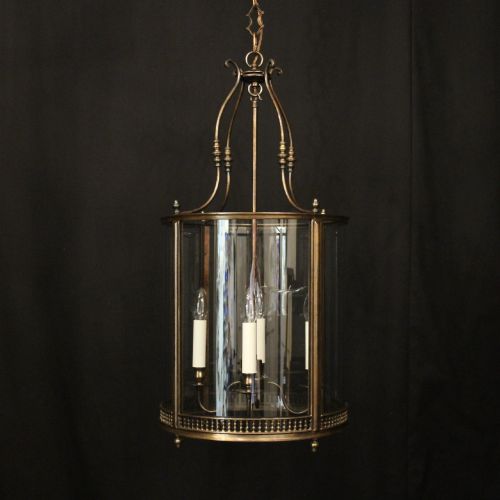
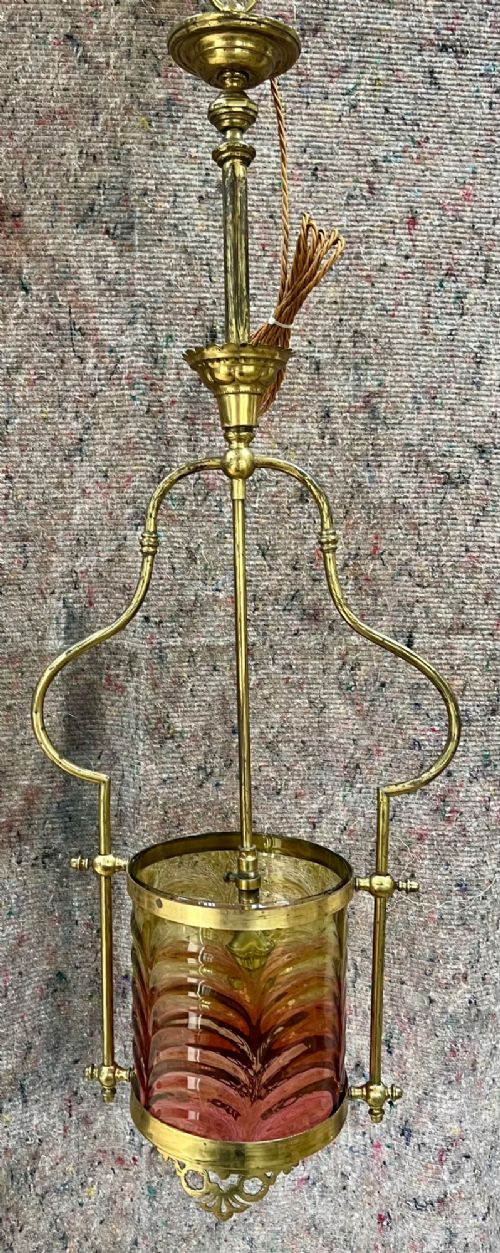
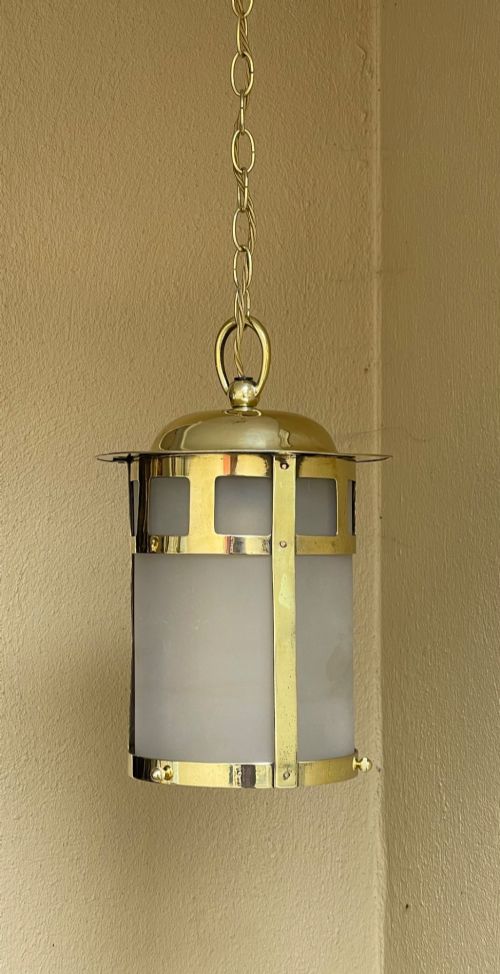
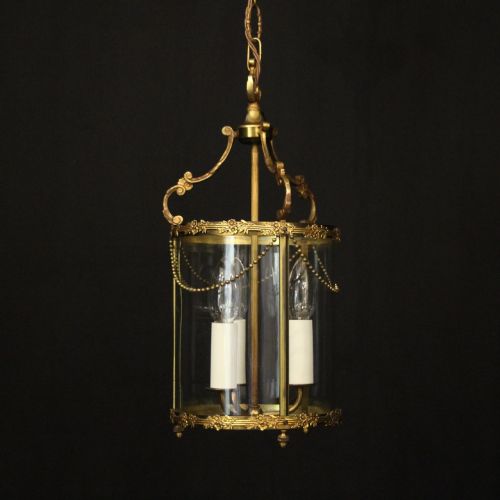
A hall lantern pendant illuminates an entrance passage with architectural presence while casting light through glass panels held by metal frames.
Hall Lantern Pendant
A hall lantern pendant serves as an overhead lighting fixture designed specifically for entrance spaces, corridors, and vestibules. The pieces found here span the Victorian, Edwardian, and early twentieth-century periods, alongside nineteenth-century examples.
Most items take the form of hexagonal or convex hanging lanterns suspended by chains or rods from ceilings. French and English origins dominate the selection, bringing distinct regional interpretations to the entrance hall typology.
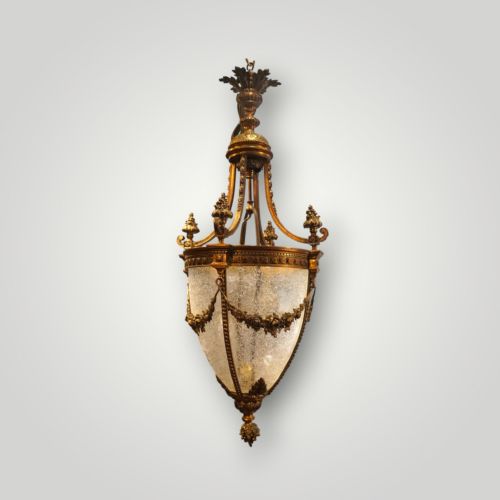
Designs range from simple brass frames with clear panes to elaborate gilded bronze creations housing multiple internal lights. Buyers encounter both single-bulb pendants and substantial multi-light fixtures suited to high ceilings.
How they were made
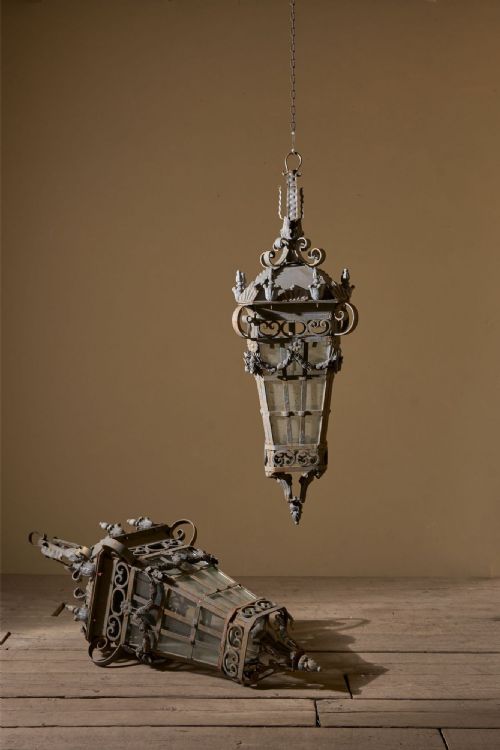
Metalworking forms the structural backbone of these pieces, utilising brass, gilt bronze, gilt brass, wrought iron, and lead to construct rigid skeletal frames. Artisans shaped these metals into complex geometric polygons or smooth convex curves to house the glass elements securely.
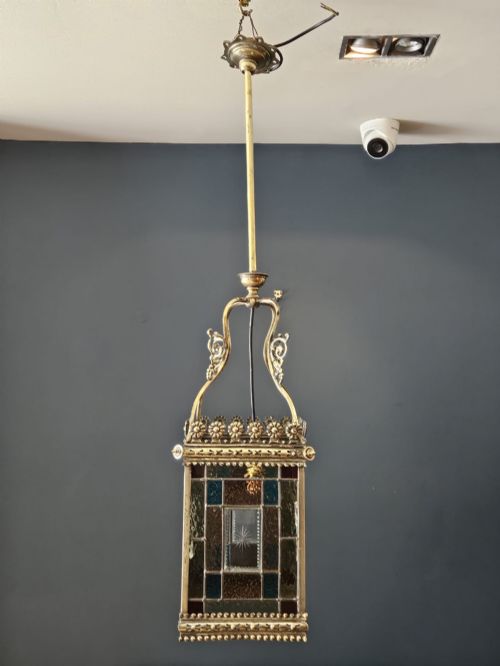
Glazing techniques define the visual character of the lanterns, incorporating leaded glass, hand-blown bullseye panes, and etched glass panels. These panels were individually cut and fitted into metal channels, sometimes secured with opening doors for internal access.
Gilding and patination completed the surface treatment on many bronze and brass examples, providing enduring metallic finishes that resisted tarnishing in high-traffic hallways.
Materials across the inventory include brass, gilt bronze, wrought iron, lead, and glass, spanning the nineteenth century through the 1930s.
What varies in quality
The sophistication of the metal casting and the intricacy of the frame detailing separate standard utilitarian hall lighting from superior decorative examples. Heavy gilt bronze or meticulously formed brass work reflects a higher level of original patronage and workshop skill.
The character of the glass panes introduces significant distinction, where hand-blown bullseye panels, etched ornamentation, or leaded stained glass sections elevate an ordinary lantern into an artistic statement. Simpler flat glass panes represent a more functional approach to hallway illumination.
Scale and proportion dictate presence, with large multi-light fixtures and matched pairs demonstrating ambitious design intended for grand architectural spaces.
The Hall Lantern Pendant Glossary
- Convex
- Curved outward in a rounded shape. This profile gathers and disperses light differently than flat glass panels.
- Bullseye glass
- A circular piece of glass featuring a prominent central thick point formed during the hand-blowing process. It adds distinct visual texture to lantern panels.
- Gilt bronze
- Bronze metal coated with a thin layer of gold or gold-coloured alloy. This technique offers a rich, enduring metallic surface.
- Leaded glass
- Small panes of glass held together by strips of lead cames. This method allows for geometric or decorative window patterns within lantern frames.
- Arts and Crafts
- A design movement prioritising traditional craftsmanship and simple forms. Pieces from this style often feature honest metalwork and visible construction details.
Hall Lantern Pendant: Frequently Asked Questions
Where should a hall lantern pendant hang?
These pendants belong in entrance hallways, stairwells, and high-ceilinged corridors where downward illumination and vertical presence make an immediate impression.
Ensure sufficient clearance beneath the lowest point of the lantern for safe passage underneath.
How do I identify an Edwardian lantern?
Edwardian lanterns typically display lighter framing and cleaner lines than their heavier Victorian predecessors, reflecting a shift toward restrained elegance.
Materials often include polished brass configured in hexagonal or simple geometric shapes dating from around nineteen hundred to nineteen ten.
Are these lanterns electrified?
Many examples on the market have been adapted for modern electrical supply while retaining their historic metal and glass framework.
Some retain older wiring or side-mounted fittings that require professional inspection and updating before installation.
What is French neoclassical style?
French neoclassical lighting draws upon classical architectural motifs such as symmetry, clean proportions, and restrained ornamentation.
These lanterns often utilise gilt bronze or brass to achieve a refined, formal aesthetic suited to traditional interiors.