

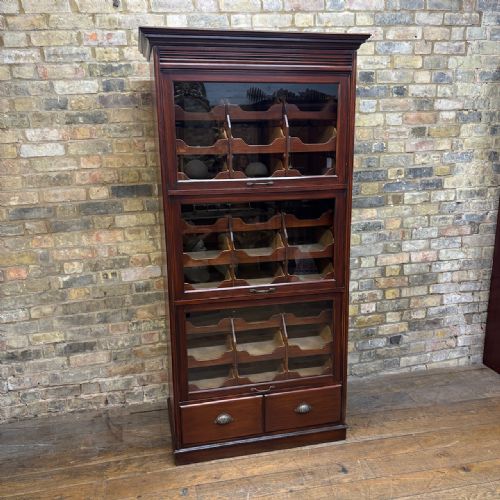



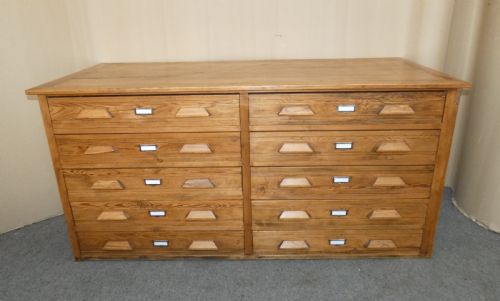


Haberdashery Counter Unit
These haberdashery counter unit pieces bring original commercial shop storage into modern domestic spaces with deep banks of drawers and glass display tops.
Haberdashery Counter Unit
A haberdashery counter unit combines functional retail storage with display capability, originating from drapery and clothing shops of the nineteenth and early twentieth centuries. These pieces typically take the form of substantial banks of drawers, shop fittings, or glass-topped counters designed to showcase small wares.
Buyers searching for a haberdashery counter unit will encounter items spanning the Victorian, Edwardian, and Art Deco periods, alongside 1920s and 1930s commercial designs. Hungarian pine shop fittings and large oak banks of drawers appear frequently across the current selection.
The forms range from multi-drawer chests and painted Hungarian shop fittings to brass-framed display counters and walnut shop chests. Each piece reflects the heavy-duty commercial requirements of past trading floors adapted for contemporary storage.
Materials and construction
Makers constructed these commercial units primarily using timber frameworks of oak, pine, mahogany, and walnut, chosen for structural endurance on busy shop floors. Hardwood fronts paired with robust secondary timbers ensured the drawer banks could withstand daily retail use.
Glazing, brass framing, and chrome hardware appear across display counters and cabinets from the 1930s onward, while earlier Victorian examples rely on fitted timber pulls and painted finishes. Original painted surfaces in white or cream survive on several Hungarian pine shop fittings.
Haberdashery Counter Unit Retail Price Guide 2026
Typical asking prices for haberdashery counter unit among the pieces listed under this phrase on Sellingantiques today, from the lower quarter to the upper quarter. They describe what is for sale here now, not the wider market.
Current listings feature pieces spanning the Victorian period through to the 1930s, constructed from oak, pine, mahogany, walnut, brass, and chrome.
What separates the finest examples
Quality in a haberdashery counter unit rests upon the integrity of the drawer construction, the preservation of original hardware, and the survival of factory finishes or historic paint. Units retaining their original brass frames, handles, and glass show superior craftsmanship.
The scale of the piece and the complexity of the drawer arrangement dictate the tier of the item, with large multi-drawer banks and branded commercial pieces representing the upper range. Unaltered structural timber and minimal replacement parts distinguish the best survivors from heavily restored examples.
Dudley & Co·Saml. Elliott & Sons
The Haberdashery Counter Unit Glossary
- Shop fitting
- Fixtures and furniture built specifically for commercial retail environments. These items were anchored or positioned to display merchandise efficiently to customers.
- Bank of drawers
- A multi-tiered assembly of numerous shallow drawers housed within a single large carcass. This configuration allowed merchants to sort small items like ribbons, buttons, and threads.
- Graduated drawers
- A vertical sequence of drawers that increase in depth from top to bottom. This design provides varied storage capacities within a single chest.
- Commercial utility
- A functional design ethos prioritising durability and practical service over ornamentation. Pieces from this category reflect straightforward industrial manufacturing methods.
Haberdashery Counter Unit: Frequently Asked Questions
What were haberdashery counters used for?
Merchants used these counters to store and display small drapery goods, sewing supplies, and haberdashery items in retail shops. The shallow drawers kept delicate stock organised while glass tops allowed customers to inspect items.
Today, buyers repurpose these units as kitchen islands, studio storage, or hallway chests. The numerous compartments suit the organisation of modern craft materials and clothing.
How do I date an antique shop counter?
Dating relies on timber selection, hardware styles, and construction techniques visible across the piece. Victorian examples often feature solid oak or pine with hand-cut joints, while 1930s pieces introduce chrome, brass framing, and polished walnut.
Maker stamps or plaque labels, where present, provide definitive attribution to firms such as Dudley & Co. Paint layers and glass types also offer clues to the manufacturing era.
Are these units suitable for kitchens?
These large timber units fit well into domestic kitchens when used as freestanding islands or primary storage banks. The deep drawers accommodate cookware, cutlery, and provisions.
Care must be taken with historic painted finishes or unsealed timber near moisture and heat sources. Many buyers position them to add period character to modern interior spaces.
How should I care for historic timber?
Maintenance involves dusting with a dry cloth and avoiding excessive exposure to direct sunlight or fluctuating humidity. Wax can be applied sparingly to nourish unpainted hardwood surfaces.
Original painted finishes require gentle cleaning without harsh chemical solvents to preserve the historic patina. Maintaining stable room conditions prevents the timber from warping or splitting.