


Gustavian Painted Furniture
Gustavian painted furniture brings pale Scandinavian light and neoclassical lines into a room, offering functional storage and seating built from pine and hardwoods.
Gustavian Painted Furniture
Gustavian painted furniture comprises items originating primarily from Sweden, drawing on late eighteenth-century neoclassical taste adapted to northern European traditions. Buyers seek these pieces for their restrained proportions, fluted columns, and pale, weathered surfaces that brighten domestic interiors.
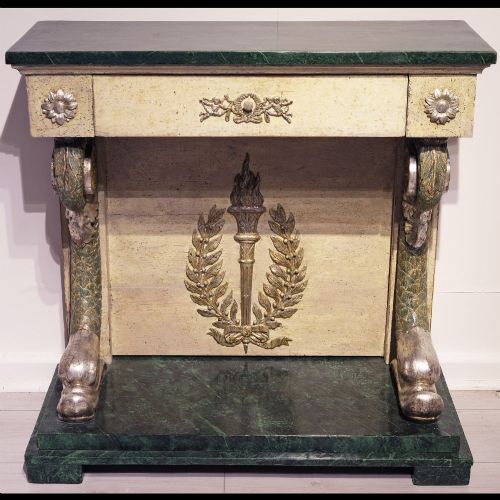
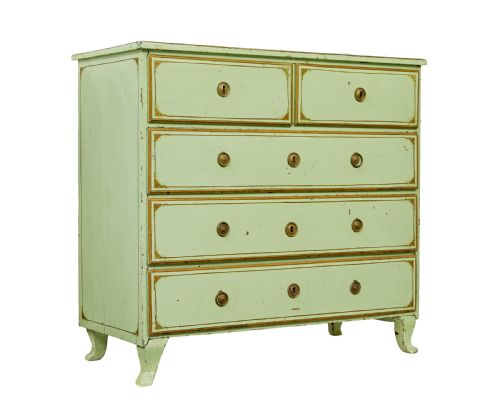
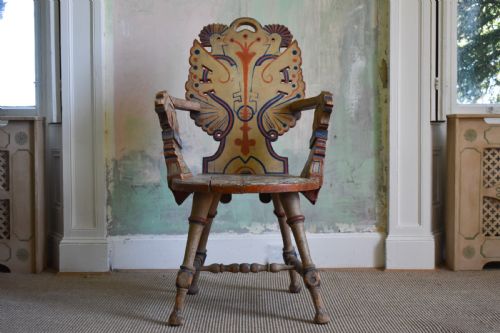
The selections available here range from eighteenth-century commodes and console tables to nineteenth-century pine chests of drawers, benches, and cupboards. Alongside strictly Swedish items, the range incorporates related Scandinavian country pieces, folk art armchairs, and continental provincial cabinets.
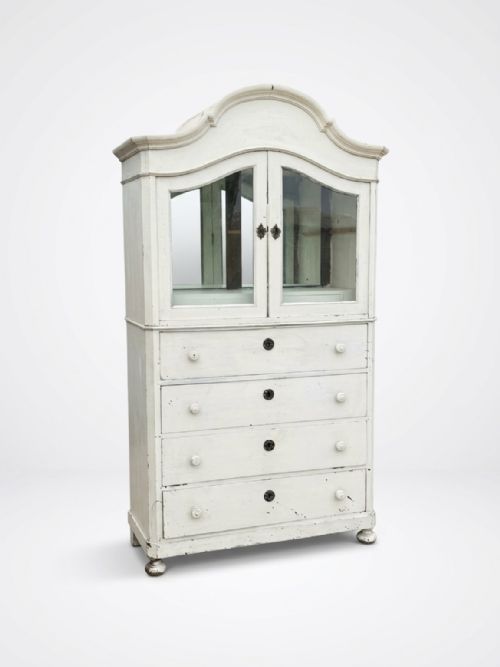
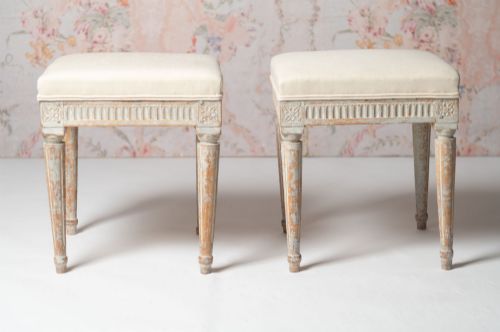
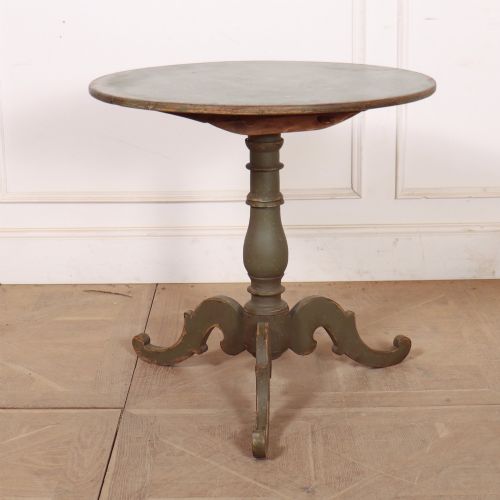
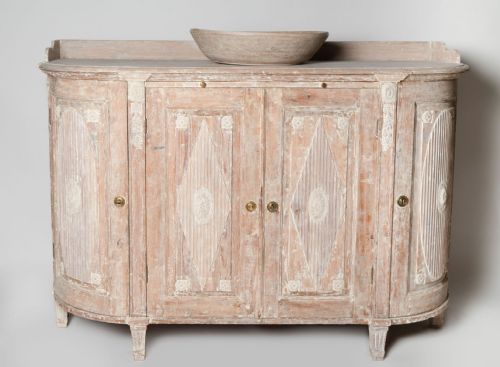
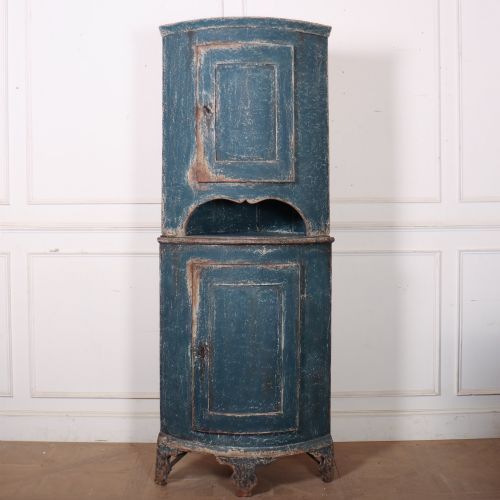
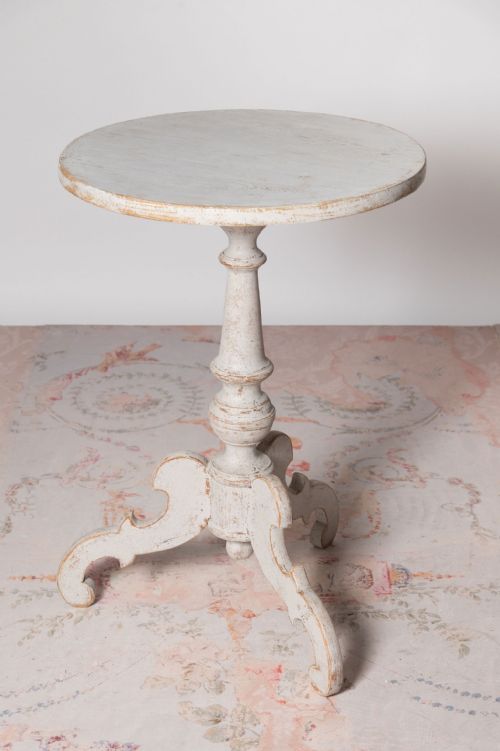
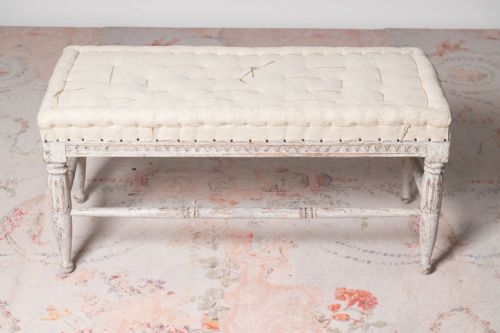
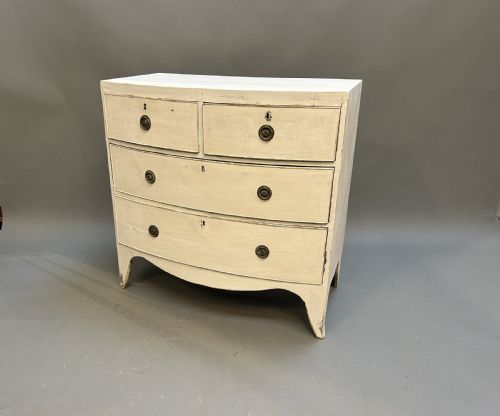
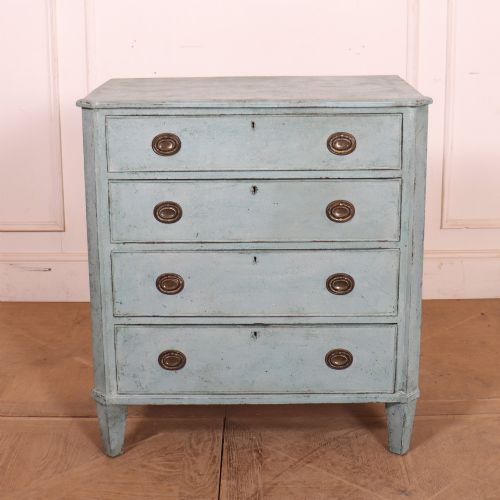
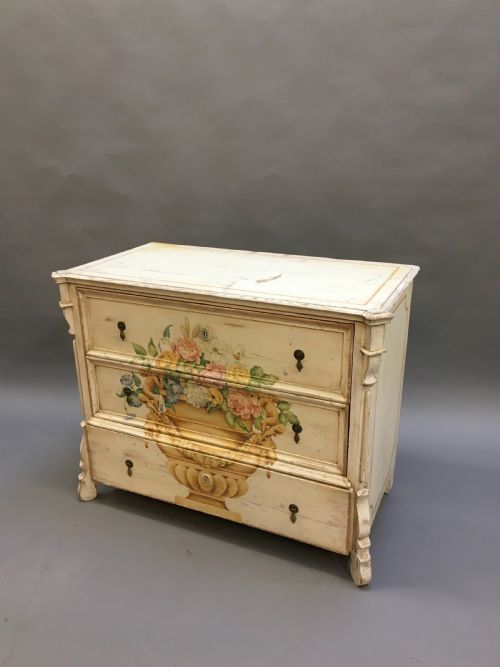
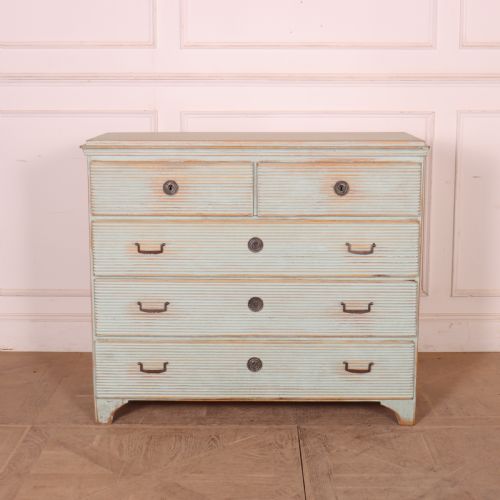
Storage forms predominate, particularly serpentine and bowfronted commodes alongside tall cupboards and kitchen cabinets. Tables, stools, and side seating appear frequently, offering practical utility with distinctive regional character.
Materials and Construction
Makers relied primarily on native pine and softwoods for carcass construction, occasionally employing oak or ash for structural strength and drawer linings. Iron and brass hardware provided functional hinges, key escutcheons, and drawer pulls.
Surfaces received layers of lead-based or oil paints, often applied in muted greys, whites, and pale blues designed to reflect available daylight. Over generations, these painted finishes acquired natural wear, patination, and sometimes scraped layers revealing earlier colours underneath.
Listings include pine, oak, ash, iron, and brass alongside painted wood and linen across eighteenth and nineteenth-century pieces.
Assessing Quality and Execution
Quality rests heavily on the integrity of the painted surface, distinguishing original scraped or layered paint from later decorative overpainting. Early neoclassical proportions with crisp hand-carved fluting and refined serpentine drawer fronts command greater appreciation than plain provincial work.
Structural joinery and timber selection also divide categories, as pieces retaining original hardware, functional locks, and sound pine carcases demonstrate superior craftsmanship. The balance between sophisticated court styles and simpler folk art variations determines the character of each individual item.
The Gustavian Painted Furniture Glossary
- Gustavian
- The Swedish neoclassical style spanning the late eighteenth and early nineteenth centuries, characterised by symmetry and restrained classical ornamentation.
- Commode
- A low chest of drawers or cabinet, often featuring serpentine or bowfronted profiles and decorative painted finishes.
- Slagbord
- A traditional Scandinavian dropleaf dining table supported by swinging wooden gates.
- Demilune
- A half-moon shape commonly applied to the tops and frames of console tables and commodes placed flush against walls.
- Scraped paint
- A conservation or decorative state where upper coats of paint are selectively removed to expose historical colour layers underneath.
Gustavian Painted Furniture: Frequently Asked Questions
How do I care for painted furniture?
Dust surfaces regularly with a soft, dry cloth to protect the historic paint layers from abrasion. Avoid chemical cleaners and direct sunlight, which can cause fading and drying in old pine timbers.
Maintain stable room humidity to prevent the wood from shrinking or expanding, which stresses both the joinery and the painted finish.
Are these pieces from the eighteenth century?
The selection spans multiple periods, including authentic eighteenth-century neoclassical examples alongside nineteenth-century interpretations and provincial pieces. Each listing indicates the specific period of manufacture associated with the item.
Craftsmen continued utilising traditional Scandinavian forms and painting techniques well into the Victorian era and the early twentieth century.
How do I identify original paint?
Original painted surfaces show natural wear patterns, subtle craquelure, and microscopic traces of underlying layers accumulated through age and use. Scraped paint examples reveal deliberate historic colour transitions beneath the surface.
Modern redecoration typically presents an even, uniform texture without the authentic patination acquired over generations of domestic life.