




Gustavian Chest
A gustavian chest brings pale elegance and generous storage to a room through painted wood and restrained neoclassical proportions.
Gustavian Chest
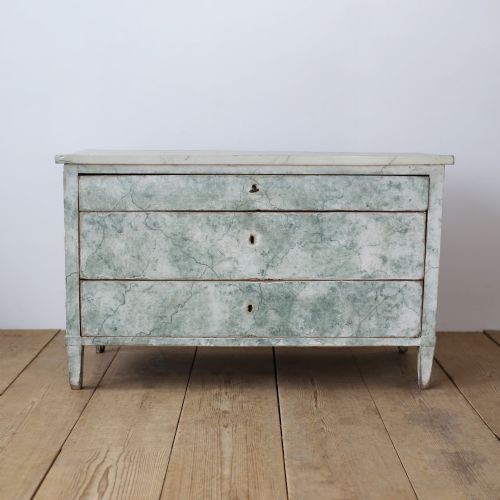
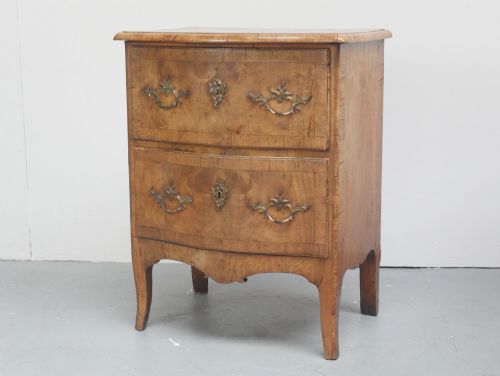
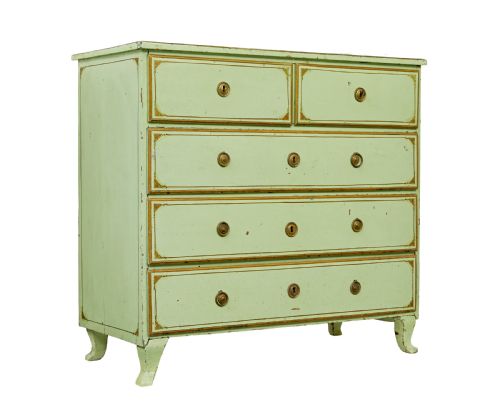
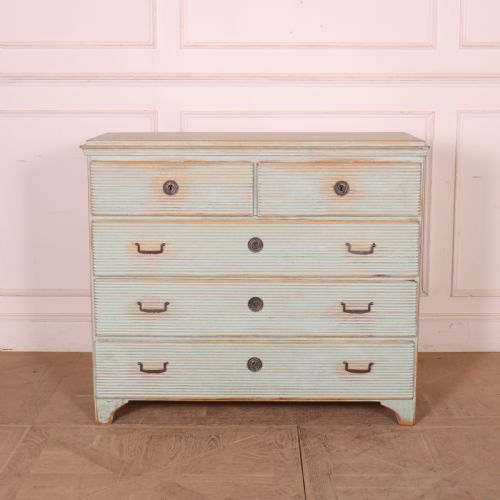
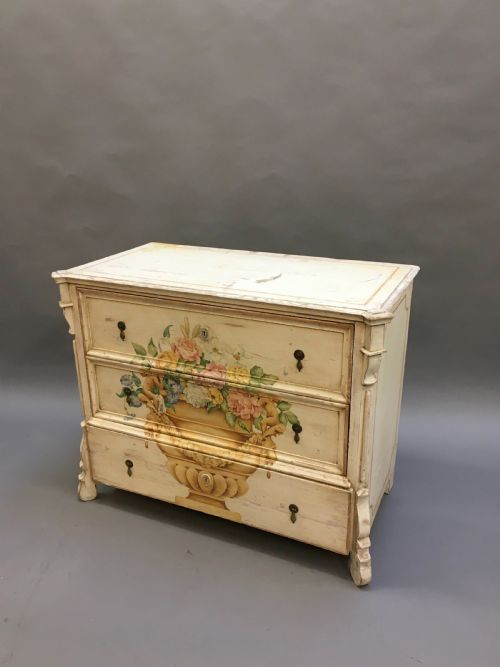
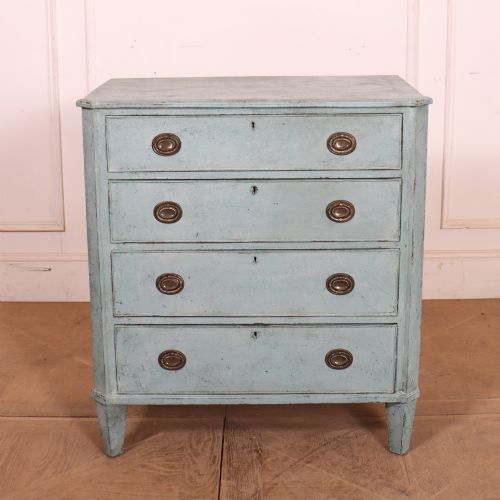
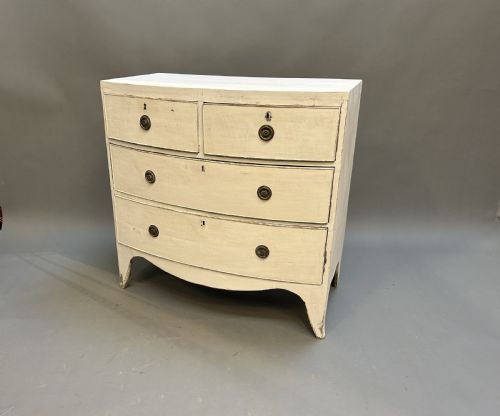
A gustavian chest typically appears as a multi-drawer commode or cabinet originating from Scandinavian workshops, particularly Swedish makers influenced by French neoclassical design. These pieces often feature serpentine fronts, fluted drawer fronts, or plain rectangular drawers built to house household linen and clothing.
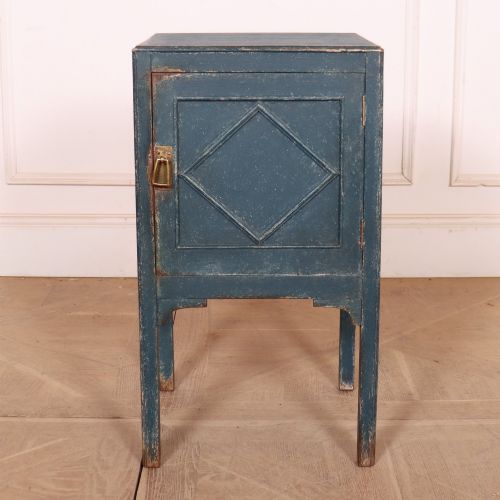
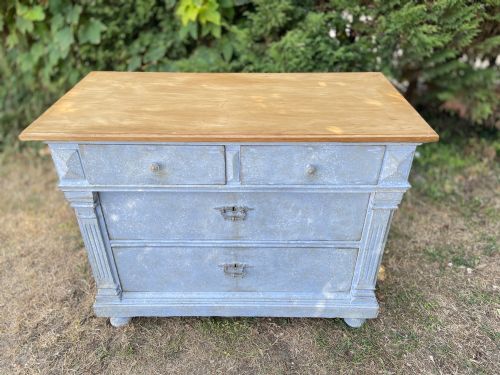
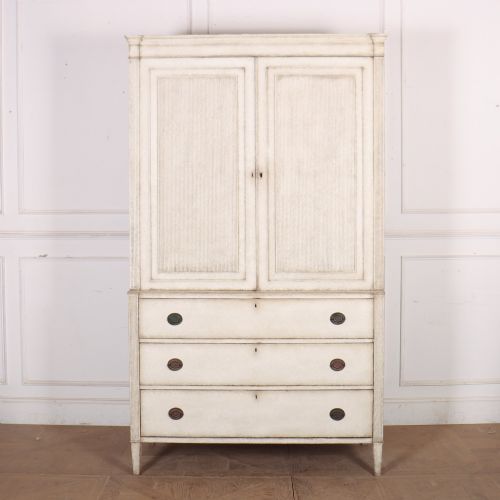
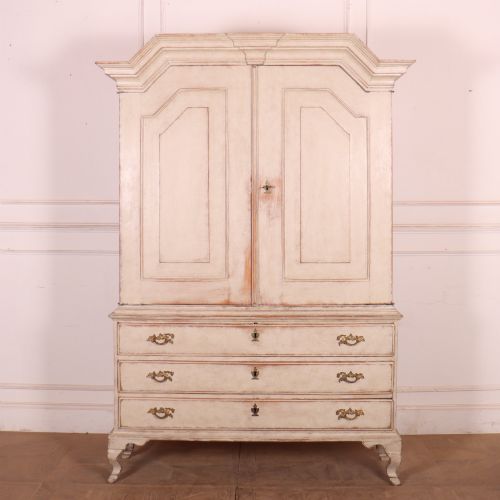
The version most commonly encountered on this page is the painted pine or birch chest dating from the nineteenth century, often finished in muted greys or white. Alongside these, examples emerge from the eighteenth century, as well as related forms such as linen cupboards, tall boys, and bonnet top cabinets.
Makers working within the Scandinavian country and Dutch provincial styles adapted these forms with local materials, producing commodes with faux marble tops or curved facades. The selection ranges from compact two-drawer commodes to larger case furniture carrying detailed hand painting.
How they were made
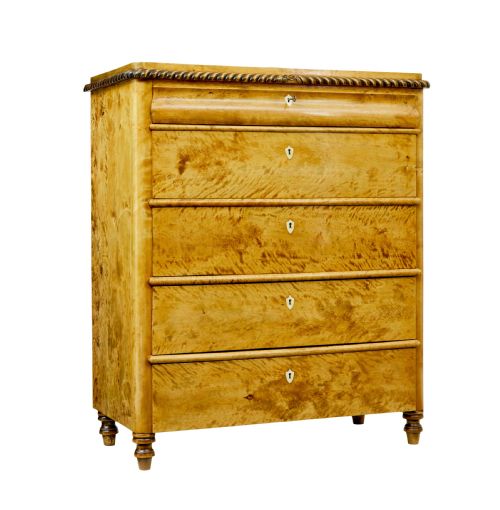
Construction relies primarily on native timbers such as pine, oak, and birch, selected for their stability in northern European climates. Woodworkers shaped drawer fronts and frames using solid timber, sometimes incorporating flame birch veneers or carved detailing on carcases.
Surface finish defines much of the construction process, with craftsmen applying multiple layers of paint to pine and hardwood bases. Iron and brass hardware, including decorative handles and escutcheons, complete the assembly alongside secondary woods like ash and metal reinforcement where needed.
Gustavian Chest Retail Price Guide 2026
Typical asking prices for gustavian chest among the pieces listed under this phrase on Sellingantiques today, from the lower quarter to the upper quarter. They describe what is for sale here now, not the wider market.
Listings feature pieces spanning the eighteenth and nineteenth centuries, constructed from pine, birch, oak, and ash.
What varies in quality
Quality reveals itself in the harmony of the proportions and the precision of the cabinetwork, particularly where serpentine curves and fluted drawer fronts meet the main frame. Pieces that maintain crisp lines and balanced decorative painting demonstrate a higher level of workshop competence.
The integrity of the timber and the retention of original or period-appropriate painted surfaces separate standard utilitarian items from finer decorative examples. Subtle details like caddy tops, hand-painted decoration, and well-fitted drawers indicate superior craftsmanship.
The Gustavian Chest Glossary
- Commode
- A low chest of drawers or cabinet, often featuring a serpentine or bowed front. These pieces serve as practical storage furniture with a decorative focus.
- Serpentine
- A furniture front curving inward at the centre and outward at the ends in a gentle wave shape. This contour requires skilled woodworking to execute cleanly.
- Flame birch
- Timber cut from birch trees to reveal a distinctive, flamy grain pattern running through the wood. Furniture makers utilised this veneer for its visual depth.
- Caddy top
- A raised or moulded tabletop style with stepped edges, commonly found on nineteenth-century case pieces. It adds architectural definition to the upper surface.
- Neoclassical
- A design movement drawing inspiration from classical antiquity, characterised by straight lines, symmetry, and restrained ornamentation. This aesthetic defines the gustavian style.
Gustavian Chest: Frequently Asked Questions
What is a gustavian chest?
A gustavian chest is a storage piece originating from Scandinavian traditions, combining neoclassical elegance with functional drawers. They are typically constructed from pine or birch and finished with painted surfaces.
These pieces provide substantial storage capacity while maintaining a light, restrained profile suited to various interior settings.
How do I date a painted commode?
Dating relies on examining construction methods, timber choices, and the composition of the paint layers. Eighteenth-century examples often show hand-cut joinery and aged surface patination.
Nineteenth-century pieces frequently utilise pine or flame birch with machine-sawn elements and standardised hardware fittings.
Where were these chests made?
The pieces listed originate predominantly from Sweden, with additional examples coming from Denmark and the Netherlands. Regional workshops adapted French neoclassical styles into local vernacular designs.
Scandinavian country and provincial makers favored soft woods and pale painted finishes over dark imported timbers.
How do I care for painted wood?
Painted surfaces require gentle cleaning with a soft, dry cloth to prevent dust accumulation and moisture damage. Avoid harsh chemical cleaners that can strip historic paint layers.
Keep the furniture away from direct heat sources and strong sunlight to protect the timber substrate and finish from cracking.