


Guilloche Enamel Pendant
A guilloche enamel pendant brings patterned metalwork beneath translucent colour, offering precise geometric depth across Victorian, Edwardian and Art Deco designs.
Guilloche Enamel Pendant
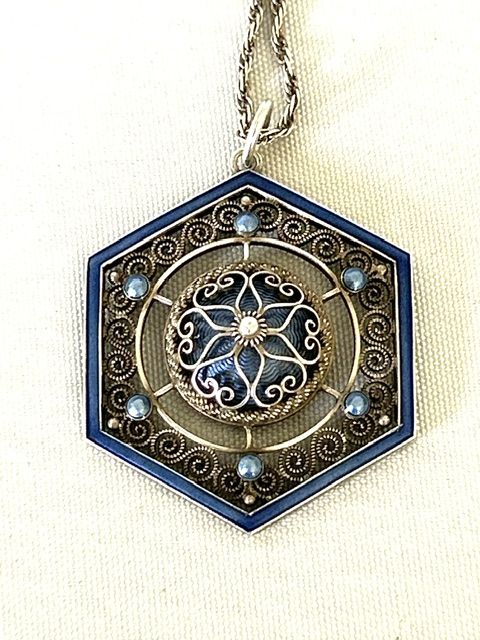
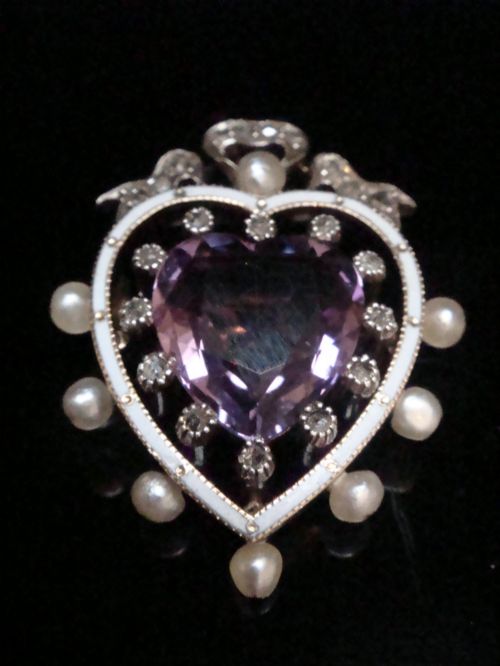
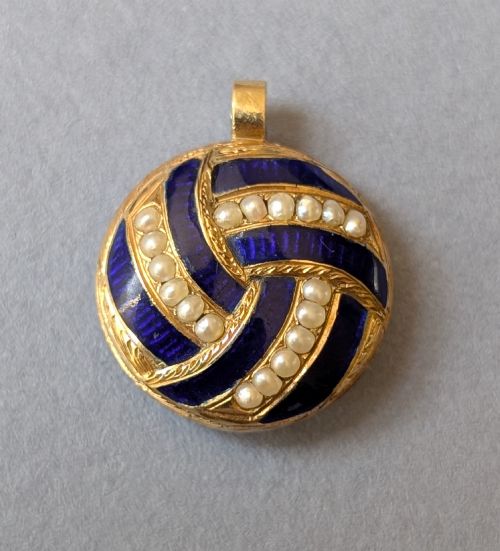
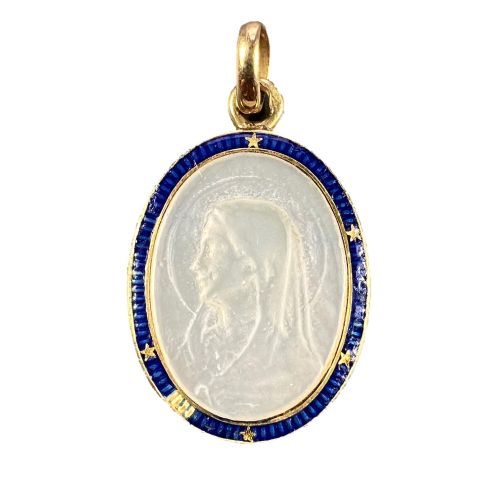
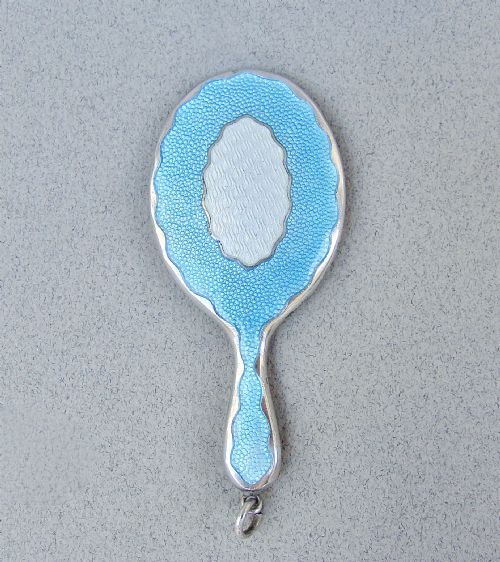
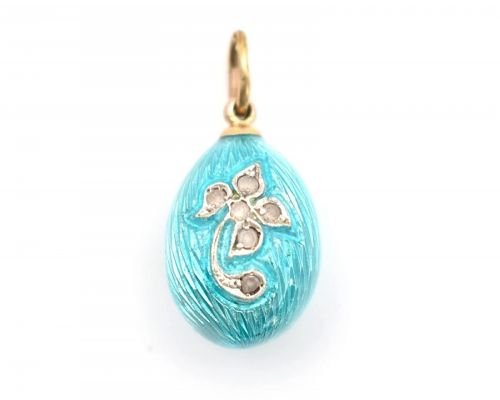
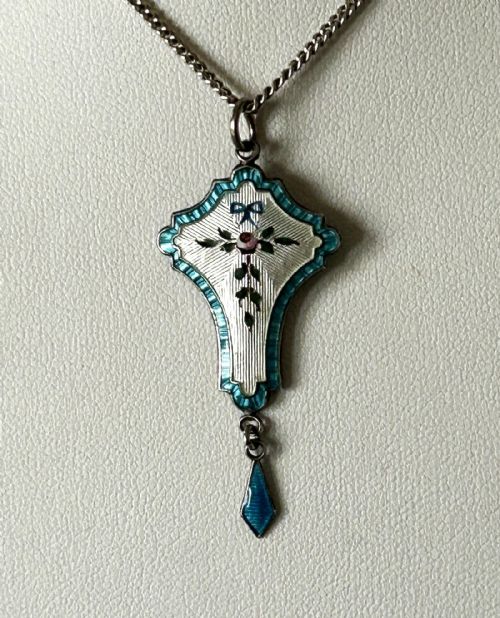
A guilloche enamel pendant is a small decorative piece suspended from a chain or ribbon, featuring machine-turned engraving beneath a coloured vitreous coating. The forms span simple hearts, eggs, compacts, and floral motifs that originate across British, French, Scandinavian, and Russian workshops. Buyers find these items grouped alongside related personal accessories like lockets, brooches, and vanity mirrors.
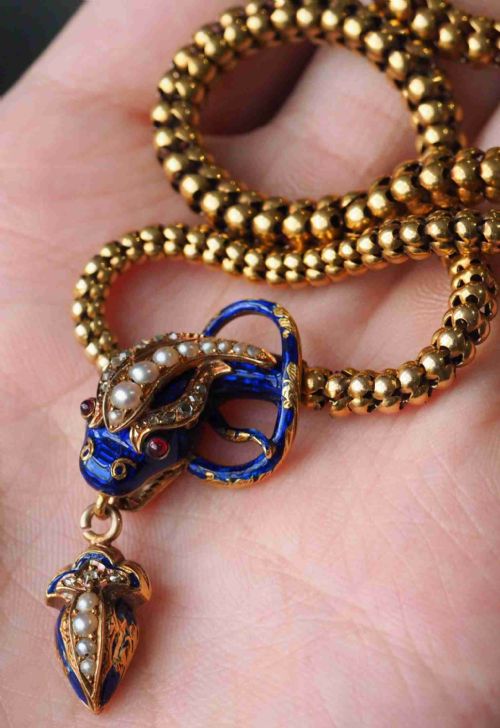
The pieces appearing most frequently on this page combine silver or gold with translucent enamel over engine-turned patterns. Victorian and Edwardian examples lean towards heart shapes and garnets, while Art Deco items introduce geometric compactness in silver. Scandinavian makers contribute distinctive torque necklaces and floral discs from later decades.
How they were made
Craftsmen used rose engines and straight-line machines to engrave precise, repeating geometric patterns into a metal base of silver, sterling silver, or yellow gold, typically ranging from 9ct to 18ct purity. This mechanical incision created the underlying texture that catches the light through the final surface.
Vitreous enamel, composed of powdered glass fused by heat, was applied over the engraved metal. Coloured pigments produced shades of blue, green, and red, sometimes enhanced by the inclusion of seed pearls, rose cut diamonds, or mother of pearl.
Guilloche Enamel Pendant Retail Price Guide 2026
Typical asking prices for guilloche enamel pendant among the pieces listed under this phrase on Sellingantiques today, from the lower quarter to the upper quarter. They describe what is for sale here now, not the wider market.
The inventory spans Victorian, Edwardian, Art Nouveau, Art Deco, and Scandinavian Modern design periods.
What varies in quality
The clarity and depth of the enamel layer determine much of the visual success of the piece, with superior examples showing an even thickness that allows the underlying engine-turned pattern to remain crisp and legible. The fineness of the machine engraving itself dictates how sharply the light reflects off the metallic substrate underneath.
The choice of precious metal framework, whether high-carat gold, sterling silver, or silver gilt, dictates the structural integrity of the mount. Master makers achieved greater refinement in the precision of their hinged elements, gemstone settings, and integrated suspension loops.
Marius Hammer·Henry Williamson·Henry Matthews·Henry Perkins and Sons·David-Andersen·Meyle and Mayer·Charles Horner
The Guilloche Enamel Pendant Glossary
- Guilloche
- A decorative technique where a mechanical lathe engraves a precise, intricate pattern into a metal surface. This forms the textured base visible beneath translucent enamel layers.
- Vitreous enamel
- A material made by fusing powdered glass to a metallic substrate at high temperatures. It provides a glossy, coloured surface that resists wear.
- Puff pendant
- A rounded, three-dimensional pendant form often shaped like a heart or a locket. These pieces usually contain hollow interiors designed to hold small mementos.
- Engine turning
- The mechanical process of cutting precise geometric designs into metal using a specialised lathe. It creates the characteristic sunburst or wave patterns seen on these jewels.
- Silver gilt
- Silver that has been coated with a thin layer of gold on its exterior surface. This treatment combines the working properties of silver with the appearance of solid gold.
Guilloche Enamel Pendant: Frequently Asked Questions
What is guilloche enamel?
Guilloche enamel is a decorative finish created by applying translucent coloured glass over a mechanically engraved metal base. The technique allows the underlying geometric pattern to show through with a distinct three-dimensional depth.
This method was widely utilised across jewellery and vanity items during the late nineteenth and early twentieth centuries. The combination of engraved metal and vitreous coating produces a bright, light-catching surface.
How do I date a pendant?
Dating a pendant relies on examining the hallmarks, materials, and overarching design style evident in the piece. Victorian and Edwardian examples often feature high-carat gold and natural pearls, whereas Art Deco items showcase geometric silver compacts and crisp colour palettes.
Assay office marks and maker stamps provide precise geographical and temporal markers for British pieces. Stylistic shifts, such as the transition from organic Art Nouveau curves to streamlined modernist lines, help narrow the period further.
How were these pendants worn?
These pieces were typically suspended from precious metal chains, ribbons, or torque necklaces around the neck. Many designs functioned simultaneously as pendants and brooches, offering versatility in how they could be displayed on garments.
Smaller examples served as functional charms on bracelets or fob pendants on pocket watch chains. Locket variants also housed miniature portraits or locks of hair against the wearer's body.
Are these items solid gold?
The metallic composition varies across the pieces, encompassing sterling silver, silver gilt, and yellow gold ranging from lower carats up to 18ct. Hallmarks stamped into the metal indicate the specific purity standard used by the maker.
Some items combine silver mounts with gold details or incorporate base metals in specific compact components. Examining the reverse or interior edges usually reveals the stamped assay indicators of the period.