


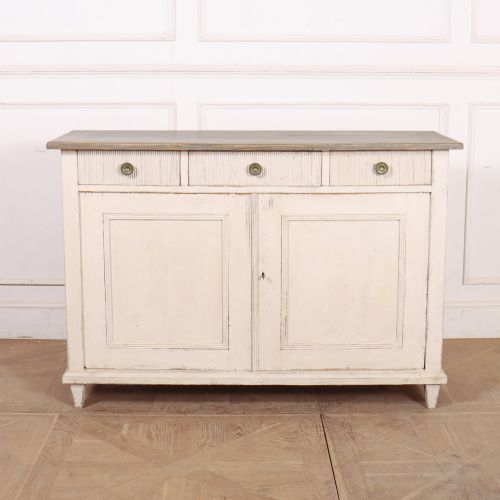
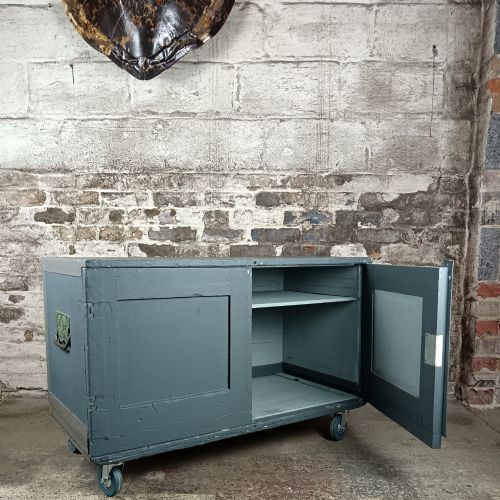
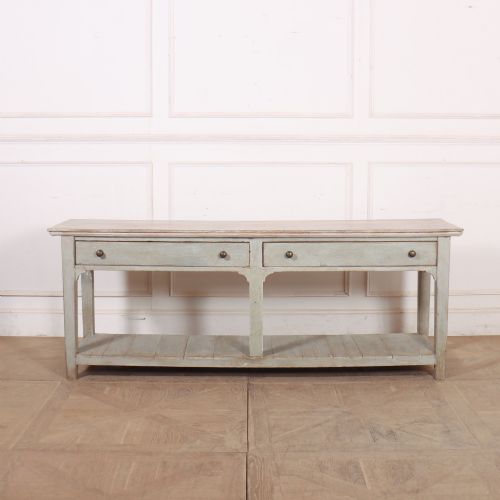


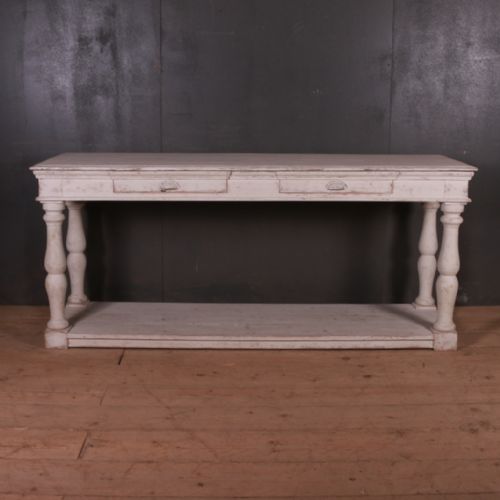


Grey Wooden Sideboard
A grey wooden sideboard brings substantial rustic storage into a room, offering surface space and enclosed shelving shaped by centuries of country craftsmanship.
Grey Wooden Sideboard
When you search for a grey wooden sideboard, you are looking at large storage furniture that combines the utility of cupboards and drawers with painted or natural wooden finishes. The pieces appearing here span country styles like French, Scandinavian, and English, alongside formal periods stretching back to the eighteenth and nineteenth centuries.
The version you are most likely to meet on this page is a painted wooden dresser base, server, or commode originating from rural workshops in Britain or continental Europe. These items range from sturdy Welsh servers and English potboard bases to Swedish enfilades and French provincial buffets, each offering deep cabinets and wide surfaces.
Many examples lean heavily into country aesthetics, showing distressed painted surfaces in muted tones that complement domestic interiors. Alongside traditional sideboards, you will encounter related forms such as marble-topped commodes, Drapers consoles, and military campaign chests that share the same practical storage footprint.
Materials and construction
Carpenters built these items primarily using solid pine, walnut, burr elm, and oak, relying on heavy timber frameworks to support marble tops and heavy drawers. Surfaces were frequently treated with layers of paint or left as polished wood, whilst metal fittings such as brass handles and iron hinges provided operational hardware.
Joinery methods varied according to region and period, encompassing dovetailed drawer boxes, pegged tenon frames, and panelled door construction. Regional cabinetmakers incorporated practical elements like potboards, deep shelving tiers, and transportable packing cases designed for durability and daily use.
Grey Wooden Sideboard Retail Price Guide 2026
Typical asking prices for grey wooden sideboard among the pieces listed under this phrase on Sellingantiques today, from the lower quarter to the upper quarter. They describe what is for sale here now, not the wider market.
One listed military chest doubles as a transportable packing case, ready for an impromptu nineteenth-century expedition.
Judging quality and craftsmanship
The distinction between standard utility items and finer pieces lies in the selection of primary timbers, such as burr elm or walnut, and the integration of heavy marble slabs. Better examples display crisp joinery, well-fitted drawers that slide smoothly within their runners, and original brass or iron hardware.
Surface finish also determines the standing of a piece, with authentic aged paint layers holding more character than modern cosmetic alterations. The integrity of the structural frame, from stable potboard bases to tightly fitted cupboard doors, dictates how well the furniture has survived through the nineteenth and eighteenth centuries.
The Grey Wooden Sideboard Glossary
- Potboard base
- An open lower shelf beneath a dresser base historically used for storing heavy pots and pans. This structural feature provides extra stability to the legs.
- Commode
- A low chest of drawers or cabinet originating in France, often featuring decorative marble tops and fine parquetry. These pieces served both decorative and functional storage roles in formal rooms.
- Enfilade
- A long sideboard or buffet designed for dining rooms, typically featuring a series of adjoining cabinets. Swedish versions frequently showcase painted country finishes.
- Campaign chest
- A sectional wooden chest built in parts with recessed brass handles for ease of transport during military deployment. These chests split into stacked sections for travel.
- Drapers console
- A long table form adapted from retail counters, offering an extended surface and shallow storage. They are suited for hallway or living room placement.
Grey Wooden Sideboard: Frequently Asked Questions
What is a dresser base?
A dresser base is the lower portion of a traditional kitchen or dining room dresser, featuring rows of drawers and enclosed cupboards beneath a flat wooden top.
Unlike tall dressers with plate racks attached above, these low units function independently as sideboards for serving food and storing household items.
How do I date an antique commode?
Dating relies on examining construction techniques, such as hand-cut dovetails on drawer boxes, type of timber used, and the style of the hardware.
Eighteenth-century examples often feature heavier oak or walnut carcasses with marble tops, whilst nineteenth-century pieces may show regional painted finishes.
Can I use a marble-topped sideboard daily?
Marble tops provide a durable, heat-resistant surface that handles daily use in dining rooms or kitchens very well, provided acidic spills are wiped promptly.
The stone adds significant weight to the wooden base, making these pieces exceptionally stable for storage and display.
What is Gustavian style furniture?
Gustavian style represents the Swedish adaptation of French neoclassical design, characterised by lighter proportions, fluted legs, and muted painted finishes.
Furniture from this tradition often combines functional storage with restrained carving, fitting neatly into modern interiors.