

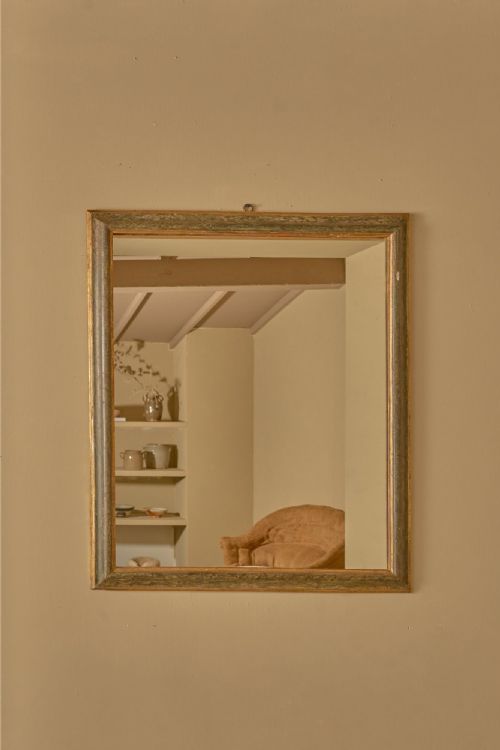

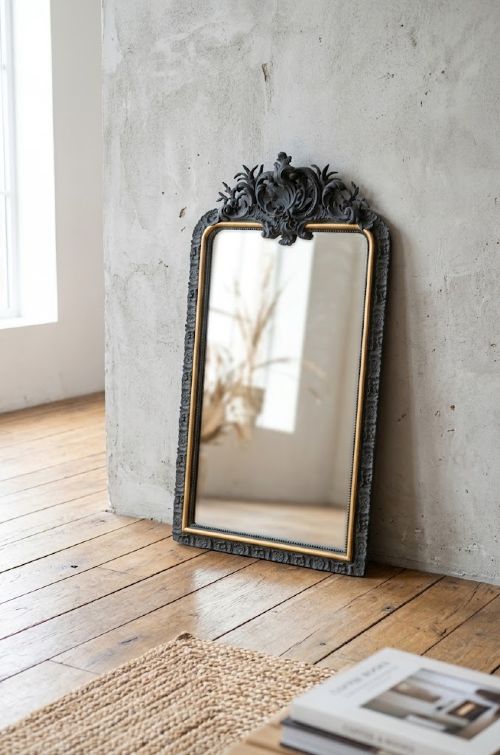


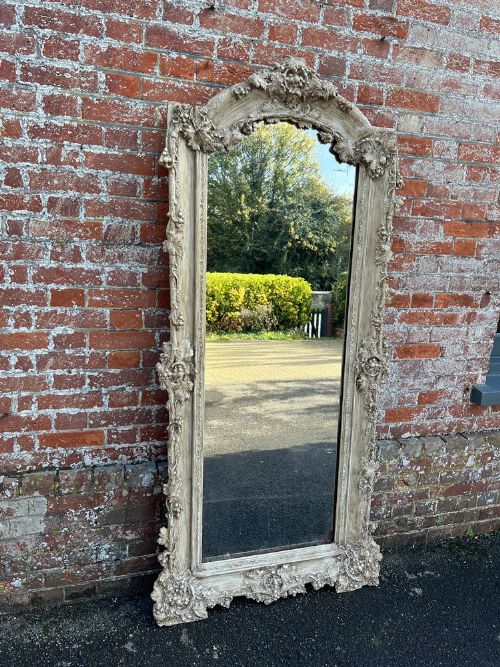


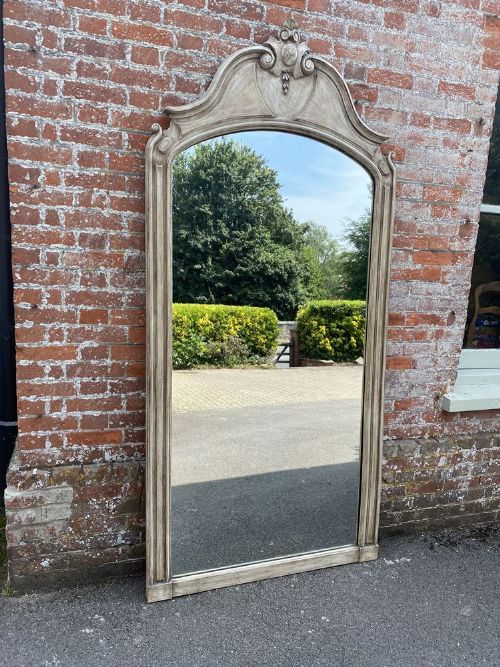


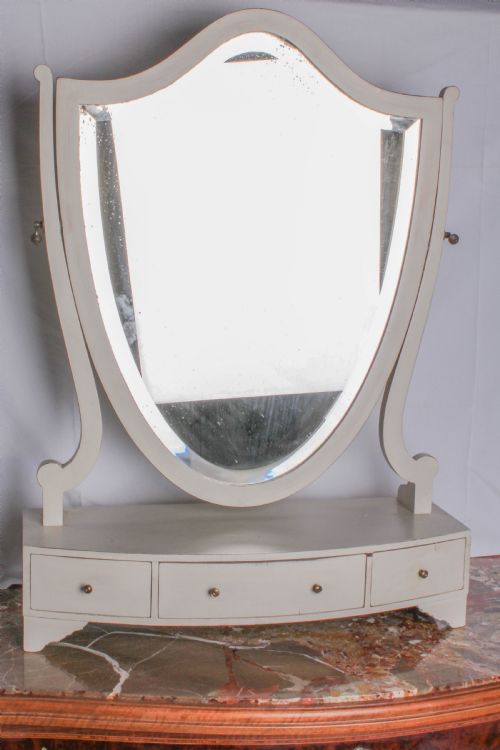

Grey Wood Mirror
A grey wood mirror brings proportion and light to a room, offering nineteenth-century French and English craftsmanship scaled for modern walls.
Grey Wood Mirror
When buyers search for a grey wood mirror, they encounter substantial nineteenth-century wall pieces originating from French and English workshops. These items span periods from the mid-nineteenth century into the early twentieth century, taking forms such as overmantels, pier mirrors, and trumeaus.
The most common form on this page is the large nineteenth-century overmantel mirror with a painted or gessoed wooden frame. Many carry arched tops, shaped crests, or architectural column framing, reflecting Louis Philippe, Victorian, and French Provincial aesthetics.
Originating largely from country houses and period salons, these objects combine functional reflective glass with decorative wooden frames finished in muted paint. They serve as focal points above mantelpieces or console tables, anchoring interior schemes with historical presence.
Materials and construction
Frames are built from solid wood, carved directly or layered with gesso to create crisp architectural mouldings and decorative borders. Artisans applied multiple coats of paint over the wood and gesso, often incorporating parcel-gilt highlights to catch the light.
The reflective surfaces consist of traditional mirror glass set securely within rebated wooden frames. Structural integrity relies on heavy timber backboards and joined corners designed to support the considerable weight of large overmantel and pier formats.
Grey Wood Mirror Retail Price Guide 2026
Typical asking prices for grey wood mirror among the pieces listed under this phrase on Sellingantiques today, from the lower quarter to the upper quarter. They describe what is for sale here now, not the wider market.
Some nineteenth-century frames hide layers of old paint beneath their grey coats, whispering secrets of forgotten Victorian salons.
Assessing quality
Quality rests in the crispness of the hand-carving and the integrity of the underlying gesso moulding. Finer examples display deep, deliberate relief work on the wooden frames rather than shallow pressing, maintaining sharp detail beneath successive layers of historical paint.
The proportion between the mirror plate and the surrounding frame dictates visual balance. Superior pieces retain original mirror glass with natural ageing alongside robust timber construction that keeps the heavy frame square and stable over time.
The Grey Wood Mirror Glossary
- Overmantel mirror
- A large wall mirror designed specifically to hang above a fireplace mantelpiece. They often feature horizontal or arched formats scaled to match the width of the hearth below.
- Gesso
- A plaster-like mixture applied to wood frames and carved to form raised decorative motifs. It provides a smooth base for painting and gilding.
- Trumeau mirror
- An antique decorative wall mirror paired with an upper panel containing a painting or carved relief. This French style integrates wall panelling with reflective glass.
- Pier mirror
- A tall vertical mirror designed to hang on the narrow wall space between windows. They frequently incorporate giltwood and painted finishes to maximise ambient light.
- Louis Philippe
- A mid-nineteenth-century French style characterised by restrained classical lines and gentle, rounded upper corners. It bridges ornate empire designs and simpler provincial tastes.
Grey Wood Mirror: Frequently Asked Questions
Are the mirror plates original?
Many nineteenth-century pieces retain their original mirror glass, which often exhibits characteristic foxing, minor speckling, and gentle distortion. These natural signs of age confirm the historical integrity of the piece.
Replacement glass occasionally appears in pieces that underwent restoration during their working life. Examining the silvering from the reverse helps determine whether the glass dates to the primary construction period.
How do I clean painted wood frames?
Dust the carved wooden frame gently with a dry, soft-bristled brush to remove surface debris without disturbing the painted finish. Avoid harsh chemical cleaners that can soften historical paint and gesso layers.
Use a mild glass cleaner applied to a cloth rather than directly onto the mirror to prevent liquid seeping behind the wooden rebate. Gentle maintenance preserves the delicate balance of paint and parcel-gilt details.
What rooms suit a large pier mirror?
Tall pier mirrors suit hallways, drawing rooms, and dining spaces where vertical proportions draw the eye upward. Their original purpose of reflecting light between windows translates effectively into modern rooms lacking natural illumination.
Pooled light from adjacent windows bounces off the glass, expanding the visual dimensions of compact spaces. Positioning them above matching console tables creates a cohesive historical arrangement.