



Grey Wood Dresser
These grey wood dresser options bring together painted finishes and timber frames across centuries of European cabinetmaking.
Grey Wood Dresser
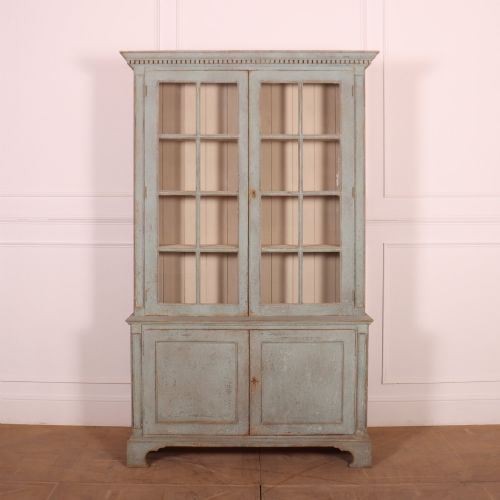
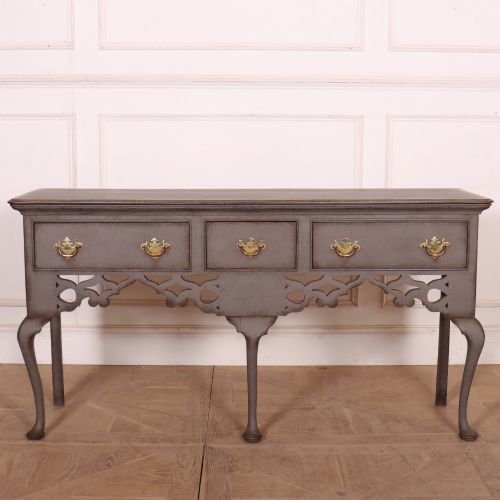
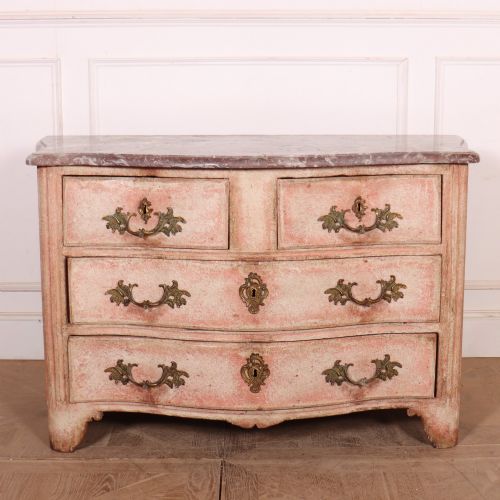
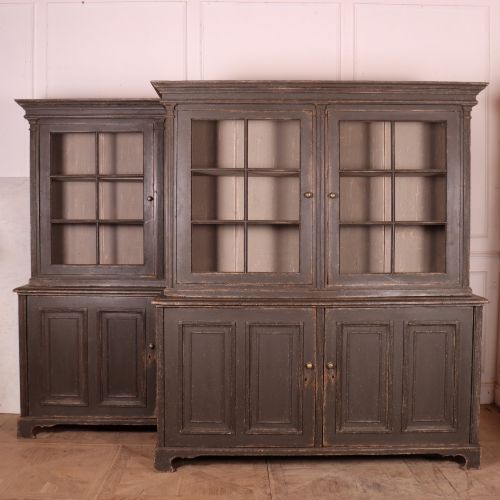
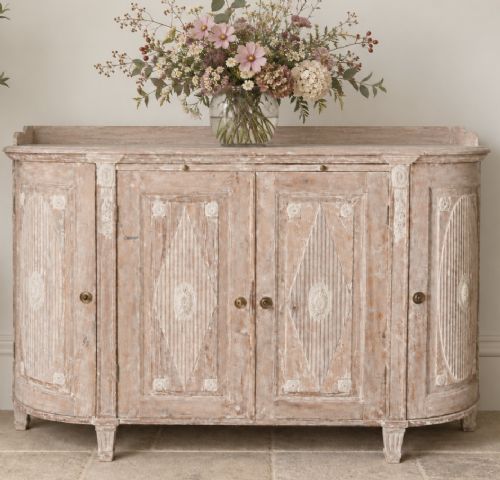
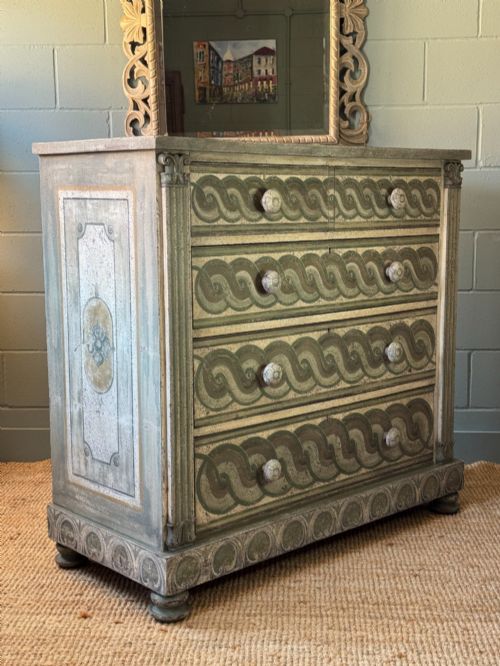
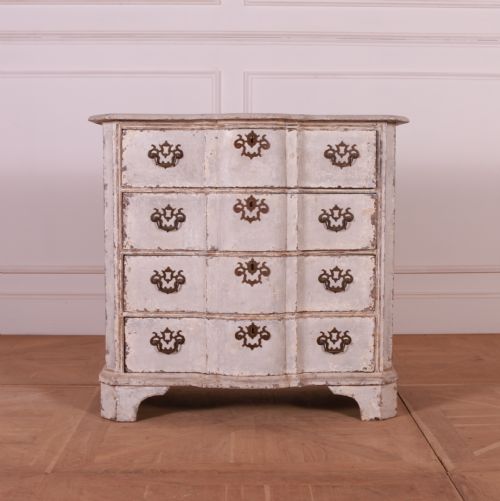
A grey wood dresser spans a variety of storage and display forms from the eighteenth and nineteenth centuries, taking the shape of chests of drawers, commodes, buffets, and servers. These pieces originate from workshops across Sweden, France, Denmark, Wales, and the Netherlands, reflecting regional rural and formal aesthetics.
The dominant style on this page is Scandinavian and French, featuring Gustavian influences, French Provincial, and Louis XVI designs alongside simpler country pieces. Buyers find serpentine fronts, bow fronts, and straight lines paired with original or later painted surfaces.
Forms include single and paired chests alongside servers, sideboards, and glazed cabinets, mostly constructed from pine and timber with integrated storage. Marble tops and faux marble tops appear frequently across nineteenth-century examples.
How they were made
Construction relies primarily on pine and general timber carcasses built with traditional joinery methods suited to domestic storage furniture. Surfaces are finished with paint, creating the characteristic grey, distressed, or decorated exteriors seen on Swedish and French pieces.
Decorative elements involve carved details, painted motifs, and applied mouldings that align with periods such as the Victorian era, the eighteenth century, and the late nineteenth century. Hardware typically incorporates brass handles and key escutcheons.
Inlets and tabletops occasionally utilise alternative materials, notably marble or painted wooden surfaces mimicking stone. Glazed sections in cabinets incorporate glass panes set into timber frames.
Grey Wood Dresser Retail Price Guide 2026
Typical asking prices for grey wood dresser among the pieces listed under this phrase on Sellingantiques today, from the lower quarter to the upper quarter. They describe what is for sale here now, not the wider market.
Listings feature pine, timber, brass, marble, and glass across 18th-century, 19th-century, and early 20th-century periods.
What varies in quality
Quality separates along the lines of proportion, decorative detail, and the integrity of the painted surface. Pieces displaying hand-painted decoration, serpentine or bow fronts, and architectural mouldings stand apart from simpler utilitarian chests.
The presence of original hardware, integrated marble or faux marble tops, and matching pairs influences the standing of a piece. Earlier eighteenth-century examples exhibit finer regional cabinetmaking details compared to later nineteenth-century production.
The Grey Wood Dresser Glossary
- Commode
- A low chest of drawers or cabinet originating from French furniture traditions. These pieces often feature decorative painted finishes and shaped fronts.
- Gustavian
- The Swedish neoclassical style popularised during the late eighteenth century, known for restrained ornamentation, pale painted surfaces, and subtle fluting.
- Serpentine front
- A furniture front characterised by a concave central section flanked by two convex ends, creating a gentle undulating curve.
- Bow front
- A convex, outward-curving front profile typical of nineteenth-century chests of drawers and commodes.
- Potboard
- A lower open shelf on a dresser or server traditionally used for storing pots and heavy kitchenware.
Grey Wood Dresser: Frequently Asked Questions
What is a grey wood dresser?
A grey wood dresser typically refers to antique painted storage furniture such as commodes, chests of drawers, and servers from European traditions. These pieces combine timber construction with painted grey or neutral finishes.
They encompass styles ranging from Swedish Gustavian designs to French Provincial and nineteenth-century country furniture, offering functional drawer or cabinet storage.
Where were these pieces made?
The listings span several European regions, with strong representation from Sweden, France, Denmark, Wales, and the Netherlands. Each region imparted local stylistic preferences onto the furniture.
Swedish pieces often show Gustavian influence, while French examples range from provincial commodes to Empire era chests and glazed cabinets.
How do I date a painted dresser?
Dating relies on examining the construction methods, drawer dovetails, hardware, and stylistic cues from periods such as the eighteenth century or the Victorian era. Structural timber and secondary woods offer clues to the age of the carcass.
Painted surfaces can be original or later decorative layers applied to older timber frames, requiring careful inspection of the wear patterns and paint composition.
How do I style a commode at home?
A antique commode or chest works well as a focal point in a hallway, bedroom, or living space, providing surface area for lamps and decorative objects. The neutral grey painted tones complement both modern and traditional interiors.
Pinned pairs or individual servers can serve as sideboards in dining areas, utilising the cabinet or drawer space for tableware storage.