

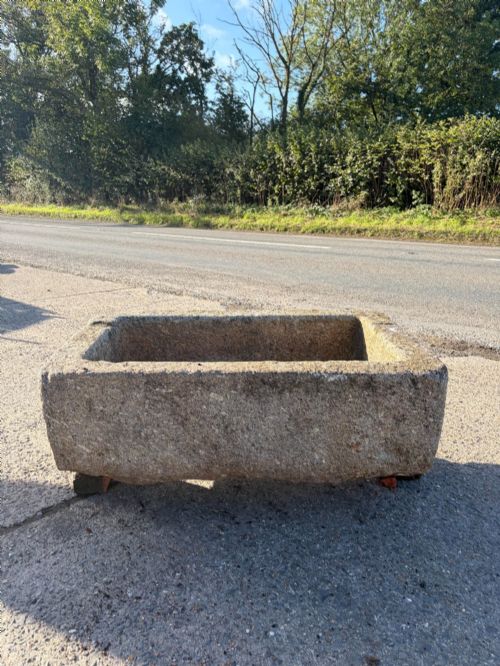
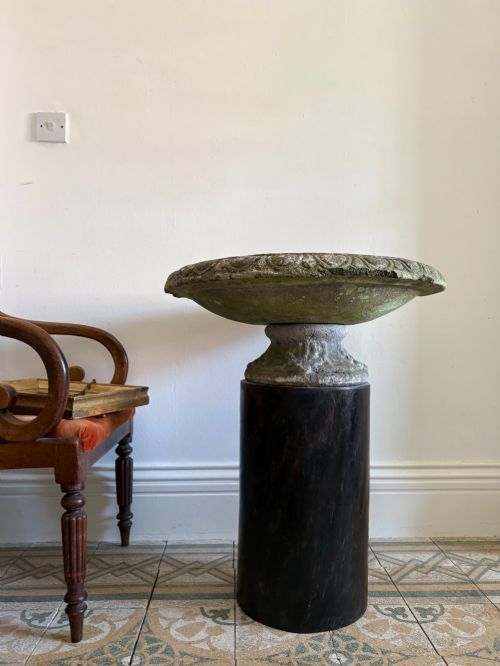
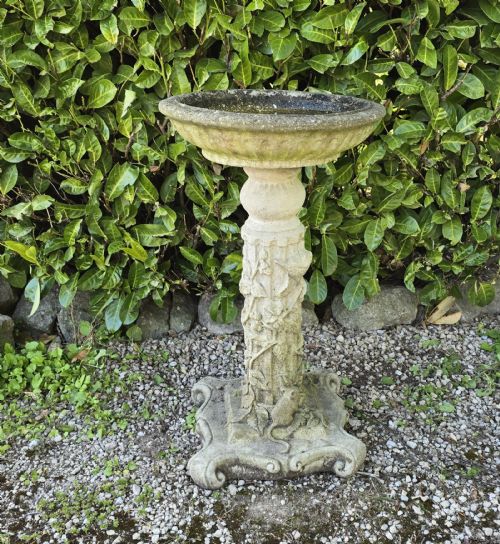


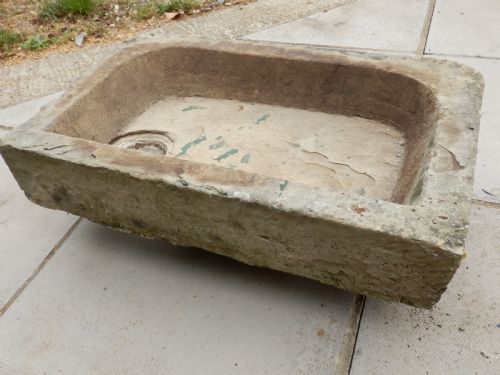

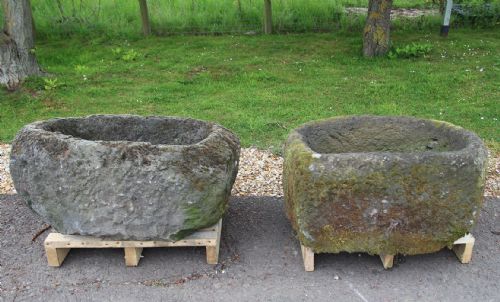

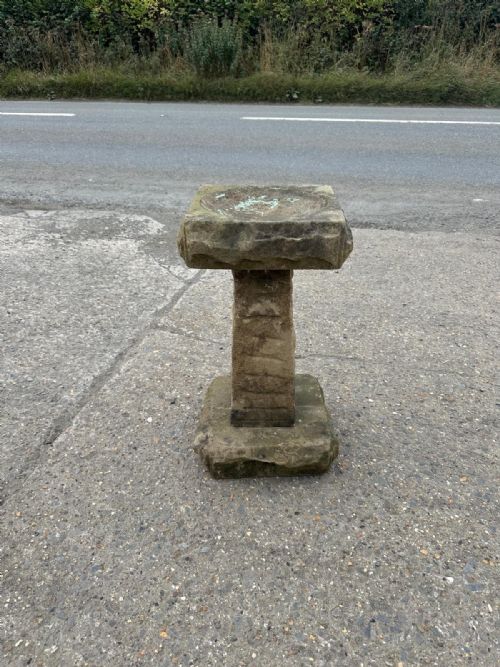


Grey Stone Garden Basin
These grey stone garden basin pieces span centuries of outdoor utility, offering natural weathered character for planting and water features.
Grey Stone Garden Basin
A grey stone garden basin encompasses utilitarian troughs, mortars, birdbaths, and planters designed for exterior spaces. When exploring a grey stone garden basin, buyers encounter forms ranging from rustic 19th-century vessels to refined 18th-century neoclassical cisterns.
The selection includes substantial architectural elements and smaller utilitarian bowls fashioned from natural geological formations. Many pieces show deep weathering from decades outdoors, developing rich patinas of moss and lichens across their surfaces.
Materials and construction methods
Masons shaped these vessels from durable natural materials including sandstone, Purbeck stone, and Carrara marble using traditional cutting and carving techniques. Earlier utility pieces bear the distinct marks of hand-chizzling, whilst later examples utilise cast or reconstituted stone.
The durability of these objects relies entirely on the density of the chosen stone and the thickness of the carved walls. Natural weathering interacts with the mineral content over generations to harden the surface and create characteristic colour variations.
Grey Stone Garden Basin Retail Price Guide 2026
Typical asking prices for grey stone garden basin among the pieces listed under this phrase on Sellingantiques today, from the lower quarter to the upper quarter. They describe what is for sale here now, not the wider market.
One extraordinary listed planter incorporates stone salvaged directly from the Houses of Parliament after wartime bomb damage.
Assessing quality in stone basins
Quality rests in the integrity of the carving, the architectural proportions, and the depth of age-related weathering. Superior examples display harmonious balance and honest utilitarian wear rather than decorative excess.
The choice of material dictates longevity, with dense natural stones holding their structural form far better than softer compositions. Original tool marks and unblemished historical surfaces elevate a piece above standard utility items.
The Grey Stone Garden Basin Glossary
- Carrara marble
- A high-grade white or grey-veined marble sourced from Italy, utilised for refined neoclassical garden cisterns and decorative vessels. It offers a smoother finish than standard sandstone.
- Reconstituted stone
- A manufactured material composed of aggregate stone mixed with a binder, moulded into specific garden ornaments. This technique became common in the early twentieth century.
- Pancheon
- A large, shallow earthenware or stone vessel traditionally used in dairies for setting milk or washing. In garden settings, these wide circular bowls function effectively as planters.
Grey Stone Garden Basin: Frequently Asked Questions
How do I clean a stone basin?
Gentle brushing with water preserves the accumulated weathering and beneficial moss growth that collectors value.
Harsh chemical detergents or pressure washers strip away historical patinas and erode the softer outer layers of the stone.
Are these stone basins frost proof?
Natural stone vessels generally withstand winter conditions provided stagnant water is prevented from freezing solid inside the cavity.
Elevating troughs slightly off the ground on small bricks prevents moisture absorption from frozen soil below.
How do I date a stone trough?
Tool marks left by bankers and chisels provide primary evidence of the era in which the mason shaped the block.
Uniform machine-cut edges point towards later manufacturing periods, whereas irregular hand-hewn surfaces indicate older origins.
Can I use an antique mortar as a birdbath?
Sturdy stone mortars serve as natural birdbaths due to their stable bases and naturally concave interiors.
Ensuring the depth remains shallow prevents wildlife hazards while maintaining the original decorative utility of the vessel.