


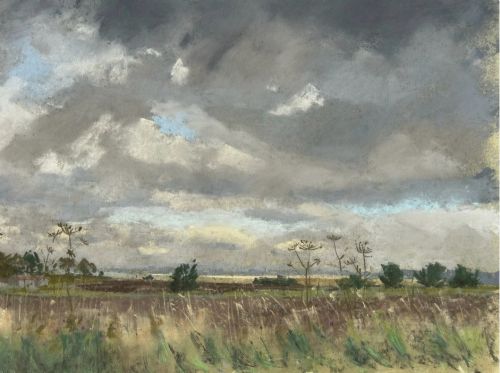
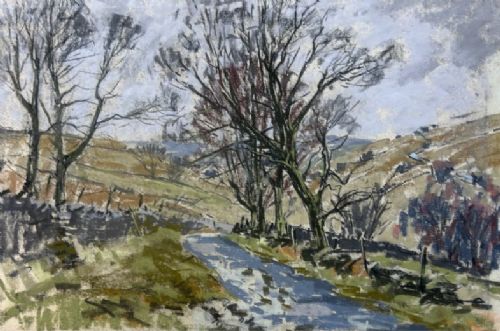
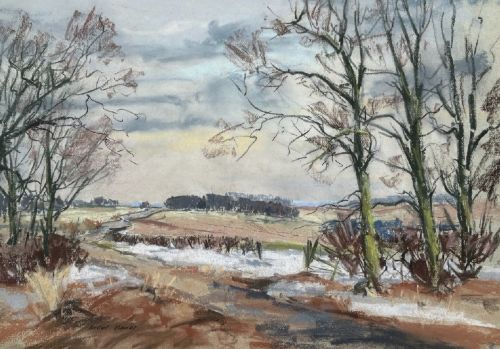
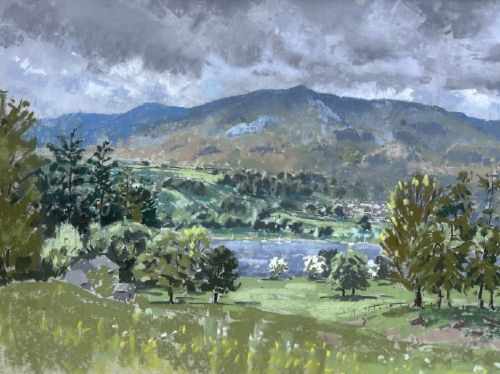



Grey Paper Drawing
A grey paper drawing uses the mid-tone sheet to hold highlights and shadow together in a single stroke.
Grey Paper Drawing
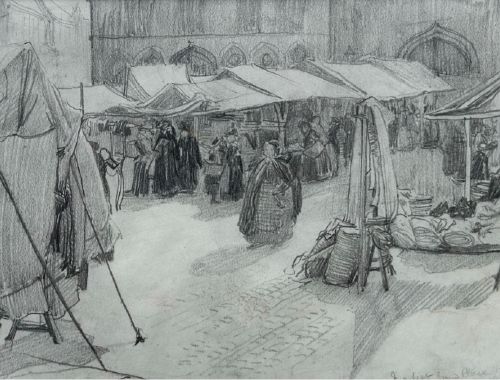
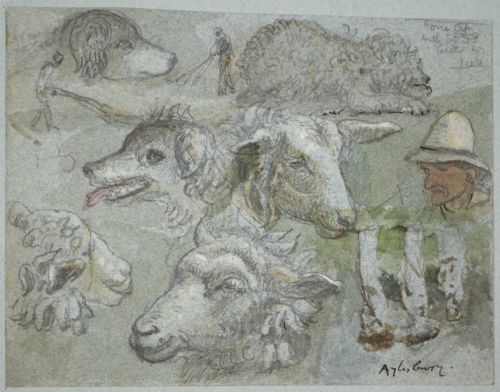
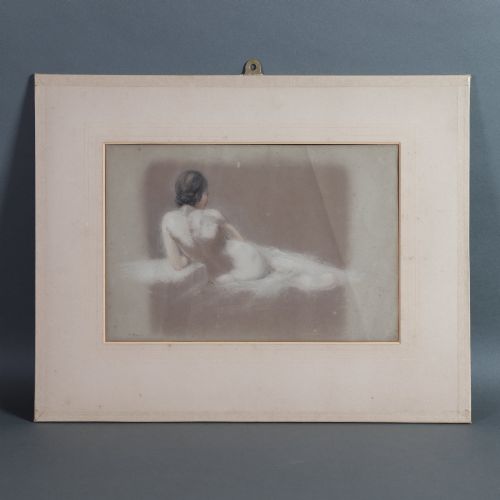
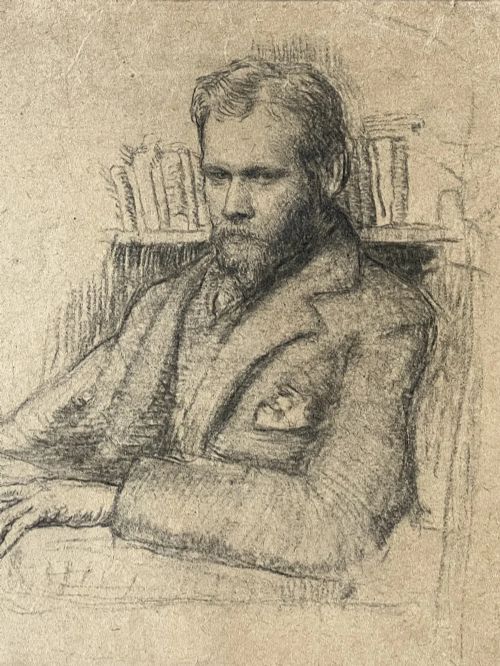
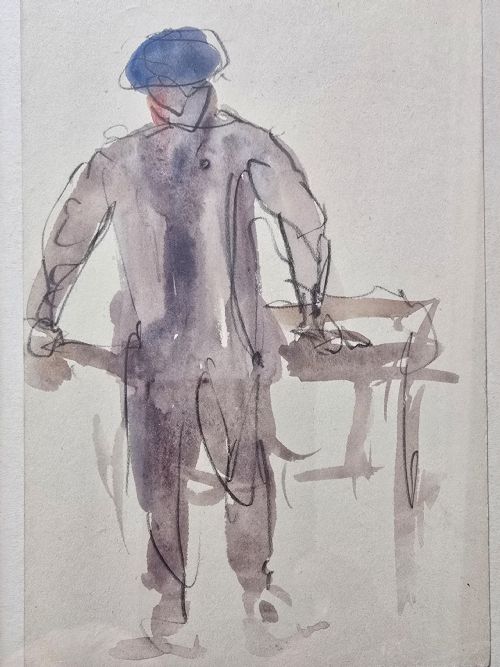
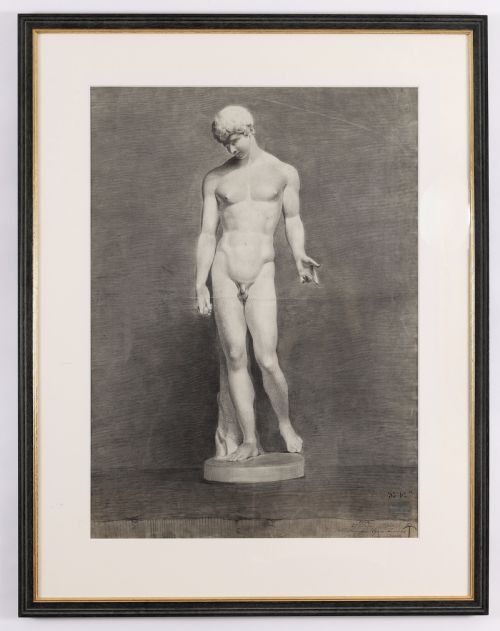
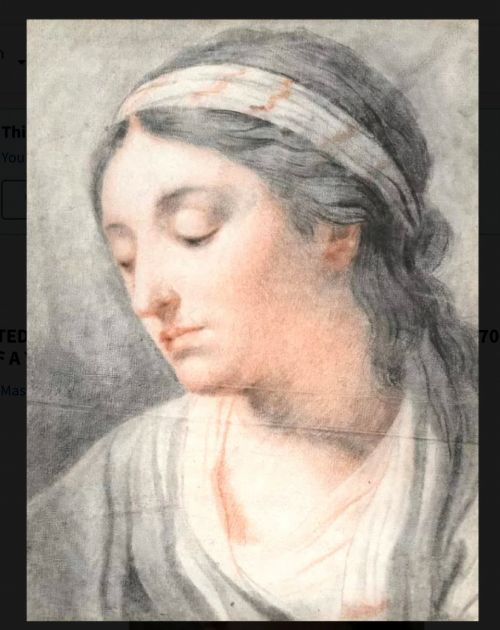
A grey paper drawing presents tonal studies, landscapes, and portraits executed across periods ranging from the eighteenth century to the mid-twentieth century. These works use the neutral ground of the sheet to balance light and dark values without relying entirely on white paper.
The pieces appearing on this page span British, French, Dutch, and German origins, taking the form of original pencil sketches, charcoal studies, and pastel compositions. Portrait drawings and landscape scenes dominate the selection, often reflecting academic training or direct observation.
Victorian, Edwardian, and mid-century modern movements provide the stylistic context for these works, showing how artists utilised tinted grounds to speed up sketching or build complex figurative studies.
Materials and Techniques
Artists combined graphite, charcoal, chalk, and pastel upon paper supports, applying dense dark marks alongside opaque white highlights to exploit the grey tone underneath. This tripartite method allowed draughtsmen to model three-dimensional form with speed and economy.
Watercolour and ink washes also appear across these sheets, sometimes layered over preliminary pencil or chalk lines to create atmospheric depth in architectural prints and landscape painting.
Grey Paper Drawing Retail Price Guide 2026
Typical asking prices for grey paper drawing among the pieces listed under this phrase on Sellingantiques today, from the lower quarter to the upper quarter. They describe what is for sale here now, not the wider market.
Listings feature works spanning the 18th, 19th, and 20th centuries, executed in graphite, pastel, charcoal, and watercolour on paper.
Evaluating the Work
Quality rests upon the sureness of the draughtsmanship and how effectively the artist uses the unworked grey paper as a mid-tone rather than mere background filler. Stronger examples demonstrate confident handling of line where the paper tone actively participates in the rendering of shadow and light.
Condition plays a part, as paper is vulnerable to light exposure and acid migration from old mounts, which can alter the original grey tint of the sheet over time.
Angus Rands·Henry Percy Huggill·James Smetham·William Etty·Augustus John·Marie Leczinska·Albert Ludovici Jnr·Michael Healy·John Rattenbury Skeaping·Stanley Orchart·Edward Dayes·Samuel Owen·J Manrique·Thomas Rowlandson·Johan Noah Bemmel·John Macallan Swan·Frank Dobson·Dame Laura Knight·Fred Lawson·Frank Saltfleet·Matthew Hale
The Grey Paper Drawing Glossary
- Mid-tone
- A middle value between absolute black and stark white that provides visual balance in a composition. In these works, the grey paper itself serves this function.
- Chalk
- A soft drawing material made from natural pigments that adheres well to textured or tinted papers. It is frequently paired with charcoal for high-contrast sketching.
- Graphite
- A form of carbon used to create precise lines and subtle tonal gradations in pencil drawings. It ranges from hard, pale leads to soft, dark pencils.
- Wash
- A diluted application of ink or watercolour used to create flat or graduated areas of tone. Artists applied washes over drawings to unify background elements.
Grey Paper Drawing: Frequently Asked Questions
What is a grey paper drawing?
A grey paper drawing is an artwork executed on tinted grey paper using mediums like charcoal, chalk, graphite, or pastel. The neutral tone of the paper allows the artist to work up both bright highlights and deep shadows quickly.
These pieces range from rapid preparatory sketches to finished portraits and landscapes produced across the eighteenth, nineteenth, and twentieth centuries.
How should I frame a drawing on paper?
Paper works require conservation-grade, acid-free mounts and framing materials to prevent the paper from yellowing or degrading over time. Keeping a window of space between the glass and the artwork prevents condensation from damaging the delicate charcoal or pastel pigments.
Displaying these pieces away from direct sunlight protects the fugitive pigments and preserves the original colour of the grey paper ground.
How can I tell the period of a drawing?
Clues to the date come from the paper stock, watermark evidence, framing remnants, and the specific style of the clothing or architecture depicted. Academic portrait studies from the nineteenth century often show rigorous hatching techniques different from looser mid-century interpretations.
Signatures, inscriptions, and artist stamps on the reverse or front also help anchor the work to a specific decade or movement.
Were these drawings meant to be finished art?
Many grey paper drawings began as preparatory studies for larger oil paintings or murals, capturing a pose or lighting effect in real time. Other examples, particularly pastels and detailed watercolours from the Victorian and Edwardian eras, were created as complete, standalone works intended for exhibition.