






Grey Painted Writing Desk
A grey painted writing desk brings restrained colour and practical workspace into a room, drawing on regional traditions from 18th-century England to Gustavian Sweden.
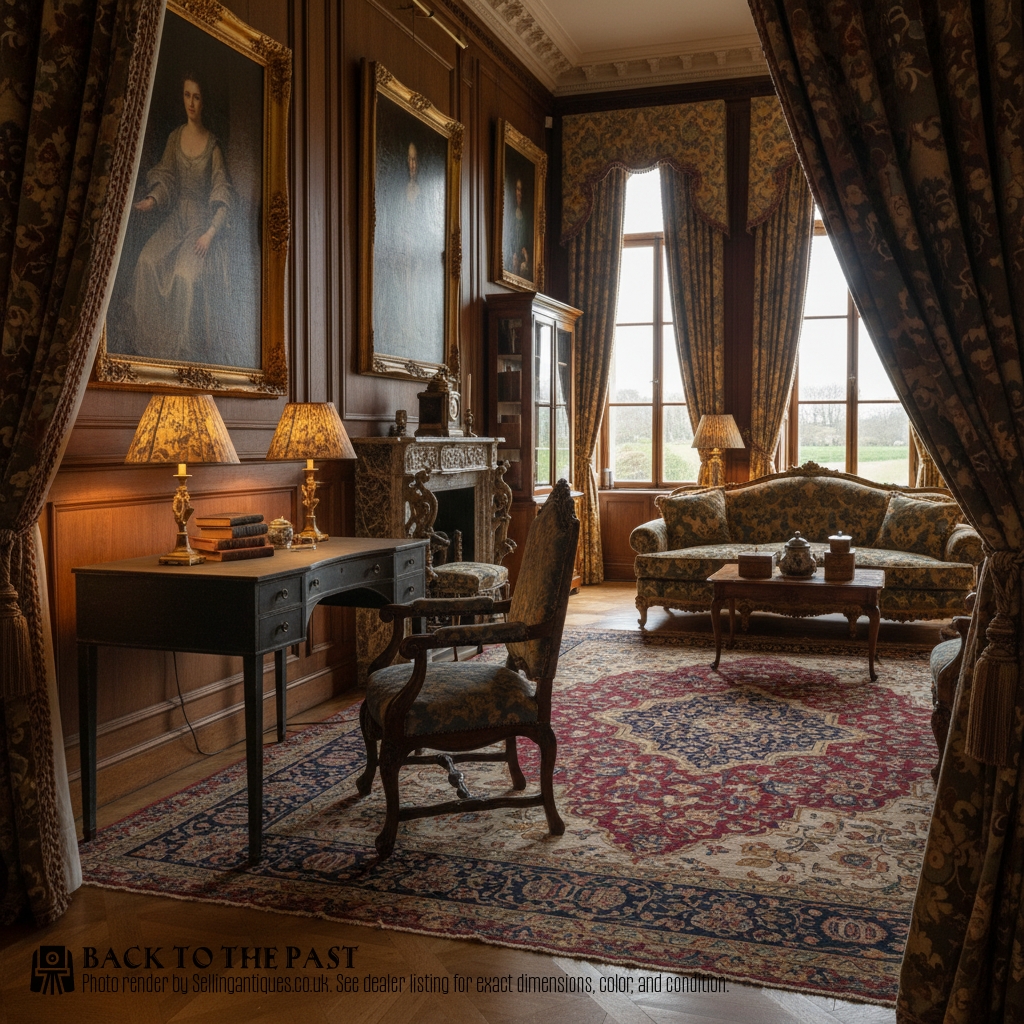
Grey Painted Writing Desk
A grey painted writing desk encompasses a variety of forms designed for correspondence and study, including side tables, writing tables, and bureau cabinets. Buyers searching for a grey painted writing desk will encounter pieces ranging from 18th-century English bureaus to 19th-century Scandinavian country tables.
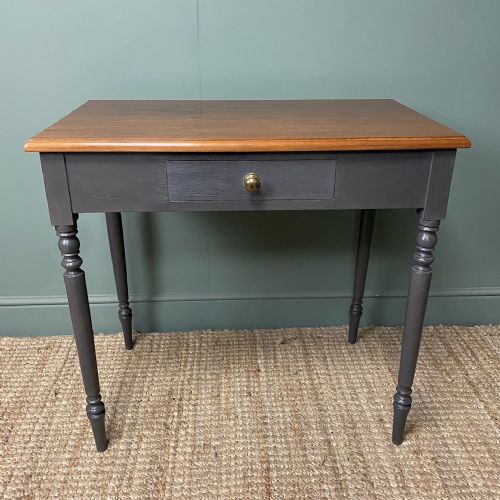
Many examples utilise softwood, pine, or timber as a base for painted finishes, showing the hand of regional cabinetmakers across different periods. From simple side tables to elaborate bureau bookcases, each piece serves as a functional workspace with a distinct decorative character.
How they were made
Construction relies primarily on traditional woodworking using timber, pine, and softwood, often shaped into writing tables, bureaus, and side tables. Carpenters joined panels and frames using period techniques suited to domestic furniture production.
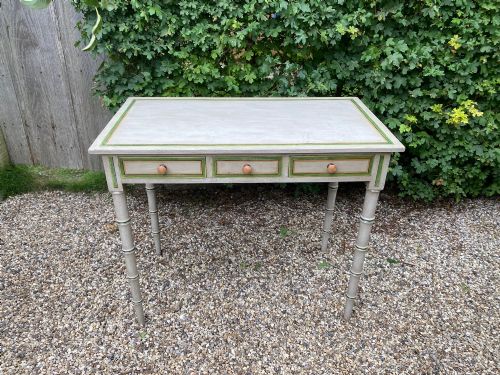
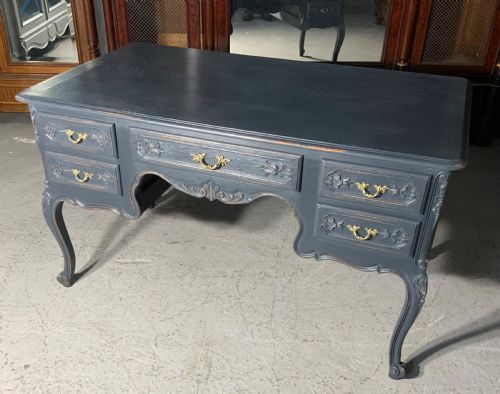
Surfaces received layers of paint, sometimes over carved oak or faux bamboo turning, creating the distinctive painted finishes seen across French and Scandinavian examples. Brass hardware such as handles and escutcheons completed the construction of drawers and fall-front desks.
Some tables feature convincing bamboo masquerading as solid timber, proving that Regency craftsmen enjoyed a clever botanical disguise.
What varies in quality
Quality rests on the integrity of the timber construction and the execution of the painted surface, distinguishing provincial vernacular work from refined cabinetmaking. Finer pieces demonstrate careful proportion and balanced joinery across complex forms like bureau bookcases.
The character of the paint finish itself dictates the visual weight of the desk, with layered patination marking the distinction between factory-like uniformity and older, hand-applied surfaces. Structural stability in legs, drawers, and fall-front writing slopes underpins the enduring utility of each table.
The Grey Painted Writing Desk Glossary
- Bureau cabinet
- A combined desk and storage unit featuring a sloping fall-front writing surface over drawers, surmounted by a bookcase. This form provides both workspace and enclosed shelving.
- Gustavian
- A Swedish neoclassical style popular during the late 18th and early 19th centuries, characterised by restrained carving and pale painted finishes. It draws inspiration from French Louis XVI design.
- Faux bamboo
- A decorative treatment where wood is carved or turned to imitate the segmented stalks of bamboo. This technique was popular during the Regency period.
- Scrub-top
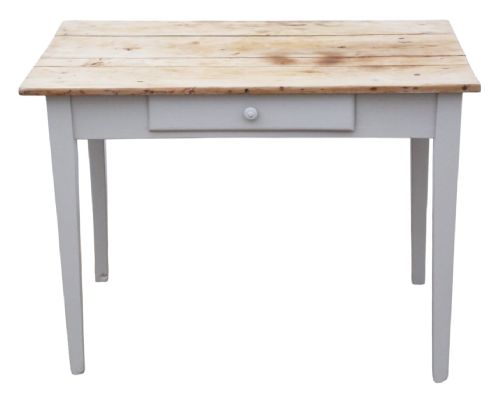
- A plain wooden tabletop left unfinished or scrubbed clean, typically paired with a painted base in vernacular kitchen and work tables. It provides a robust, utilitarian surface.
Grey Painted Writing Desk: Frequently Asked Questions
Where should I place a writing desk?
These desks suit studies, bedrooms, or living spaces where surface area and subtle colour are required. Their modest footprints allow them to function as writing tables or side tables.
Positioning them near natural light enhances the painted finish and provides practical illumination for daily correspondence.
How do I care for painted wood?
Maintain painted surfaces by dusting regularly with a soft, dry cloth to prevent dirt accumulation. Avoid harsh chemical cleaners that can degrade historic paint layers.
Keep wooden furniture away from direct heat sources and significant humidity fluctuations to protect the underlying timber and joints.
What is a bureau bookcase?
A bureau bookcase combines a lower writing desk with an upper shelving unit enclosed by doors. The fall-front desk drops down to reveal small compartments for stationery.
This form offers substantial vertical storage alongside a dedicated writing surface, making it a prominent piece in traditional interiors.
How do I identify Regency style?
Regency furniture draws on classical antiquity, featuring clean lines, restrained ornamentation, and sometimes exotic details like faux bamboo turning. Pieces from this period often balance formal elegance with domestic utility.
Proportions are typically refined, with attention paid to the natural grain of the wood and the subtlety of painted or polished finishes.