


Grey Mountain Art
Grey mountain art brings the majesty of peak and crag directly into a room, capturing rugged uplands in watercolour, oil, and ink.
Grey Mountain Art
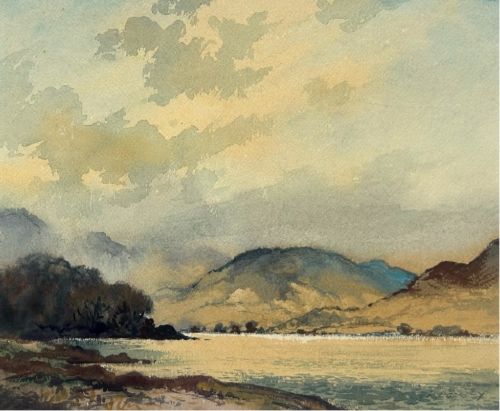
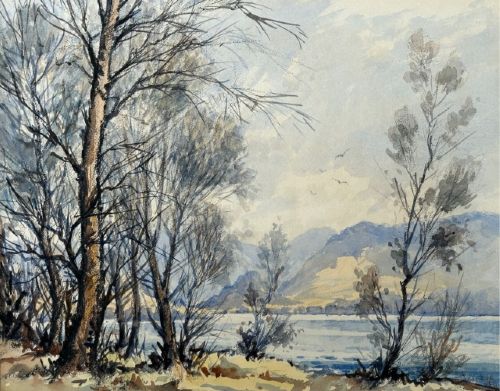
When buyers search for grey mountain art, they seek depictions of highland crags, remote summits, and upland lakes rendered across several centuries. The pieces available range from Victorian watercolours of Swiss passes to mid-century views of Scottish and Cumbrian lakes.
The dominant forms are landscape paintings executed in watercolour on paper or oil on canvas and board. These works capture atmospheric conditions in places such as Snowdonia, the Hebrides, and the Swiss Alps through varied stylistic approaches.
Buyers will encounter traditional British watercolours alongside mid-century British impressionism and mid-century Chinese album sketches. Each piece offers a distinct topographical record shaped by the period in which the artist worked.
Materials and methods
Artists create these landscapes using watercolour pigment on paper and oil paint on canvas or board. Ink is also utilised, particularly in bound albums featuring artist seals alongside brushwork.
Support materials include wood framing and glass protection for works on paper, while oil paintings are executed on prepared boards or stretched canvases.
Travellers journeyed to distant peaks with sketchbooks in hand, returning with damp paper and indelible memories of alpine air.
Factors of quality
The strength of the composition and the handling of light and atmosphere separate the more accomplished works from simpler topographical records. Masterful handling of watercolour washes or oil pigment brings a genuine sense of scale and weather to the upland subject.
Provenance and documentation influence the standing of a piece. Signed works and those attributed to recorded painters carry firmer historical attribution than anonymous or unverified examples.
Robert Leslie Howey·Ya Ming·Stanley Orchart·William Miller Frazer·Hirst Walker·Noel Harry Leaver·James Poole
The Grey Mountain Art Glossary
- Watercolour
- A paint consisting of pigment suspended in a water-based solution, traditionally applied to paper to create translucent washes of colour.
- Oil on board
- A painting technique where oil pigments are applied directly to a rigid wooden panel or stiff board rather than stretched canvas.
- Impressionism
- An art style focused on capturing the visual impression of a moment, particularly the shifting effects of light and atmosphere in outdoor settings.
- Album
- A bound book containing a collection of related sketches or paintings, often preserved together with artist seals and inscriptions.
Grey Mountain Art: Frequently Asked Questions
What periods do these paintings come from?
The works span from the nineteenth century through the mid-twentieth century, including Victorian and mid-century modern examples.
Dates range from the 1800s up to the 1960s, reflecting shifts in landscape painting styles over time.
Where do these mountain scenes depict?
The locations include British uplands such as the Lake District, Snowdonia, Scotland, and the Hebrides.
Other works record continental peaks, including views of Switzerland and Alpine passes.
How should I frame a watercolour?
Watercolour paintings require protection behind glass to prevent atmospheric damage and fading of the pigments on paper.
Mounts should be used to keep the paper surface from touching the glass directly.
Are these pieces signed by the artists?
Several works feature artist signatures, inscriptions, or studio seals confirming their authorship.
Others are historical examples attributed to specific schools or periods without a visible signature.