


Grey French Bedstead
A grey french bedstead brings the elegance of nineteenth and early twentieth century chateaux into a modern bedroom with calm, neutral tones.
Grey French Bedstead
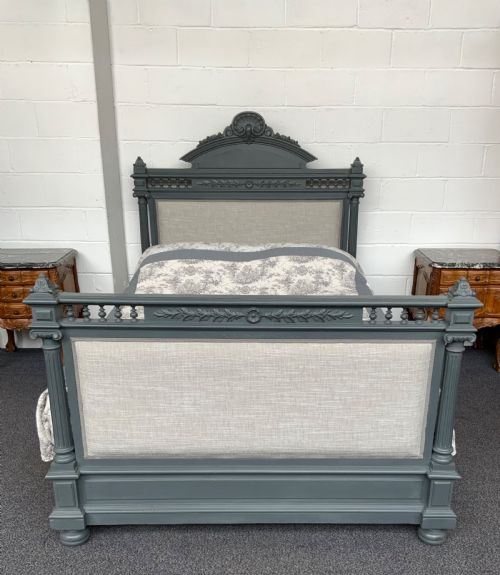
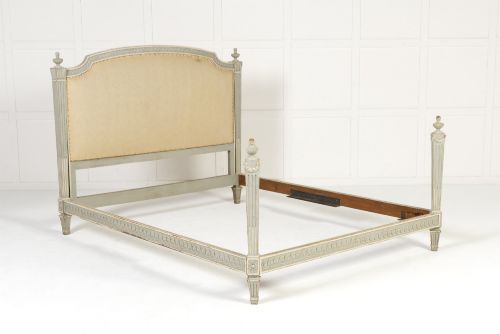
A grey french bedstead offers a sleeping frame finished in painted wood, combining classic continental forms with neutral grey paint. These pieces typically appear in double, kingsize, and super king dimensions, reflecting historical room proportions.
Most examples originate from the nineteenth century or the early decades of the twentieth century, capturing periods from the 1890s through to the 1920s. Buyers encountering this phrase will find a mix of double and larger sizes, often retaining their original structural proportions.
The aesthetic draws heavily on traditional continental design vocabulary, ranging from restrained classical lines to more ornate regional interpretations. These frames provide a focal point that anchors a bedroom scheme without dominating the floor space.
Construction and materials
Makers utilised solid timber and carved wood as the primary structural base, applying paint finishes directly to the wood surfaces. Brass embellishments and detailing frequently appear on these painted frames to highlight key architectural junctions.
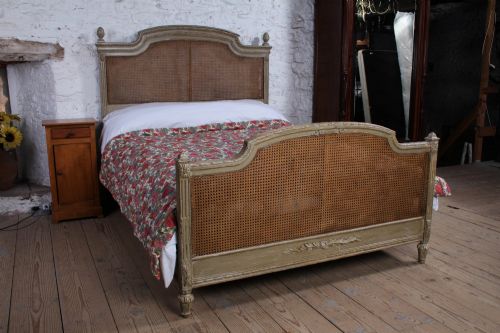
Upholstery forms a major component of many designs, utilising fabric and fabric upholstery on headboards and footboards. Caned panels also feature in specific regional styles, requiring careful weaving technique within the wooden frame.
One exceptional super king setup even includes matching chairs for those who take their morning coffee in absolute historical style.
Assessing craftsmanship and finish
The depth and precision of carved wood details distinguish finer frames from simpler production pieces. Crisp lines in the timberwork indicate superior artisan skill during the original construction.
The quality of the painted finish and the integration of brass embellishments affect the overall presence of the bedstead. Better examples display harmonious proportions between the upholstered areas, painted timber, and metal highlights.
The Grey French Bedstead Glossary
- Louis XVI Style
- A design period characterised by straight lines, symmetry, and neoclassical ornamentation. It contrasts with the more flowing curves of earlier monarchical styles.
- Louis XV Style
- A design approach defined by asymmetry, C-scrolls, and naturalistic motifs. This aesthetic brings softer organic curves to bed frames.
- Caned
- A technique where woven material, usually rattan, forms decorative panels within a wooden frame. It provides a lighter visual weight to larger bed structures.
- Brass Detailing
- Metal ornamentation applied to wooden furniture to accent corners, mouldings, and structural joins. It adds a warm metallic contrast to painted surfaces.
Grey French Bedstead: Frequently Asked Questions
What sizes do these beds come in?
The available frames span double, kingsize, and super king dimensions, accommodating standard modern mattress sizes depending on the specific nineteenth or twentieth century build.
Buyers should verify the internal dimensions of older frames to ensure a correct fit for contemporary mattresses and bases.
How do I care for the painted finish?
Regular dusting with a soft, dry cloth preserves the painted wood surface without damaging the underlying pigment. Avoid harsh chemical cleaners that can dull the paint or affect brass detailing.
Keep the bedstead away from direct heat sources and strong sunlight to prevent the timber from warping and the paint from cracking over time.
Are these beds easy to assemble?
Most antique french bedsteads utilise traditional slot-in iron or wooden side rail fixings rather than modern modular hardware. Setting them up typically requires two people to align the headboard, footboard, and side rails correctly.
Checking the stability of the joints during assembly ensures the frame remains square and secure for daily use.
What styles influence these designs?
The primary influences stem from French revival aesthetics, particularly Louis XV and Louis XVI movements, alongside chateau vernacular. These styles incorporate carved wood, painted surfaces, and occasional fabric upholstery.
Recognising these decorative elements helps identify the approximate period and design lineage of an individual bedstead.