



Grey Blue Sky Artwork
Grey blue sky artwork gathers atmospheric landscape and marine paintings, bringing open horizons and coastal weather directly into interior spaces.
Grey Blue Sky Artwork
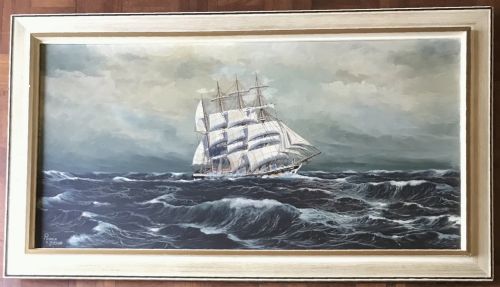
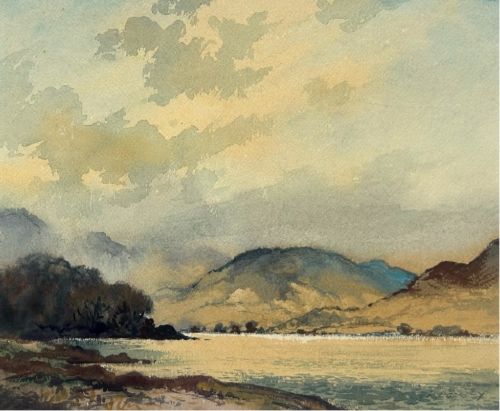
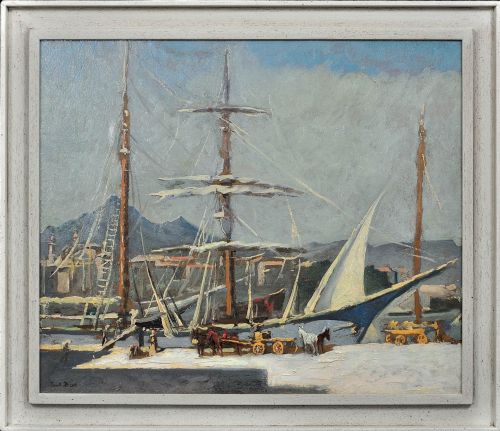
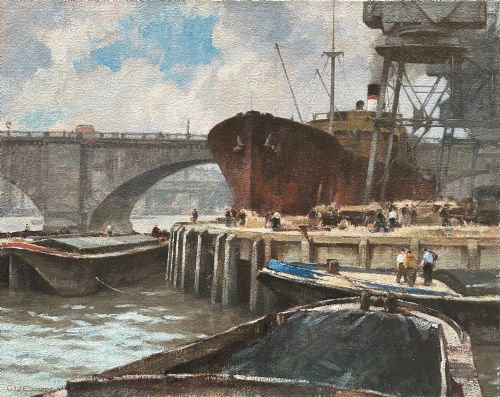
Grey blue sky artwork encompasses paintings capturing expansive maritime scenes, river estuaries, and rural landscapes dominated by variable atmospheric conditions. When searching this phrase, a buyer examines historical depictions where meteorological atmosphere dictates the mood of the entire composition. These pieces span from the nineteenth century through the mid-twentieth century, recording changing light over water and open land.
The versions most frequently met on this page include watercolours and oil paintings originating from British and European traditions. Artists utilise these muted palettes to portray northern harbours, coastal movements, and regional topographical views under heavy cloud cover. Each painting relies on tone rather than bright chroma to establish distance, depth, and spatial realism.
How they were made
Painters applied oil paint to canvas or wood panels, and watercolours onto paper, building up atmospheric effects through layered washes or thick brushwork. Oil mediums allowed artists to manipulate heavy impasto for turbulent seas and dense clouds, whereas watercolours exploited the white of the paper to render luminous, translucent cloud formations.
Framed presentation typically involves traditional wood mouldings, often glazed in the case of works on paper to protect delicate pigments from environmental damage. Canvases are stretched across wooden frames, preserving the structural tension of the woven fabric over decades of display.
Current listings feature watercolours and oil paintings spanning the nineteenth and twentieth centuries, employing paper, canvas, and wood panels.
What varies in quality
Quality separates through the artist's command of tonal graduation within limited grey and blue spectra, determining whether a sky feels expansive or flat. Masterful handling creates palpable humidity, movement, and atmospheric pressure, whereas lesser works treat the sky as a static background wash without meteorological conviction.
The structural integrity of the support and the preservation of original pigments dictate the longevity of the visual impact. Strong compositions maintain clear horizon placement and dynamic interplay between land, water, and air, anchoring the entire pictorial space.
Charles William Adderton·Thomas Bush Hardy·Paul Jean Clays·Bertram Priestman·Claude Muncaster
The Grey Blue Sky Artwork Glossary
- Watercolour
- A painting method where fine pigment is suspended in a water-soluble binder and applied to paper. This technique relies on the reflective quality of the paper beneath to create luminous atmospheric effects.
- Oil on canvas
- Pigment mixed with drying oil applied to a woven fabric stretched across a wooden frame. It permits rich textural manipulation and deep tonal layering.
- Impasto
- Paint applied thickly to a canvas or panel so that it stands distinctly above the surface. This technique lends tangible relief to clouds, water, and coastal elements.
- Topographical landscape
- An artwork depicting a specific, recognizable geographical location with realistic accuracy. These pieces often serve as historical records of regional architecture and shorelines.
Grey Blue Sky Artwork: Frequently Asked Questions
What periods do these artworks represent?
The selections span from the eighteenth century through the mid-twentieth century, encompassing Victorian maritime art and mid-century modern movements.
Most pieces date from the nineteenth and early twentieth centuries, reflecting traditional British and European regional painting styles.
How should I hang these paintings?
Position them at eye level on neutral walls to allow the muted atmospheric tones to command the visual field without competing background distractions.
Keep watercolours away from direct sunlight to preserve the delicate pigments and paper supports over time.
What subjects appear most frequently?
Maritime scenes, harbour views, estuaries, and rural northern landscapes dominate the compositions across all listed periods.
Artists frequently recorded shipping vessels, coastal fortifications, and topographical views under heavy overcast skies.
Are these works signed by the artists?
Many examples feature original artist signatures or historical attribution notes inscribed directly onto the painting surface or mounting.
Documented provenance helps verify the authorship and historical context of nineteenth and twentieth-century works.