





Green Woven Tapestry
These green woven tapestry pieces bring historic landscapes and pastoral scenes into rooms through centuries of textile artistry.
Green Woven Tapestry
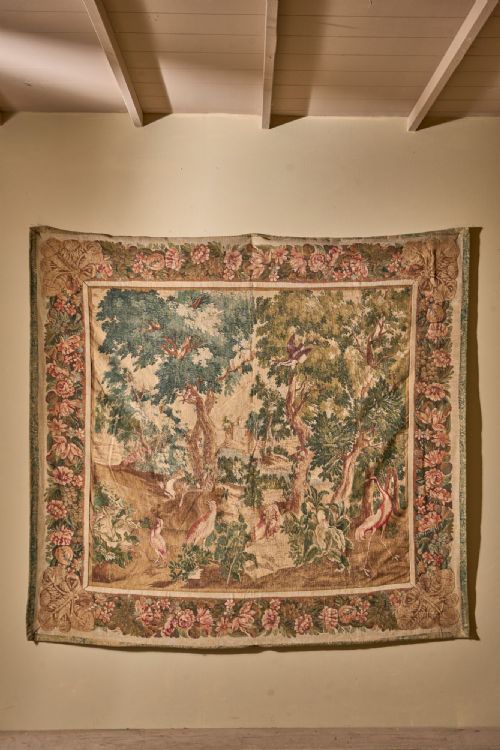
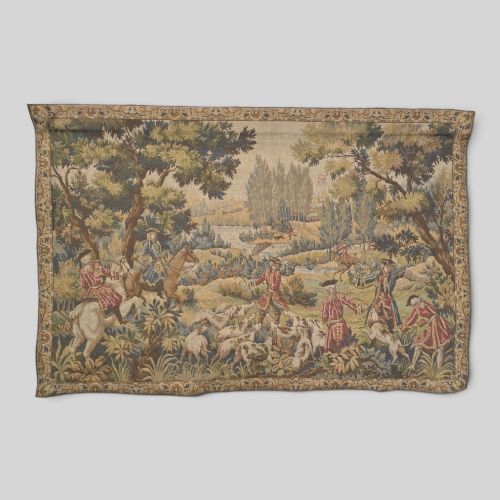
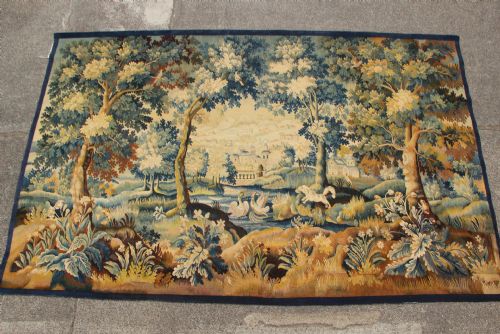
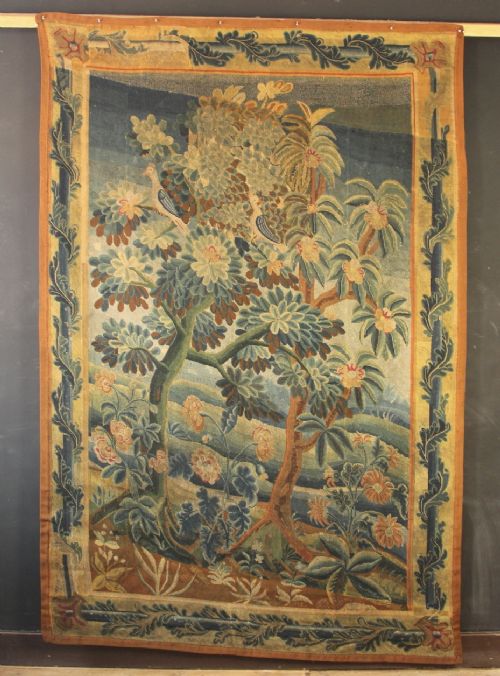
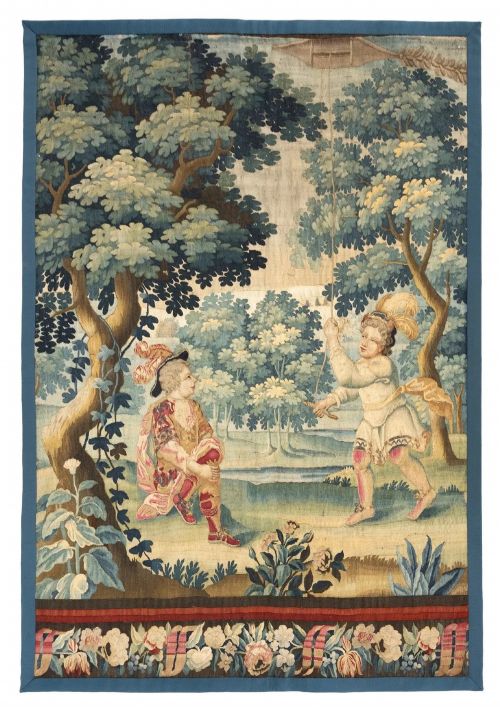
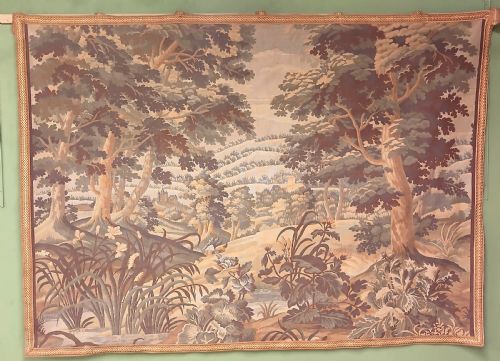
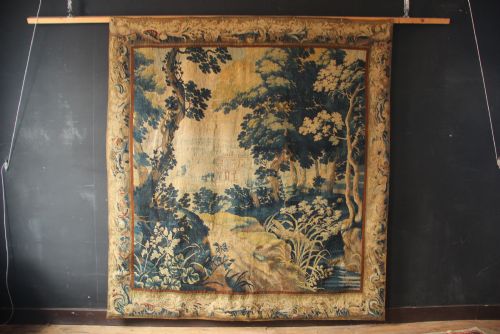
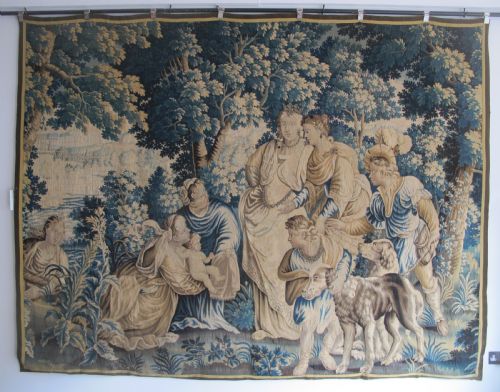
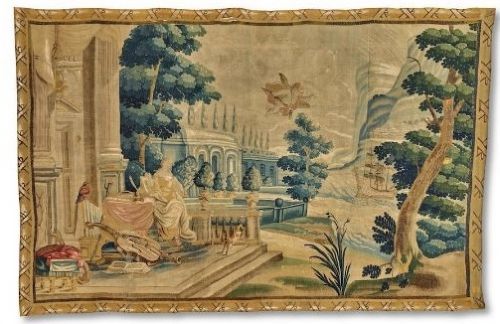
A green woven tapestry typically depicts verdant forest landscapes, mythical gardens, or pastoral themes dominated by botanical hues. These large textiles and wall hangings serve as architectural elements that soften stone walls and absorb sound in high-ceilinged rooms.
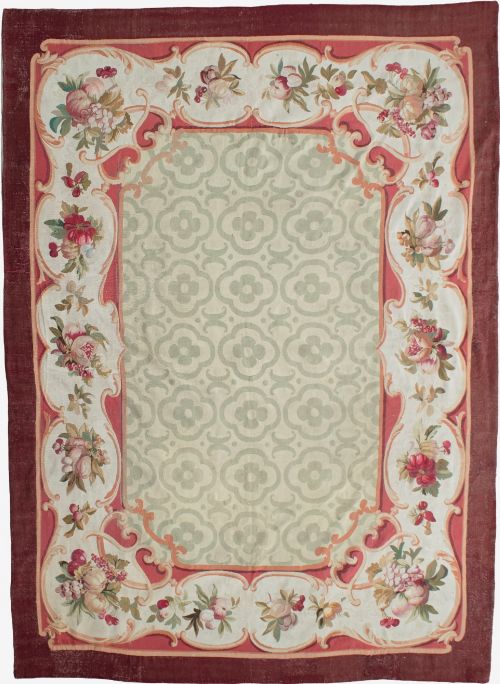
The selections available range from seventeenth-century Flemish verdure works to nineteenth-century French Aubusson panels and decorative carpets. Buyers often encounter pieces portraying dense foliage, stylized trees, and distant castles woven into intricate compositions.
Smaller formats such as cushion covers and framed panels also appear alongside grand-scale wall hangings. Each piece reflects the decorative priorities of its period, shifting from narrative mythological scenes to purely botanical garden views.
Materials and Weaving Techniques
These textiles rely on combinations of wool, silk, cotton, and linen spun into warp and weft threads. Wool provides the structural weight and durability required for large wall hangings, while silk introduces luminous highlights to foliage and garments.
Weavers utilised manual looms, interlocking coloured threads to build complex pictorial surfaces without a shuttle. Natural dye sources yielded deep greens, browns, and ochres that mellowed over centuries into harmonious tonal ranges.
Listings span from sixteenth-century North German workshops to nineteenth-century French Aubusson productions, featuring wool, silk, and linen.
Assessing Artistic Merit and Condition
Quality rests in the density of the weave, the complexity of the botanical detailing, and the preservation of the original dye palette. Superior examples display subtle gradations of green that give depth to foliage and create realistic perspective in wooded glades.
The integrity of the textile structure dictates the longevity of the piece, particularly where silk threads have aged faster than surrounding wool. Conservation history and the stability of the backing canvas further distinguish museum-grade examples from decorative fragments.
The Green Woven Tapestry Glossary
- Verdure
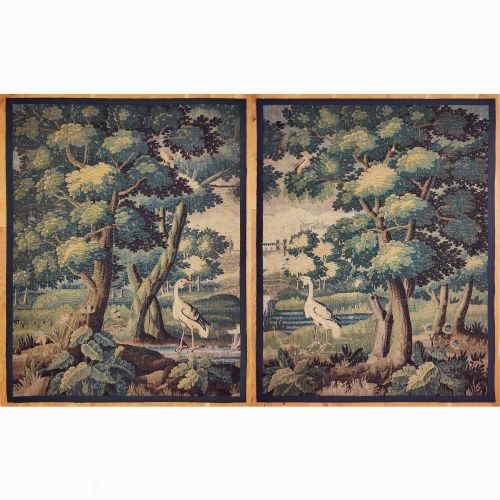
- A tapestry style featuring lush forest foliage, trees, and plants as the primary subject, often populated by birds or animals. These landscape scenes dominated European weaving centres from the sixteenth to the eighteenth centuries.
- Aubusson
- A style of tapestry and carpet produced in the French town of the same name, known for pastel palettes and classical motifs. These pieces often incorporate architectural borders framing pastoral views.
- Warp
- The stationary vertical threads stretched on a loom that form the structural foundation of a woven textile. Weft threads are passed through these structural lines to create the visible image.
- Kilim
- A flat-woven carpet or rug produced without a pile, utilising slit-weave techniques to create geometric patterns. Examples from regions such as Ushak and Bessarabia offer alternative flat-woven textures.
- Fragment
- A surviving portion of a larger historical tapestry, often mounted and framed for display. These pieces preserve specific motifs or figures from works that could not be kept intact.
Green Woven Tapestry: Frequently Asked Questions
How should I hang a heavy tapestry?
Large wall hangings require even weight distribution to prevent structural distortion along the upper edge. A specialist conservator can attach a supportive canvas sleeve and Velcro system to distribute tension across a wooden batten.
Direct exposure to strong sunlight should be avoided to protect wool and silk fibres from fading. Hanging textiles away from damp exterior walls ensures the natural fibres remain stable over time.
What is a verdure tapestry?
A verdure tapestry focuses on landscape elements such as trees, leaves, foliage, and occasionally small animals or distant buildings. These works were designed to bring the feeling of an outdoor garden or forest inside grand rooms.
The dominant colour palette relies heavily on various shades of green, blue-green, and ochre. They served as popular decorative wall coverings in European homes from the Renaissance through the nineteenth century.
Can I clean an antique tapestry?
Routine maintenance should be limited to very gentle surface vacuuming through a protective mesh screen on a low suction setting. Professional textile conservators should handle any wet cleaning or major structural repairs.
Attempting to wash historic wool and silk textiles at home risks shrinking the fibres and causing dye bleeding. Regular inspection for dust accumulation helps prevent particulate matter from embedding in the weave.
How do I date an old tapestry?
Dating relies on stylistic analysis of the border designs, costume details of any figures present, and the specific types of foliage depicted. Flemish and French workshops shifted their aesthetic preferences across centuries, moving from dense Renaissance compositions to lighter Rococo and Neoclassical frameworks.
Material analysis of the spun threads and remaining dyes provides further context when stylistic markers overlap. Comparing the weave density and subject matter to documented museum examples confirms the likely period of manufacture.