

Green Wooden Desk
A green wooden desk brings character and a functional workspace to a room, drawing on periods from the Georgian era to the early twentieth century.
Green Wooden Desk
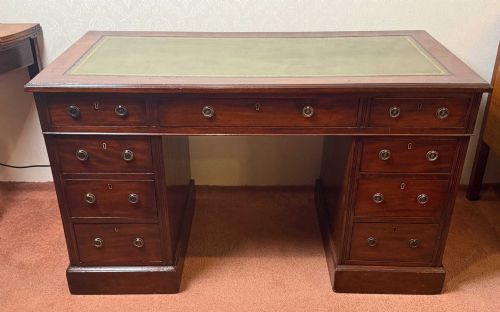
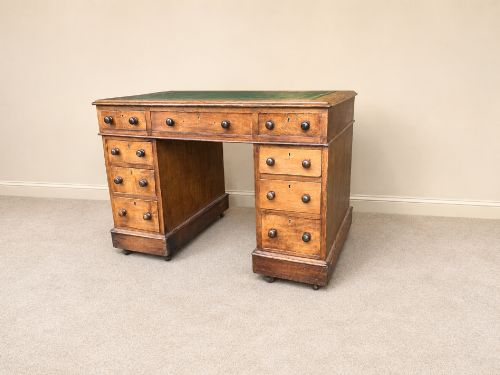
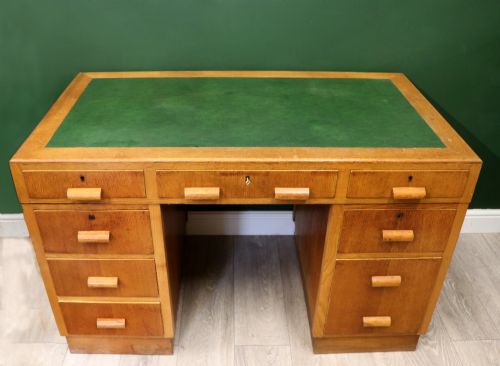
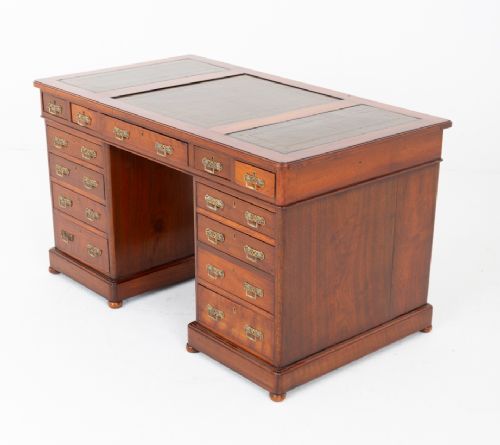
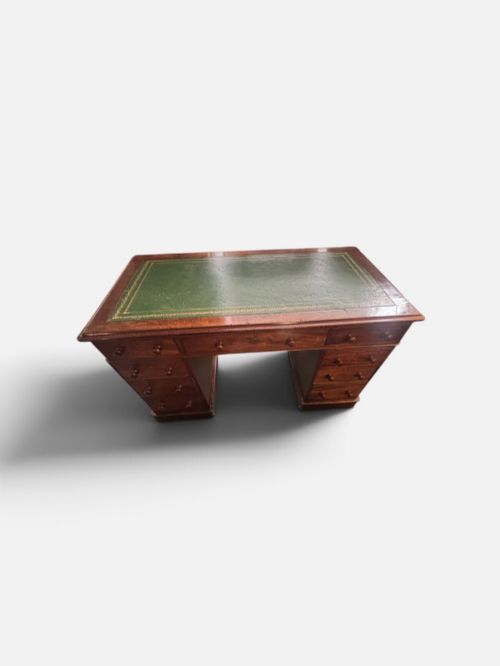
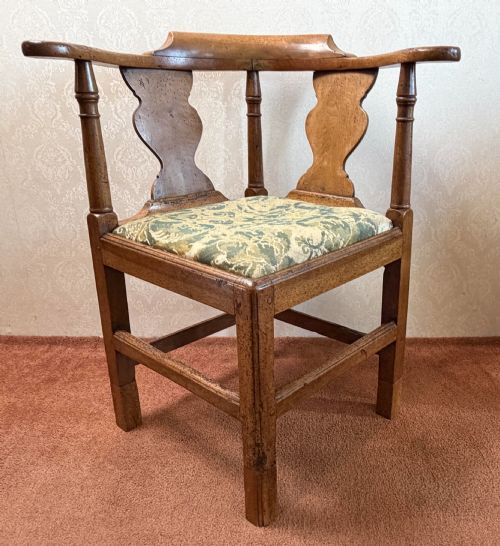
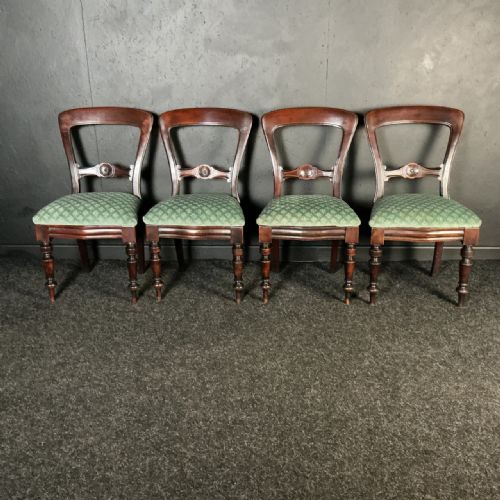
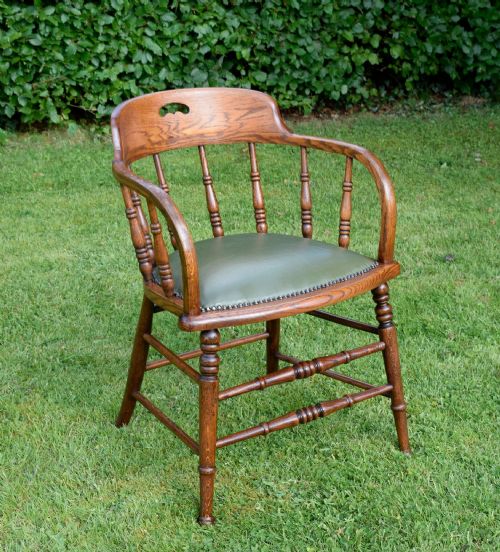
A green wooden desk unites solid timber construction with contrasting writing surfaces, most often found in pedestal, partner, or Davenport forms. The selection spans the Georgian, Victorian, and Edwardian periods, utilising painted finishes or inset leather and velvet inserts in shades of green.
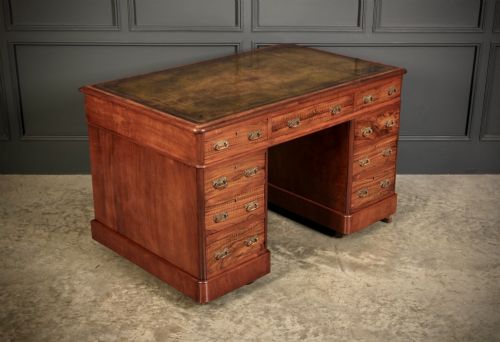
Pedestal desks and writing tables form the core of the selection, accompanied by Davenport desks and slope writing boxes. These pieces combine drawers and compartments with durable writing surfaces designed for daily use.
Originating from British workshops and cabinet makers, these items reflect the stylistic shifts from ornate Victorian mahogany to lighter Edwardian oak and utilitarian twentieth-century designs.
How they were made
Cabinet makers constructed these desks using timbers such as mahogany, walnut, oak, and elm, often pairing solid frames with flame mahogany or burr veneers. Brass hardware, including handles, locks, and bound corners, provides structural reinforcement and decorative detail.
Writing surfaces feature vegetable-tanned leather, velvet, or fabric inserts, frequently accented with blind tooling or gilt leaf borders. Painted finishes and polished wood surfaces protect the underlying timber while defining the visual character of the piece.
Green Wooden Desk Retail Price Guide 2026
Typical asking prices for green wooden desk among the pieces listed under this phrase on Sellingantiques today, from the lower quarter to the upper quarter. They describe what is for sale here now, not the wider market.
What varies in quality
The standard of timber selection and veneer matching dictates the visual depth of a desk, distinguishing simple utility pieces from fine cabinet work. Finely figured flame mahogany and burr walnut require superior skill in sawing and application.
Hardware integrity and drawer construction, such as hand-cut dovetails and original brass locks, reflect the competence of the original maker. The preservation of original tooled leather writing surfaces and polished finishes adds substantial merit.
Howard and Sons·Gillows·George Philips and Son Ltd
The Green Wooden Desk Glossary
- Pedestal desk
- A heavy freestanding desk comprising two supporting pedestals of drawers with a central writing section.
- Davenport desk
- A compact nineteenth-century writing desk featuring a sloping lid and drawers accessed from the side.
- Partners desk
- A large double-sided pedestal desk designed for two people to work opposite each other.
- Writing slope
- A portable or stationary box with an angled lid that opens to reveal compartments for writing materials.
- Flame mahogany
- A distinctive wood grain pattern created by slicing through boughs or forks of the mahogany tree.
Green Wooden Desk: Frequently Asked Questions
How do I identify a Victorian pedestal desk?
Victorian pedestal desks typically feature substantial mahogany or walnut construction with multiple drawer banks flanking a central kneehole. They often incorporate inset leather writing surfaces and traditional brass hardware.
Heavier proportions and deep, rich timber patination distinguish these nineteenth-century pieces from lighter twentieth-century office furniture.
What is a Davenport desk used for?
A Davenport desk serves as a compact writing station featuring a sloping, hinged top for correspondence. Side drawers provide concealed storage for stationery and inkwells.
Its modest footprint made it popular in nineteenth-century drawing rooms and parlours where space was limited.
Are leather desk inserts original?
Many nineteenth-century desks retain replacement leather writing surfaces, as the material naturally wears down with use. Original inserts often display faded gilt tooling and craquelure consistent with age.
Examining the edges and surrounding timber helps determine whether the leather has been renewed during restoration.
How do I care for a wooden desk?
Maintain timber surfaces by applying quality beeswax periodically and avoiding placement near direct heat sources. Protect the leather insert from moisture and sharp objects to preserve the finish.
Gentle dusting with a soft, dry cloth prevents particulate accumulation without damaging the antique polish.