
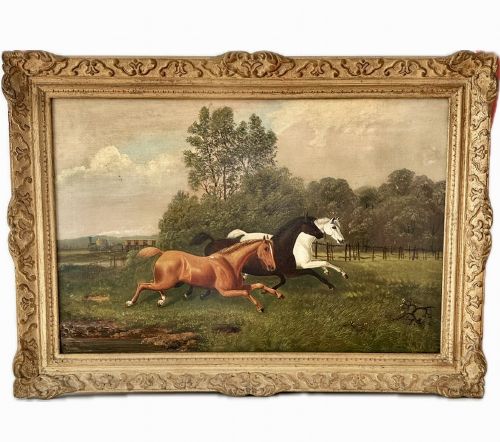


Green Victorian Sporting Artwork
Green Victorian sporting artwork captures horses, hounds, and country pursuits across nineteenth-century canvas and paper.
Green Victorian Sporting Artwork
Green victorian sporting artwork encompasses nineteenth-century oil paintings, prints, and wall art depicting equestrian scenes, hunting dogs, and field sports.
You will most frequently encounter oil on canvas works and framed prints showcasing horses, setters, spaniels, and countryside landscapes from the Victorian era.
The subjects range from fox hunting and steeplechasing to fishing and cricket, reflecting the outdoor pursuits valued during the nineteenth century.
What varies in quality
The fineness of brushwork in the depiction of animal anatomy, rider posture, and landscape detail distinguishes finer canvases from simpler school pieces.
The preservation of the original canvas, paper, and gilt framing determines the physical integrity of the piece.
The prominence of the artist and the clarity of the composition establish the distinction between standard decorative works and notable nineteenth-century paintings.
Watch for a Victorian pike surfacing after a catch, proving that fish had just as much drama in nineteenth-century ponds as horses did.
Edward Priestley·George Armfield·Colin Graeme Roe·Alfred Duke·Robert Cleminson·William Albert Clark·Samuel John Egbert Jones·John Parker Davis
The Green Victorian Sporting Artwork Glossary
- Oil on canvas
- Pigment mixed with drying oil applied to a stretched cloth support. This technique allows for rich colour blending and lasting durability.
- Lithograph
- A print made from a flat stone or metal plate on which an image is drawn with a greasy substance. It enabled mass production of detailed colour illustrations.
- Gilt
- A thin layer of gold leaf applied to wood or other surfaces. It provides a reflective, decorative border to traditional frames.
- Equestrian
- Pertaining to horses and horse riding. This theme is central to many nineteenth-century sporting scenes.
- School
- A group of artists sharing a similar style, period, or regional influence. It often denotes works by followers of a particular tradition.
Green Victorian Sporting Artwork: Frequently Asked Questions
What subjects appear in green victorian sporting artwork?
The subjects focus primarily on horses, hunting dogs, fishing, and shooting scenes set within nineteenth-century landscapes.
Artists recorded hounds pursuing game, horses clearing ditches, and anglers displaying their catch by riverbanks.
How do I care for these oil paintings?
Keep oil on canvas works away from direct sunlight and fluctuating temperatures to protect the paint and canvas.
Dust wooden and gilt frames gently with a dry cloth and avoid using liquid cleaners.
Are these pieces original nineteenth-century works?
The selection includes period oil paintings created during the nineteenth century alongside contemporary prints of that era.
Signatures, framing styles, and canvas conditions help identify the age of each individual piece.
How were these prints originally used?
Many framed prints and annual plates were produced for domestic display in country homes and parlours.
Publishers often released these colour lithographs to commemorate sporting events or seasonal traditions.