




Green Velvet Fireside Chair
A green velvet fireside chair brings deep colour and soft texture to a room, offering a traditional seat built for warmth and comfort.
Green Velvet Fireside Chair
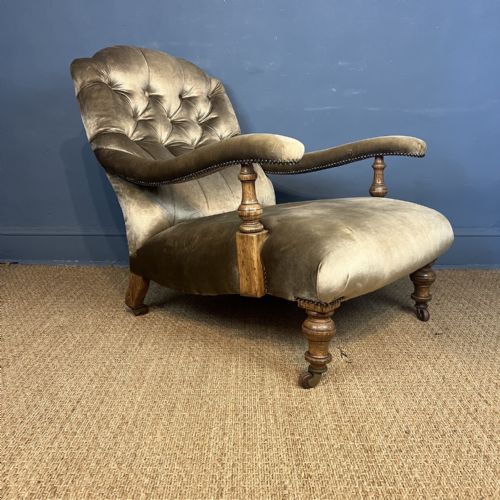
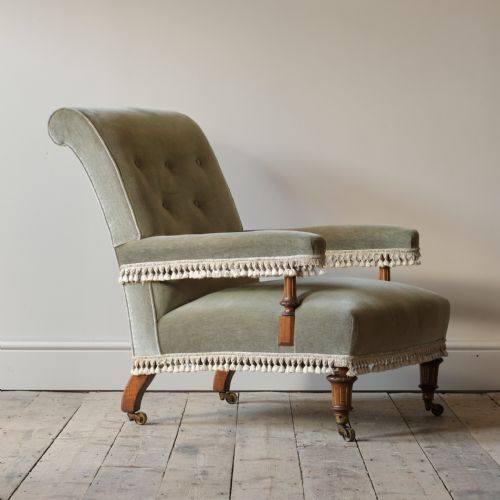
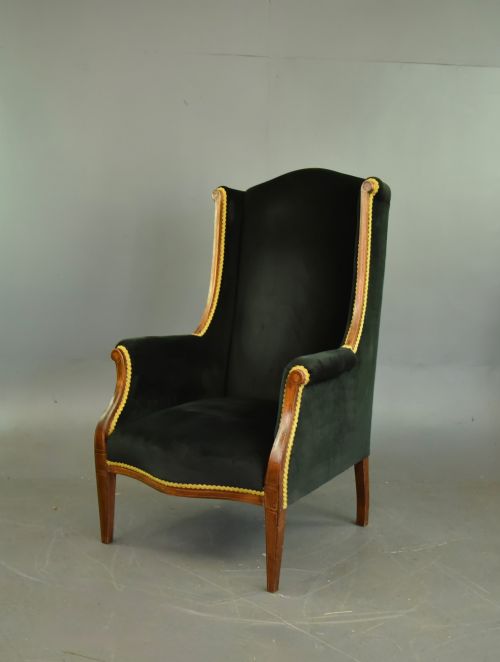
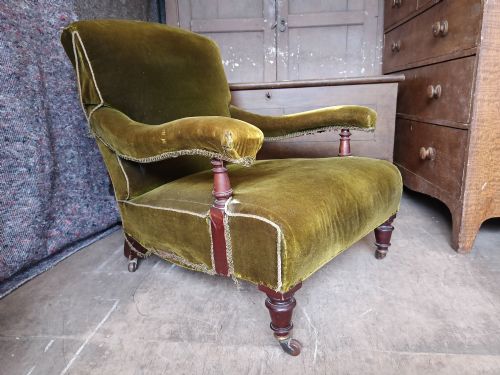
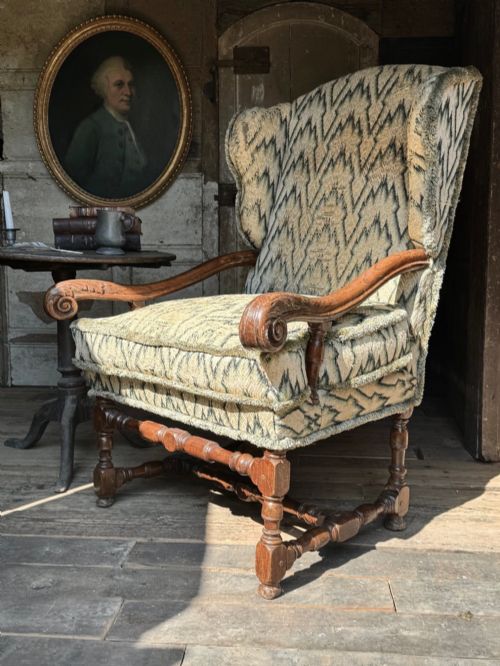
A green velvet fireside chair groups together upholstered seating designed for low-to-the-fire comfort, spanning periods from the eighteenth century to the twentieth. You will frequently encounter Victorian and Edwardian examples on this page, alongside earlier stylistic revivals.
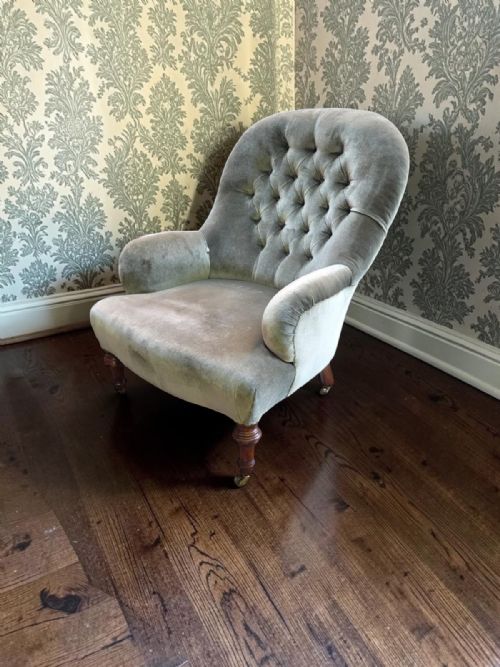
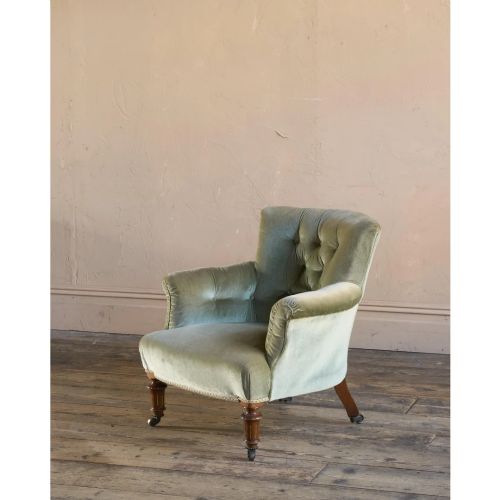
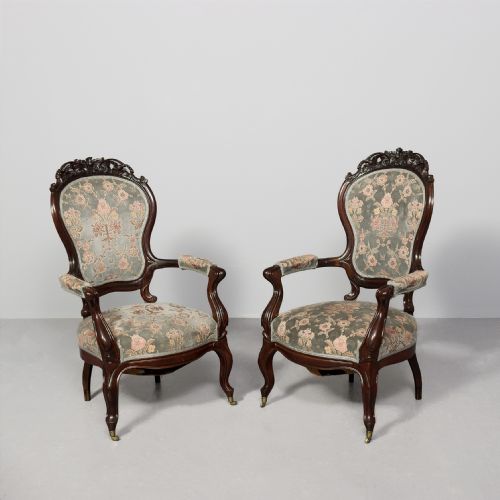
The forms vary from button-backed nursing chairs and low bedroom seats to substantial wingbacks and open armchairs. Timber frames in mahogany, walnut, rosewood, and oak support the textile upholstery.
Originating across English and French traditions, these chairs reflect the domestic seating habits of past centuries. The velvet surface provides a tactile richness that defines the group.
Materials and Construction
Makers constructed the structural frames from hardwoods including mahogany, walnut, rosewood, oak, and general timber. These woods were carved, turned into barley twist details, or shaped with cabriole legs to support the upholstered body.
Textile upholstery, specifically velvet, covers the padding of arms, backs, and sprung or stuffed seats. Brass fittings occasionally appear on castors or decorative elements, completing the construction of the chair.
Some nineteenth-century chairs include hidden castors beneath their cabriole legs, designed to let occupants glide across the hearth without scuffing the floorboards.
Distinctions in Standard
The integrity of the underlying timber frame and the precision of the cabinetwork set examples apart. Frames that retain their original structural firmness without modification represent higher standards of period craftsmanship.
The quality of the textile finish and the depth of the padding dictate the refinement of the piece. Superior execution shows in the balanced proportions of the carved woodwork and the neatness of the upholstery work.
Gillows·Hampton & Sons·C. Hindley & Sons
The Green Velvet Fireside Chair Glossary
- Wingback
- An armchair with side panels designed to shield the occupant from draughts. These wings extend from the upholstered arms up to the backrest.
- Button Back
- A style of upholstery where depressions are formed in the padding by stitches or buttons pulled tight. This technique secures the stuffing and creates a patterned surface.
- Cabriole Leg
- A furniture leg that curves out in a convex shape at the knee and tapers inward in a concave shape below. It finishes in a simple foot without a stretcher.
- Barley Twist
- A type of turning shaped like a spiral rope, found on the wooden legs or supports of chairs. This decorative woodworking technique appears frequently on nineteenth-century frames.
- Bergère
- An enclosed armchair with upholstered sides and back, typically featuring an exposed wooden frame. The style draws on French design traditions.
Green Velvet Fireside Chair: Frequently Asked Questions
How do I date a Victorian fireside chair?
Examine the wood of the frame and the style of the carving or turning, such as barley twist legs or rosewood finishes. Victorian pieces often display heavier proportions and specific button-backed upholstery.
Compare the construction methods and wood types with known stylistic markers of the mid to late nineteenth century. Secondary woods and framing techniques further help pinpoint the decade of manufacture.
What is a wingback armchair used for?
A wingback armchair was traditionally placed near a hearth to trap heat and block cold draughts from reaching the person seated. The side panels offered protection while sitting close to an open fire.
Today, these chairs function as reading seats or statement armchairs in living spaces. Their high backs and enclosed sides provide privacy and physical support.
How should I care for velvet upholstery?
Brush the velvet gently with the grain using a soft-bristled brush to maintain the pile and remove surface dust. Avoid harsh rubbing or direct moisture which can crush the fabric.
Professional cleaning is recommended for deeper maintenance to preserve the colour and texture of the textile. Keep the chair away from direct sunlight to prevent fading.
Are these chairs comfortable for daily use?
Many period armchairs feature deep padding and sprung seats designed for extended sitting. The scale of wingbacks and open armchairs offers substantial physical support.
Comfort levels depend on the condition of the internal padding and upholstery webbing. Inspecting the firmness of the seat gives a clear indication of how it feels in use.