



Green Velvet Arm Chair
A green velvet arm chair brings rich colour and deep texture to a room, drawing on centuries of upholstery traditions.
Green Velvet Arm Chair
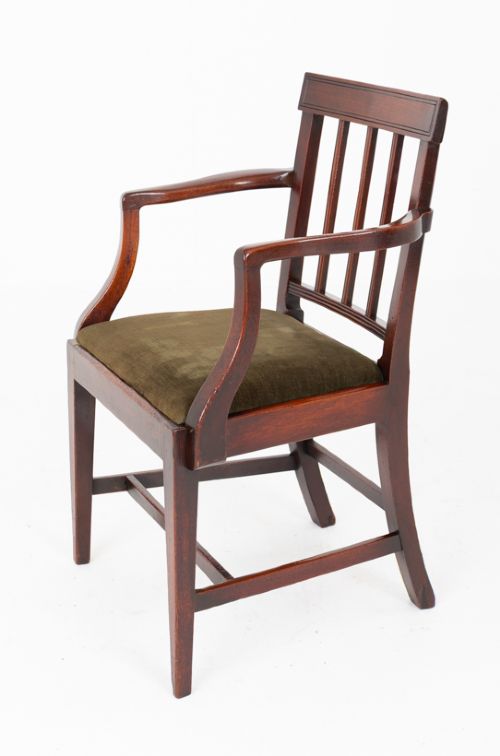
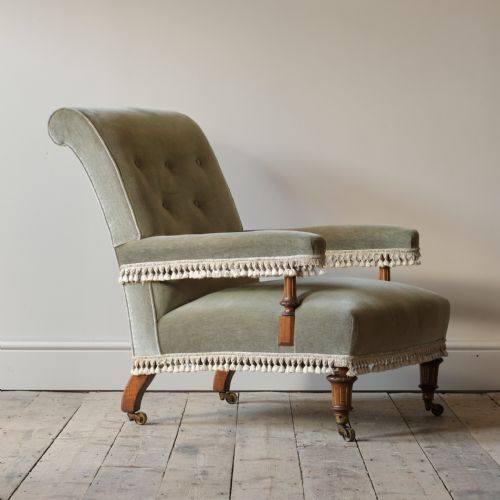
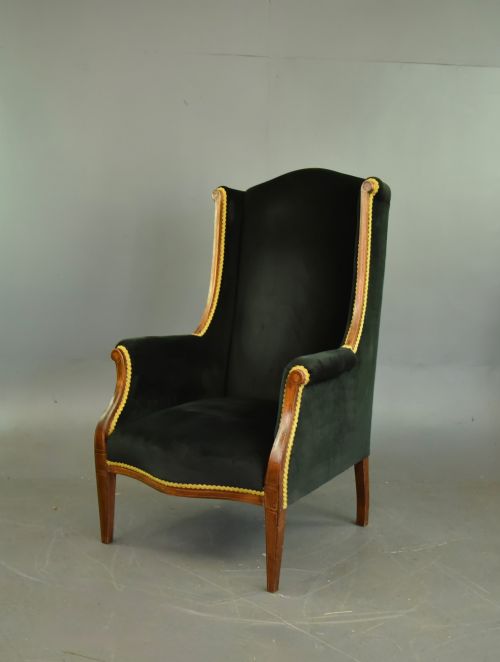
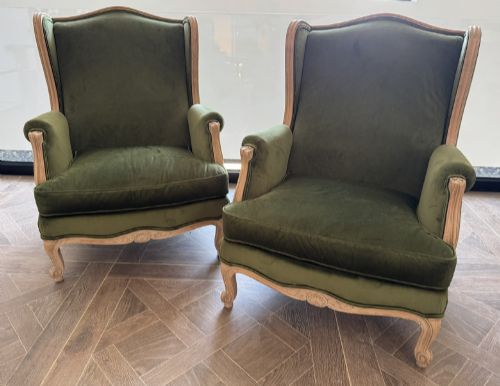
When searching for a green velvet arm chair, buyers encounter seating spanning the Georgian, Regency, Victorian and Edwardian periods. These pieces range from substantial library chairs and wingbacks to low bedroom chairs and carved elbow chairs.
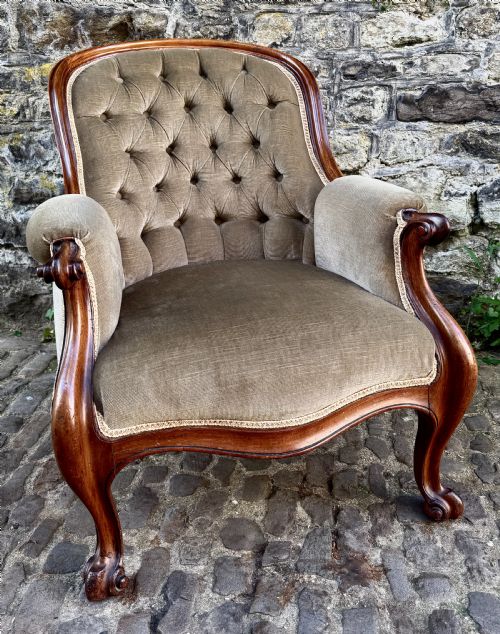
The selection here includes mahogany, walnut, rosewood and oak frames paired with velvet upholstery in shades from sage to dark green, often finished with button backs or tassel trim.
How they were made
Frames are constructed from hardwoods such as mahogany, walnut, rosewood, oak and satinwood, sometimes featuring carved details, barley twist supports, or brass accents. Upholstery employs velvet fabric stretched over traditional stuffing and springs.
Maker signatures and stamps occasionally appear on timber frames, while construction methods reflect the cabinet-making standards of the nineteenth and early twentieth centuries.
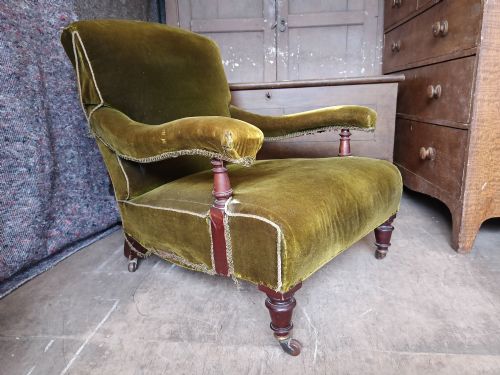
Some chairs retain threadbare green velvet that has absorbed decades of fireside heat and quiet reading sessions.
What varies in quality
Quality rests in the timber selection and the carving of the frame, where dense hardwoods like mahogany and walnut indicate finer work than plain secondary woods. The execution of details such as scrolled arms, turned legs, and inlaid satinwood defines the higher tiers.
The execution of the upholstery work, including buttoning and trim application, separates standard workshop output from pieces attributed to notable makers.
Gillows·Hampton and sons·Howard and sons·Holland and sons
The Green Velvet Arm Chair Glossary
- Button back
- An upholstery style where depressions are formed in the padding by pulling buttons deep into the stuffing. This creates a diamond pattern across the inner back.
- Barley twist
- A decorative turning technique resembling a twisted rope. It appears on the legs and structural supports of Victorian chairs.
- Wingback
- An armchair with side panels attached to the back and arms. These panels originally blocked drafts in older rooms.
- Scroll arm
- An armchair arm shaped in a continuous curve resembling a scroll. This profile is common in Regency and Victorian designs.
Green Velvet Arm Chair: Frequently Asked Questions
How do I clean antique green velvet?
Velvet requires gentle handling to preserve the pile and the rich green colour. Professional cleaning is recommended for antique upholstery.
Avoid using water or standard chemical sprays on older fabrics, as moisture can damage the backing and the timber frame beneath.
Are these chairs comfortable for daily use?
Many of these armchairs were designed for sitting in libraries, drawing rooms, or bedrooms, offering solid lumbar support and padded seats.
Upholstered versions with sprung seats provide a softer sit, though the depth and height vary considerably between Georgian and Victorian models.
How can I tell a Victorian chair from a Georgian one?
Georgian chairs generally display cleaner architectural lines and darker mahogany timbers with less applied ornamentation. Victorian pieces often introduce heavier proportions, walnut or rosewood veneers, and elaborate carvings like barley twists.
Upholstery styles also shift, with button backs and deep tufting becoming prevalent during the nineteenth century.
What wood types should I look for?
Mahogany and walnut form the backbone of the better nineteenth-century frames. Rosewood and satinwood appear on select library and drawing room pieces.
Softer woods like oak and various hardwoods are typically found on provincial or revival pieces from the later Victorian and Edwardian periods.