




Green Valley Painting
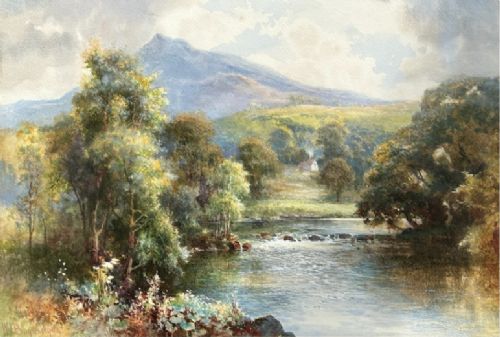
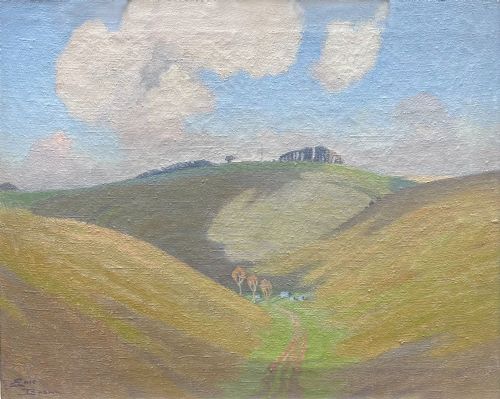
A green valley painting captures the topography of rural riverways and mountain vales through historic oil and watercolour pigments.
Materials and execution
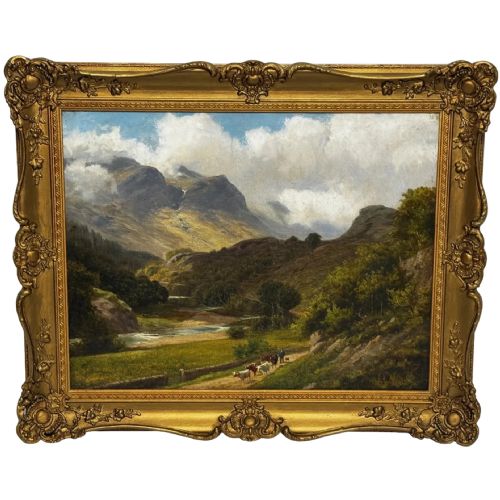
Artists deployed oil paint and watercolour pigment across canvas, paper, and wood panel supports to capture natural light and shadow within these landscapes. Many historic works incorporate traditional gilt framing to complement the painted composition.
Makers utilised brushwork ranging from tight Victorian detail to looser Post-Impressionist and Fauvist strokes, depending on the period and stylistic movement of the individual work.
Distinctions in standard
The strength of a composition rests upon the artist's handling of atmospheric light, particularly in depicting evening shadows or sunlight across a valley floor. Greater depth is achieved when the maker balances topographical accuracy with expressive brushwork.
The integrity of the original support, whether canvas, wood panel, or paper, influences the piece, alongside the preservation of the pigment and the appropriateness of any associated gilt frame.
Among the valley landscapes sits a lucky charm still life depicting delicate lily of the valley flowers.
Alfred Young Nutt·William Joseph Boyes·Eric Brown·William George Tennick·Hubert Wellington·Reginald Grange Brundrit·J Barclay·Harold Lawes·Fred Stead·Stephen Enoch Hogley·George Melvin Rennie·Henry Sykes·Frederick Richard Lee·Ernest Higgins Rigg·Charles Branwhite·Owen Bowen·Lester Sutcliffe·John J. Hamer·J.D. Walker·Hubert Sattler
The Green Valley Painting Glossary
- Watercolour pigment
- A water-soluble medium applied to paper surfaces to create translucent washes of colour. It requires careful mounting behind glass to protect the paper from moisture.
- Oil paint
- A slow-drying paint made from pigment suspended in oil, typically applied to canvas or wood panel. This medium allows for rich colour saturation and textured impasto application.
- Canvas
- A heavy woven fabric stretched across a wooden frame to serve as a durable support for oil paintings. It has been utilised by artists for centuries.
- Gilt frame
- A wooden decorative border coated with gold leaf or metallic paint. These frames enhance the visual presentation of landscape paintings from the Victorian period onwards.
Green Valley Painting: Frequently Asked Questions
What periods do these paintings date from?
The available artworks span from the nineteenth century through the Edwardian era and into the mid-twentieth century.
You will find examples representing Victorian landscape art alongside later British Impressionist and Modern British movements.
Which materials were used for these works?
Painters employed oil paint and watercolour pigments applied to canvas, heavy paper, wood panels, and card supports.
Many of the works retain their period gilt frames, adding structural and decorative depth to the pieces.
Where do the landscape scenes depict?
The geographical subjects cover diverse rural topographies including Welsh river valleys, Yorkshire dales, and Scottish glens.
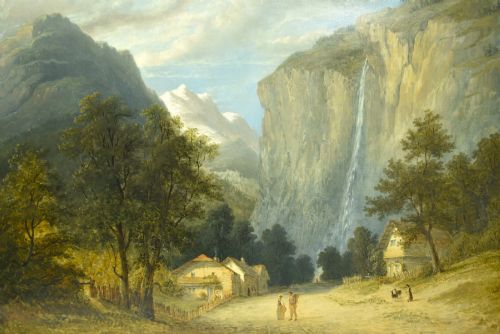
Several pieces also record continental European locations such as Swiss mountain passes and alpine waterfalls.
How should I care for a watercolour painting?
Watercolour works on paper must be kept away from direct sunlight to prevent the pigments from fading over time.
Ensure they are displayed in dry environments behind protective glass with acid-free mounting.