

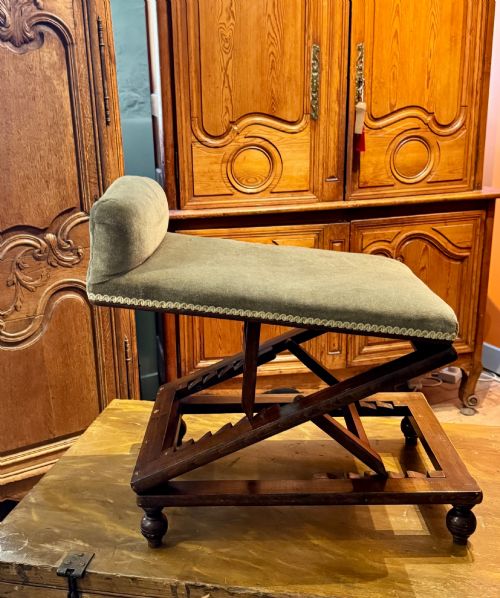
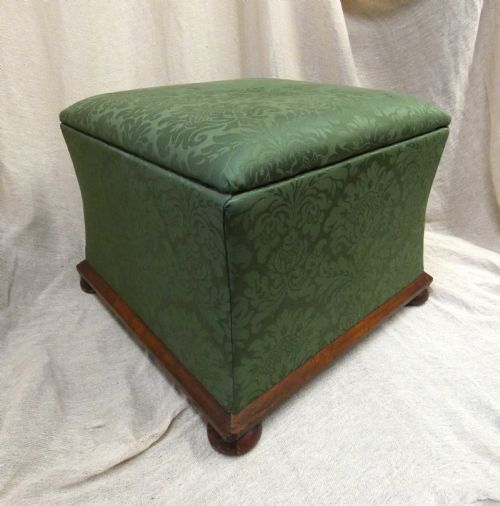


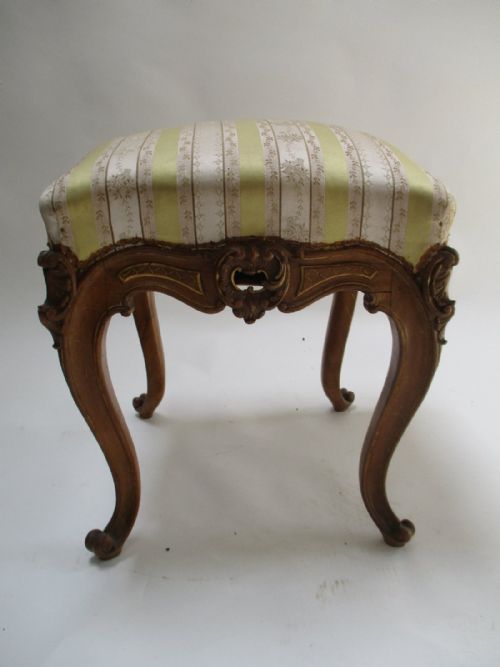
Green Upholstered Footrest
A green upholstered footrest brings softness to a room, offering a low perch for tired feet upholstered in velvet, wool, or linen.
Green Upholstered Footrest
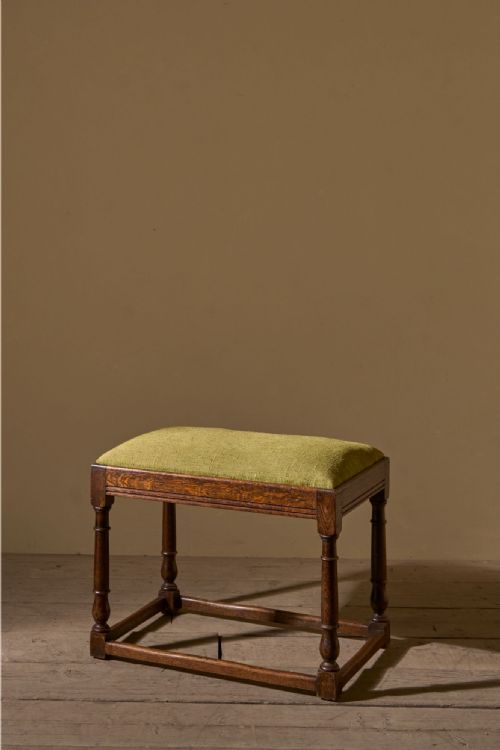
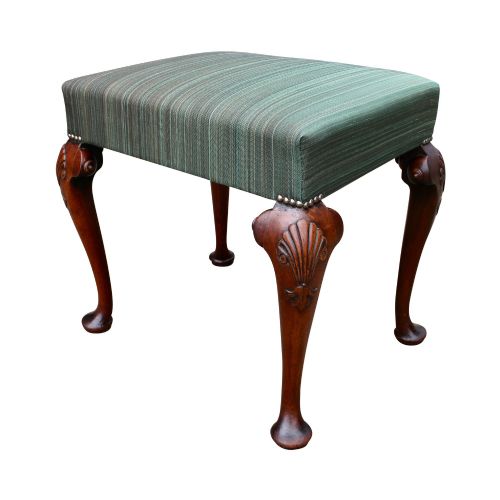
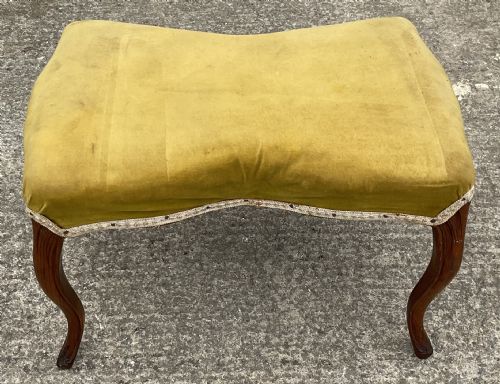
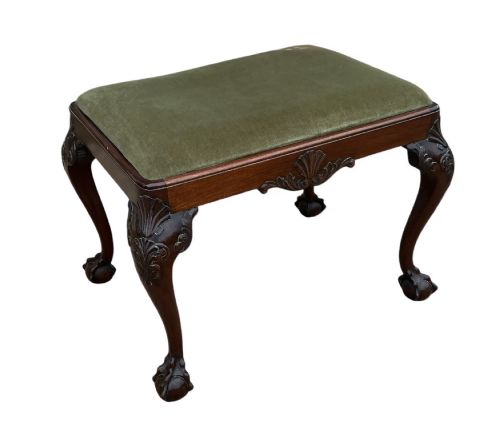
A green upholstered footrest is a practical domestic seat designed to support the feet or serve as a low stool, appearing in forms such as footstools, ottomans, and gout stools. When searching for a green upholstered footrest, buyers encounter pieces ranging from compact Victorian footstools to larger square ottomans and adjustable designs. These items frequently date from the nineteenth century or the early twentieth century, reflecting periods of solid domestic craftsmanship.
The styles span traditional revivals including Queen Anne, Chippendale, and Jacobean, alongside English country house aesthetics and French influences. Woods such as mahogany, oak, walnut, and beech form the structural frames, often exposed around the edges of the upholstery. Most examples combine a sturdy timber base with soft textile coverings in shades of green.
Makers and workshops of the past utilised both simple joint construction and elaborate carved detailing to create these functional furnishings. Whether intended for a formal drawing room or a quiet study, a green upholstered footrest provides a tangible link to historical interior styling.
What varies in quality
The choice of timber underpins the integrity of each piece, with dense hardwoods like walnut and mahogany providing greater durability than softer woods. Carved detailing on the wooden frames indicates the level of artisan skill invested in the construction.
The selection of covering material also differentiates examples, from standard woven fabrics to heavy linens, tapestries, and rich velvets. Frames featuring adjustable or metamorphic mechanisms require precise engineering to function smoothly over generations.
Green Upholstered Footrest Retail Price Guide 2026
Typical asking prices for green upholstered footrest among the pieces listed under this phrase on Sellingantiques today, from the lower quarter to the upper quarter. They describe what is for sale here now, not the wider market.
Whytock and Reid
The Green Upholstered Footrest Glossary
- Gout stool
- A specialised footrest designed with an adjustable or sloped top to support a foot affected by gout. These pieces often include mechanical adjustments.
- Joint stool
- An early form of wooden stool constructed with mortise and tenon joints held together by wooden pegs. They provide sturdy, low seating.
- Ottoman
- A low, upholstered seat or footstool without a back or arms, often built on a larger scale. They function as both footrests and casual seats.
- Chinoiserie
- A decorative style reflecting European interpretations of Chinese artistic traditions, sometimes seen on carved wooden frames and details. It adds distinctive ornamentation to furniture.
- Tapestry
- A heavy hand-woven or jacquard textile featuring pictorial designs, utilised as a durable upholstery covering on antique stools. This material adds texture and historical pattern.
Green Upholstered Footrest: Frequently Asked Questions
What is a gout stool?
A gout stool is an adjustable footrest designed to elevate and angle a foot for comfort. These pieces feature mechanical parts to alter the incline.
They appear in nineteenth-century workshops as specialised medical and domestic furniture. The adjustable design sets them apart from standard static footstools.
How do I clean antique upholstery?
Cleaning antique upholstery requires gentle surface care suited to textiles like velvet, wool, or heavy linen. Professional restoration preserves fragile historic fibres.
Avoid harsh chemical cleaners that damage aged fabrics and wooden frames. Regular light dusting protects the textile surface from wear.
Are these footrests sturdy enough to sit on?
Most of these pieces were built using solid hardwoods like oak, mahogany, and walnut to support daily weight. Their robust timber frames ensure lasting structural integrity.
Heavier ottomans and joint stools function reliably as spare seats in a room. Lighter adjustable stools suit foot support rather than heavy seating.
How do I identify Victorian pieces?
Victorian footstools often display dark woods such as mahogany and walnut paired with rich upholstery. Characteristic design revivals define the aesthetic of this era.
Examination of the timber framing and joinery helps distinguish nineteenth-century production. Stamped maker details or characteristic hardware offer further chronological clues.