



Green Textile Art
Green textile art gathers together historic needlework, tapestries and woven wall hangings spanning centuries of domestic and grand interior decoration.
Green Textile Art
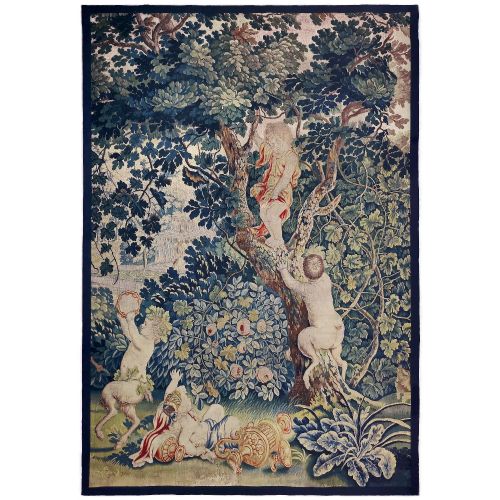
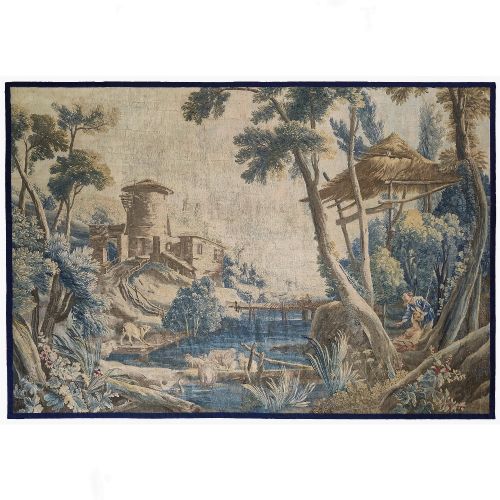
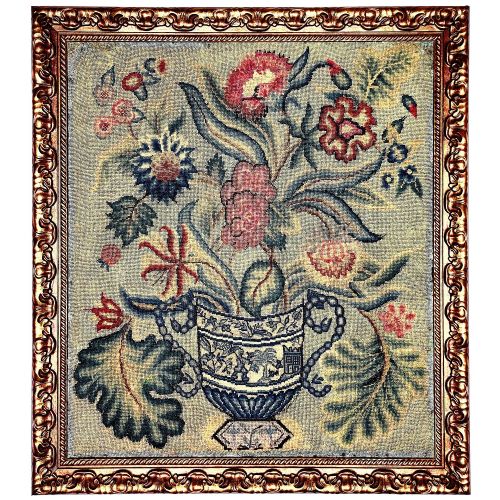
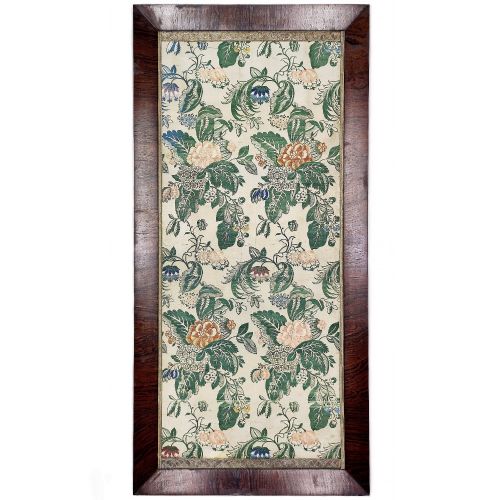
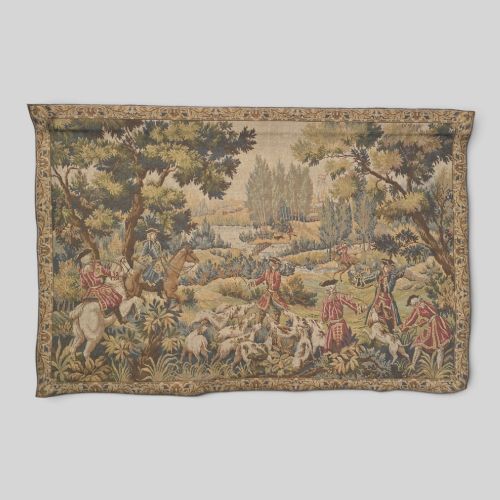
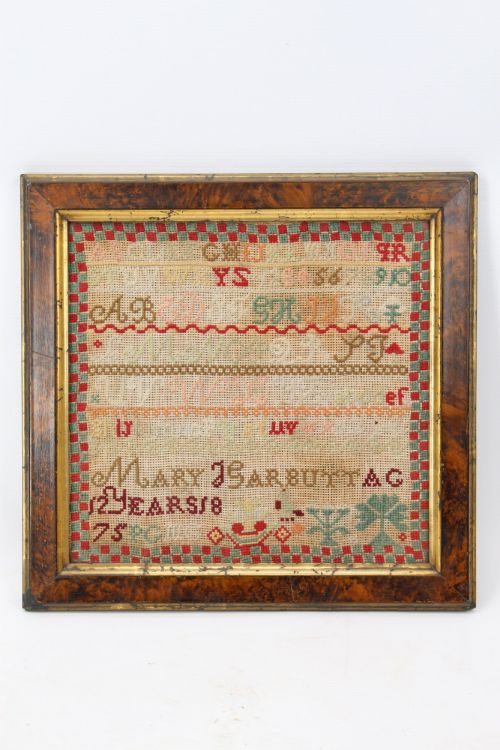
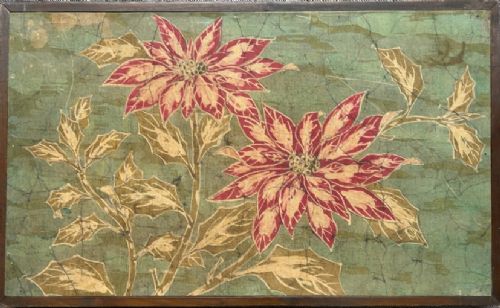
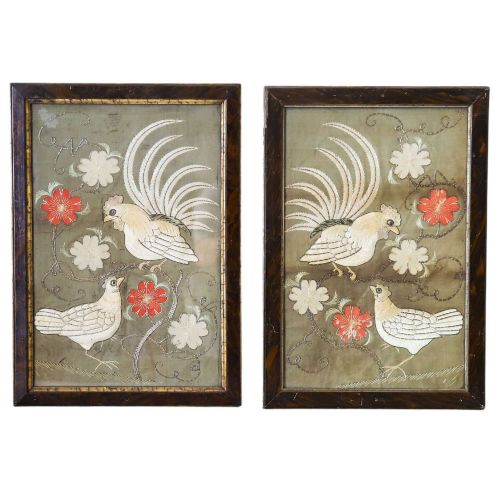
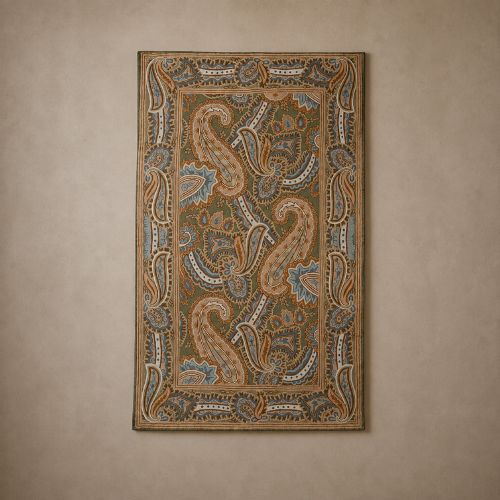
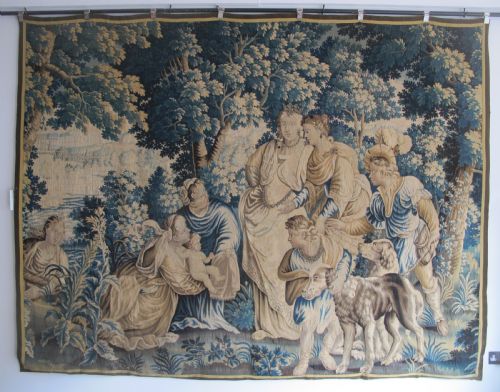
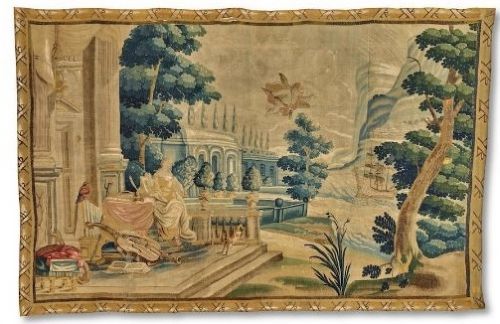
Green textile art encompasses diverse historical categories ranging from seventeenth-century Flemish verdure tapestries to nineteenth-century needlework samplers and mid-twentieth-century batik panels. Pieces designed for wall suspension appear frequently, including large Aubusson panels and framed wool or silk embroideries.
The material record spans from domestic samplers worked by young girls in the Georgian and Victorian eras to grand mythological and pastoral wall hangings produced in European workshops. Scandinavian rya rugs and Indian painted wall cloths further broaden the scope of textile items found in this category.
Materials and construction
Makers utilised natural fibres such as wool, silk, cotton and linen, often combining them within a single woven panel or embroidered surface. Pigments applied to cloth appear in specific painted wall textiles alongside complex needlework techniques including gros-point and crewelwork.
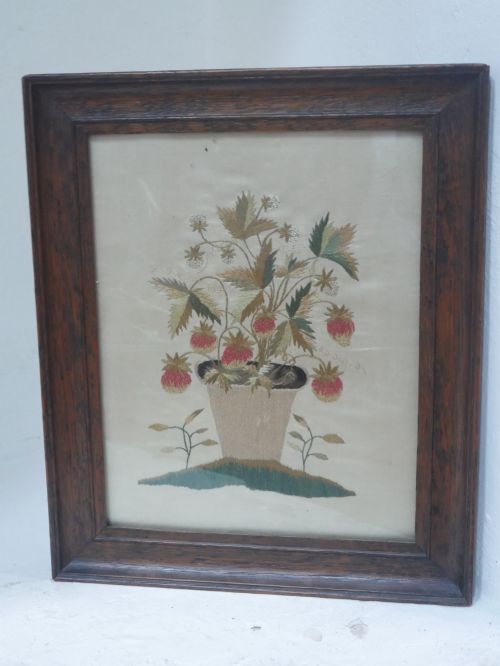
Wooden frames and occasionally glass protect fragile textile fragments, while larger tapestries rely on dense warp and weft interlacing without auxiliary support. Structural variation ranges from simple band samplers to heavy carpet weaves and layered textile panels.
Green Textile Art Retail Price Guide 2026
Typical asking prices for green textile art among the pieces listed under this phrase on Sellingantiques today, from the lower quarter to the upper quarter. They describe what is for sale here now, not the wider market.
Several historical samplers record youthful arithmetic and stitch errors left permanently in thread by makers centuries ago.
Evaluating execution
Quality rests on the density of the weave, the precision of the needlework and the clarity of pictorial composition. Finely rendered figures, deliberate stitch control and sophisticated colour shading distinguish ambitious workshop productions from simpler domestic exercises.
Condition and completeness alter the standing of a textile, separating intact historical panels from fragmentary survivors. The stability of the fibres and the retention of original botanical or mineral pigments dictate the visual strength of the piece.
The Green Textile Art Glossary
- Sampler
- A piece of needlework demonstrating various stitches and patterns, traditionally worked by young practitioners to evidence their skill. Surviving examples often record the maker's name, age and date of completion.
- Verdure tapestry
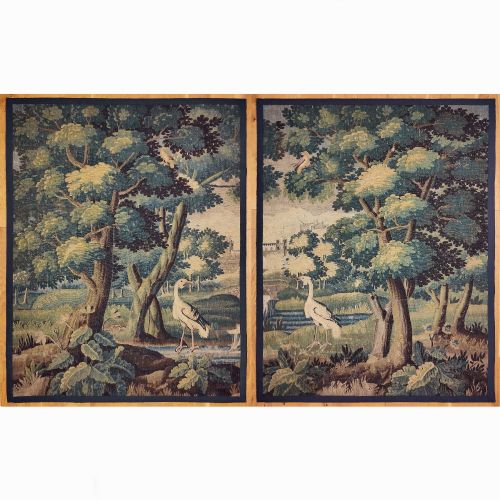
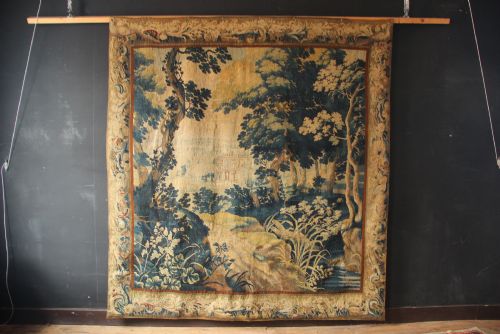
- A woven wall hanging dominated by botanical foliage, trees, and landscape views, frequently featuring birds or animals. These scenes draw upon seventeenth and eighteenth-century European weaving traditions.
- Aubusson
- A style of tapestry originating from the French town of the same name, known for pictorial pastoral and mythological subjects. These woven panels decorated noble and bourgeois interiors alike.
- Crewelwork
- A type of embroidery executed with wool yarn on a sturdy linen or cotton ground, producing textured surface patterns. This technique appears widely on historical hangings and decorative panels.
- Rya
- A traditional Scandinavian knotted pile rug or wall hanging characterised by long, soft wool threads. These textiles combined practical warmth with decorative geometric or organic designs.
Green Textile Art: Frequently Asked Questions
How should I hang a heavy antique tapestry?
Large tapestries require even weight distribution across a concealed wooden batten or metal rod using a heavy cotton or linen support band stitched along the upper reverse edge.
Avoid hanging textiles directly in strong sunlight or against damp external walls to preserve the integrity of the wool and silk fibres.
Can I clean an old wool sampler myself?
Historic needlework requires professional textile conservation rather than domestic washing due to the vulnerability of aged threads and fugitive natural dyes.
Surface dust can be gently removed using low-suction vacuum cleaners fitted with mesh screens to protect fragile stitches.
What does verdure mean in tapestries?
Verdure refers to landscape scenes dominated by green foliage, trees, gardens and woodland creatures rather than human historical narratives.
These panels brought the appearance of the outdoors into formal domestic interiors during the seventeenth and eighteenth centuries.
How do I date an antique embroidery?
Dating relies upon stylistic cues, materials, framing methods and inscribed dates or maker details worked directly into samplers.
Comparative study of stitch types, motifs and fibre analysis help place undated panels within their broader historical period.