
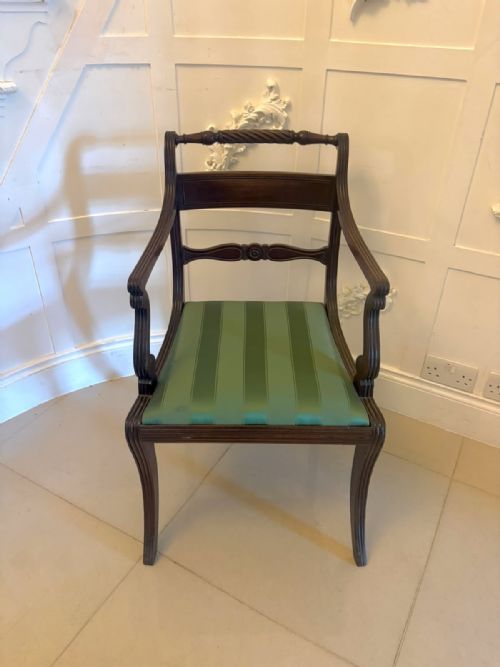


Green Striped Chairs
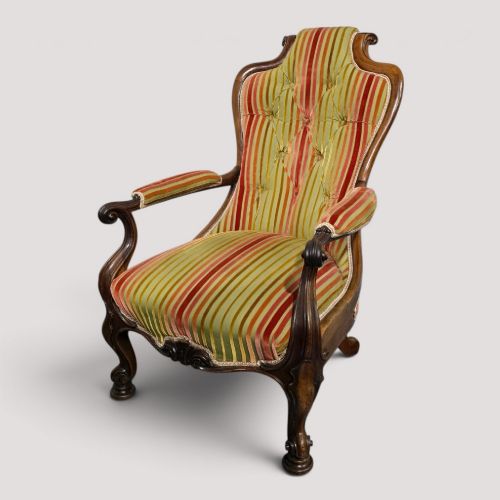
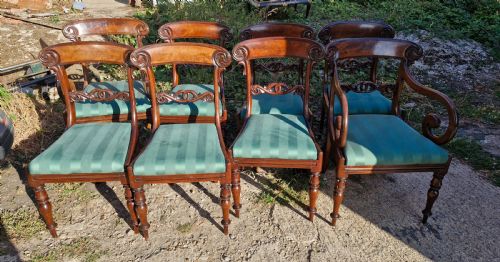
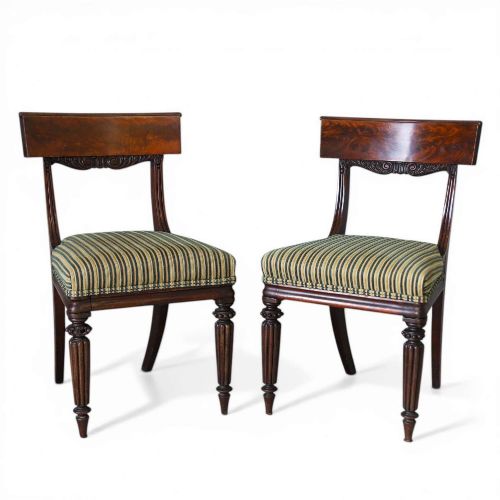
Green striped chairs bring pattern and period character to a room, ranging from mahogany dining seats to carved library armchairs.
Green Striped Chairs
Green striped chairs encompass a wide variety of seating forms spanning the Georgian, Regency, Victorian, and early twentieth-century periods. When searching for green striped chairs, buyers encounter everything from sets of mahogany dining chairs to single upholstered armchairs, chaise longues, and sofas.
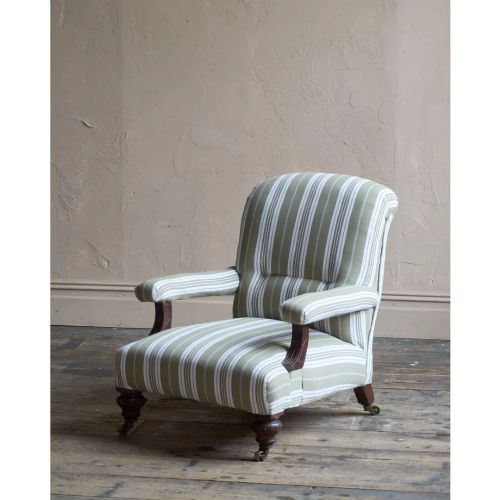
The selections on this page feature classic seating styles such as Victorian, Regency, William IV, French Neoclassical, Karl Johan, George IV, Louis XV style, and Georgian. Forms range widely from practical dining chairs and desk chairs to oversized open armchairs and library chairs.
How they were made
Makers utilised solid timbers such as mahogany, birch, rosewood, and painted wood for the frames, often incorporating brass details and carved elements. Upholstery relies on traditional textiles, cotton, and ticking fabrics to achieve the characteristic striped appearance.
Construction techniques span from Regency cabinet-making to Victorian framing methods, resulting in sturdy hardwood structures designed to support detailed fabric coverings.
Period origins span from eighteenth-century Georgian designs through to early twentieth-century Karl Johan and French-influenced seating.
What varies in quality
Quality shows in the selection and figuration of the timber used for the frames, along with the crispness of any carved decoration on the wood. Higher-tier examples demonstrate superior cabinet-making joinery and well-proportioned forms that balance comfort with period aesthetics.
The execution of the upholstery work and the choice of textile also separate standard examples from finer pieces. Original or sympathetic fabric choices enhance the historical integrity of chairs originating from nineteenth-century workshops.
The Green Striped Chairs Glossary
- Regency stripe
- A distinct vertical pattern associated with nineteenth-century interior decoration. It frequently appears on upholstery for chairs from the Regency and Victorian eras.
- Curule
- An ancient Roman-derived X-shaped furniture form adapted during the nineteenth century. This design underpins specific library armchairs and seating frames.
- Chaise longue
- An elongated upholstered chair designed for reclining. These pieces combine seating and footrest elements within a single frame.
- Open armchair
- A seat featuring un-upholstered wooden armrests. These frames expose the carved or polished hardwood structure alongside the upholstered pad.
Green Striped Chairs: Frequently Asked Questions
Are these chairs suitable for daily dining?
Many of the listed pieces are sets of dining chairs constructed from solid hardwoods like mahogany. They are built for regular use around a dining table.
Buyers should check the specific dimensions and seat heights to ensure they suit modern tables and seating preferences.
How do I identify a Regency chair?
Regency chairs typically date from the early nineteenth century and feature clean classical lines influenced by ancient Greek and Roman designs. They often utilise dark timbers such as mahogany.
Details like saber legs and subtle brass inlay help distinguish this period from later Victorian revivals.
Can I use an armchair in a bedroom?
Oversized armchairs, slipper chairs, and chaise longues fit naturally into bedroom settings as reading spots or decorative statement pieces. Their upholstered forms provide softer textures against bedroom furniture.
Scale is the main consideration to ensure the chair matches the proportions of the room.
What is a Karl Johan chair?
Karl Johan chairs reflect the Scandinavian interpretation of Empire and neoclassical styles during the nineteenth century. They often employ birch and other pale wood varieties.
These pieces bring a distinct Nordic character to interiors while maintaining formal period proportions.