





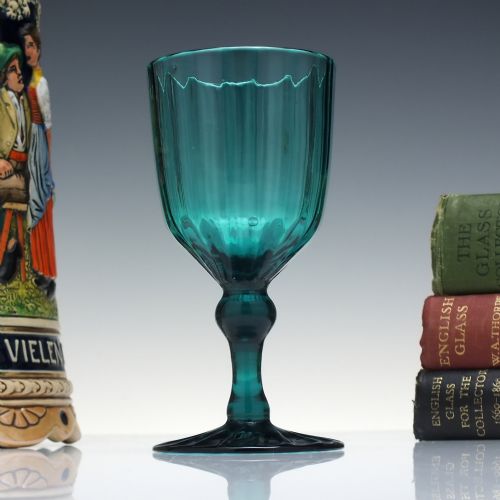


Green Stem Wine Glass
These green stem wine glass examples bring distinctive colour and historical craft to the table, offering a striking way to serve wine.
Green Stem Wine Glass
When you search for a green stem wine glass, you encounter pieces spanning the Georgian, Victorian, and Edwardian eras up to the early twentieth century. The selection ranges from robust roemer glasses to tall goblets and delicate dessert wines in shades from pale green and aqua to emerald and turquoise.
The objects listed show both English and continental origins, particularly from Bohemia and firms like Theresienthal. You find single vessels alongside matched pairs and larger sets intended for practical dining use.
Victorian and Edwardian examples dominate the offerings, often featuring coloured glass bowls paired with contrasting stems or fully tinted green vessels. These glasses reflect changing dining customs across the nineteenth and twentieth centuries.
How they were made
Glassmakers utilised lead glass, crystal, and blown glass techniques, shaping vessels by hand while molten. Rib moulding created textured surfaces on eighteenth-century pieces, while wheel cutting defined later Biedermeier examples.
Many items incorporate enamel decoration and gold leaf applied to the surface. Polychrome enamel and floral motifs required careful firing to bond the pigments permanently to the glass body.
Green Stem Wine Glass Retail Price Guide 2026
Typical asking prices for green stem wine glass among the pieces listed under this phrase on Sellingantiques today, from the lower quarter to the upper quarter. They describe what is for sale here now, not the wider market.
The listings span multiple periods from the Georgian era through to 1910, showing glass, coloured glass, and crystal.
What varies in quality
Quality shows in the weight and clarity of the glass, the precision of the cut or moulded ribs, and the skill evident in enamel work. Pieces with cleanly proportioned stems and balanced bowls demonstrate superior craftsmanship.
The execution of surface decoration distinguishes standard production from finer output. Hand-painted enamels and delicate gilding require steady execution that elevates the appearance of the finished vessel.
Theresienthal·Frits Hechert
The Green Stem Wine Glass Glossary
- Roemer
- A traditional Germanic drinking vessel featuring a wide bowl and a hollow, studded stem. These glasses often display green glass and detailed enamel work.
- Enamel
- Opaque glass paste applied to the surface of a vessel as decoration. Artisans used polychrome enamels to create floral and geometric patterns.
- Biedermeier
- A Central European style dating to the early nineteenth century. Furniture and decorative arts from this period emphasise clean lines and practical elegance.
- Lead glass
- Glass containing lead oxide, which increases brilliance and weight. This material allows for sharper wheel cutting and clearer ringing tones.
Green Stem Wine Glass: Frequently Asked Questions
What is a roemer glass?
A roemer is a traditional Germanic drinking vessel with a distinctive large bowl resting on a cylindrical, hollow stem decorated with applied prunts. These glasses were historically used for white wine and hock.
Most surviving examples appear in green glass, reflecting the natural iron impurities in the sand used by early continental glasshouses. They range from eighteenth-century exports to later Bohemian productions.
How do I date a green wine glass?
Dating relies on observing the form, manufacturing technique, and decorative style of the piece. Georgian glasses often show pontil marks on the base and heavier lead composition, while Victorian and Edwardian examples utilise machine moulding or brighter coloured glass.
Comparing the shade of green and the presence of enamel or cut decoration helps place a glass within its specific nineteenth or early twentieth-century period.
Can I use antique wine glasses today?
These historical glasses are robust enough for gentle contemporary use during special dinners. Hand washing in warm water preserves the glass and any delicate enamel or gold leaf decoration.
Avoid placing antique glassware in dishwashers or exposing them to sudden temperature changes to prevent thermal shock and cracking.
What is the difference between crystal and glass?
Crystal contains added minerals such as lead or barium that increase the refractive index and weight of the material. This composition allows artisans to cut finer facets and produce clearer rings when struck.
Standard glass lacks these additives, resulting in a lighter feel and simpler forming characteristics.