



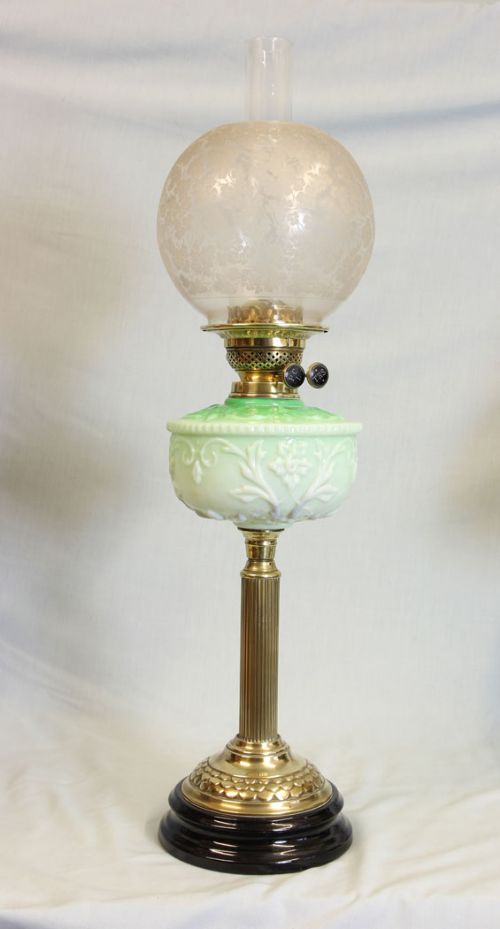


Green Shade Oil Lamp
A green shade oil lamp brings a warm, steady glow and authentic period character to any room.
Green Shade Oil Lamp
A green shade oil lamp combines functional nineteenth-century lighting with distinctive coloured glass reservoirs and globes. These pieces range from tall brass floor standards to compact table lamps designed for domestic use.
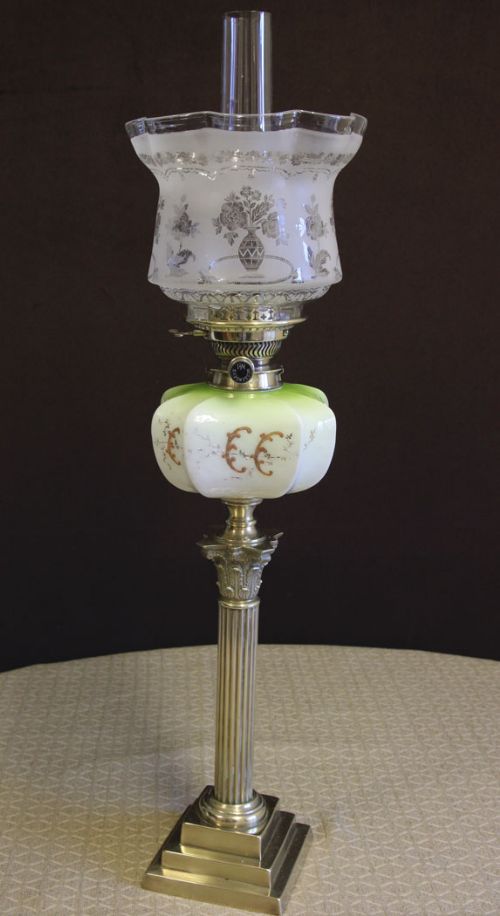
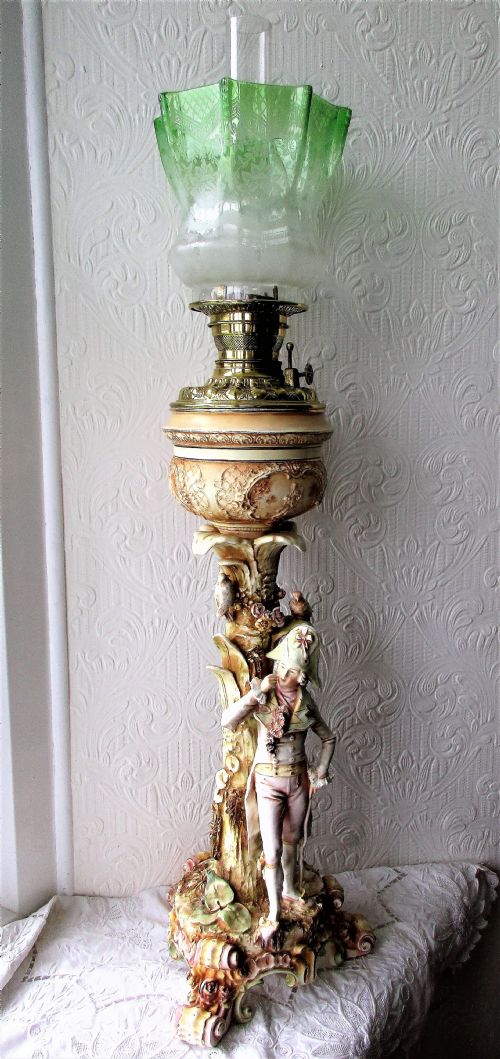
Most examples originate from the Victorian period, spanning standard column designs to figural porcelain compositions. Buyers encounter brass bodies paired with tulip-shaped shades, frosted glass globes, and matching green fonts.
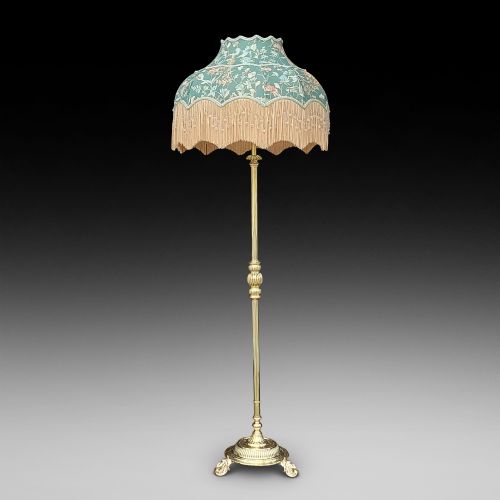
The selection includes adjustable standards and duplex burners alongside standalone replacement shades. French and English workshops dominate the origins, reflecting diverse stylistic influences from classical revival to utilitarian domestic design.
Materials and construction
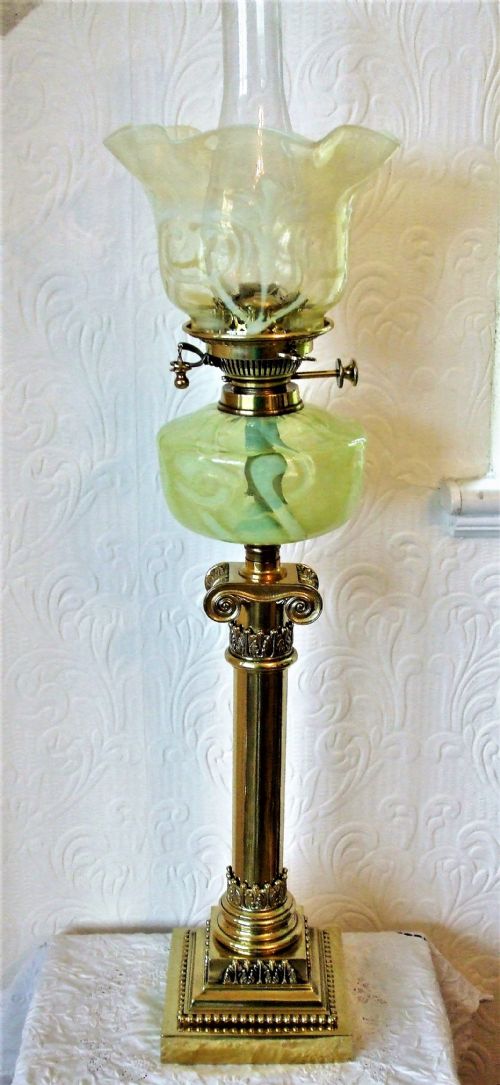
The construction relies heavily on polished brass and cast metal, frequently shaped into Corinthian or ionic columns. Silver-plated elements and ormolu provide more ornate framing for delicate satin and clear glass components.
Green Shade Oil Lamp Retail Price Guide 2026
Typical asking prices for green shade oil lamp among the pieces listed under this phrase on Sellingantiques today, from the lower quarter to the upper quarter. They describe what is for sale here now, not the wider market.
Listings feature Victorian pieces incorporating brass, porcelain, and both frosted and clear green glass.
Judging quality and execution
Superior examples exhibit crisp casting in the brass columns and intricate repoussé detail on the metal bases. The weight and clarity of the green glass shade or font distinguish finer workshop output from simpler production.
Maker marks on the burner mechanism, such as duplex systems or specific patented designs, indicate higher grade domestic lighting. Integration between the metal mountings and the glass elements reveals the precision of the original assembly.
Hinks
The Green Shade Oil Lamp Glossary
- Duplex burner
- A twin-wick mechanism that produces a brighter flame than single-wick variants. This system became standard on better quality nineteenth-century lighting.
- Font
- The oil reservoir of the lamp, frequently rendered in coloured or green glass to match the upper shade. It sits atop the main column or base.
- Peg lamp
- A small oil lamp fitted with a tapered lower metal or glass peg designed to drop directly into a candlestick or receiver. These offer versatile placement options.
- Repoussé
- A metalworking technique where the artisan hammers the design from the reverse side to form raised ornamentation. This appears on brass bases and reservoirs.
- Tulip shade
- A flared glass shade resembling an open flower bloom, commonly utilised on Victorian table lamps to direct downward illumination.
Green Shade Oil Lamp: Frequently Asked Questions
What is a green shade oil lamp?
A green shade oil lamp is a nineteenth-century lighting fixture featuring a metal or ceramic base, an oil reservoir, and a distinctive green glass shade. They were standard domestic lighting before electricity.
Today, collectors value them for their period aesthetic and atmospheric illumination. Many have been converted for modern electrical use while retaining their original burner assemblies.
How do I identify a Victorian oil lamp?
Victorian oil lamps are identified by heavy brass columns, marked burner mechanisms like duplex systems, and specific nineteenth-century proportions. Materials typically include heavy cast brass, porcelain figural elements, and blown glass.
Stylistic cues such as classical revival columns or etched glass shades point directly to the nineteenth-century manufacturing period. Maker names stamped on the brass knobs confirm the era.
Can these lamps still burn oil?
Many nineteenth-century lamps retain their original internal wick chambers and burners, though safety guidelines often prompt modern electrical conversion. Using them with paraffin requires careful inspection of the metal reservoir and wick mechanism.
Buyers intending to burn oil must ensure the font is free from internal hairline fractures. Most contemporary owners prefer to display them as decorative objects or with safe electrical wiring.
How do I clean the brass and glass?
Brass components respond well to gentle cleaning with a soft cloth to preserve the aged patina developed over the decades. Avoid harsh chemical polishes that strip the historical character from the cast metal surfaces.
Glass shades and green fonts can be washed in warm soapy water using non-abrasive sponges. Care must be taken around delicate painted details or thin satin glass edges.