


Green Peridot Pendant
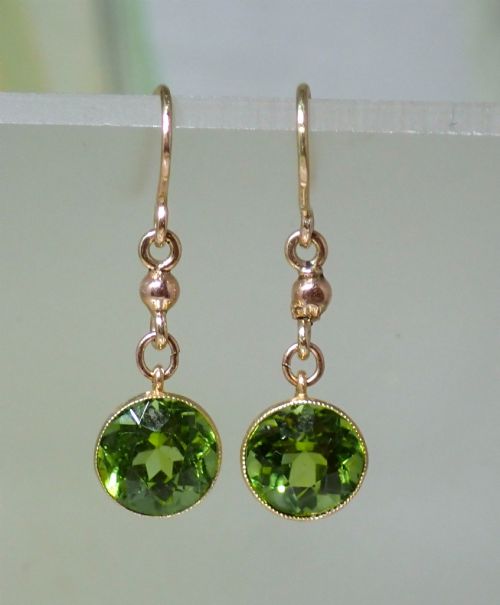
A green peridot pendant brings the bright, olive sparkle of early twentieth-century jewellery, often paired with seed pearls in delicate gold settings.
Green Peridot Pendant
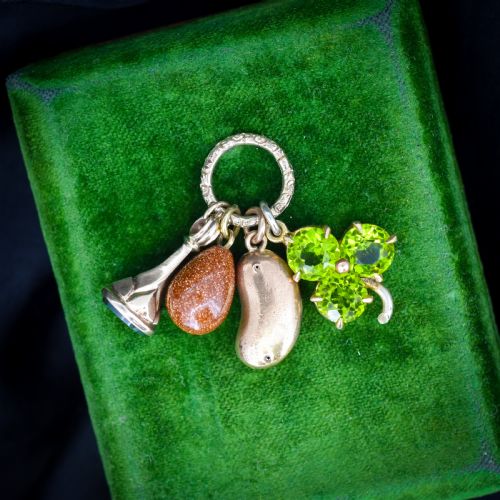
A green peridot pendant draws the eye with its distinct lime or olive hue, which defined much of the fine work produced around the turn of the twentieth century. These pieces emerge predominantly from the Edwardian and Victorian eras, alongside related styles such as Art Nouveau and Arts and Crafts. When searching for a green peridot pendant, buyers frequently encounter drop formats, lavalier designs and cluster configurations.
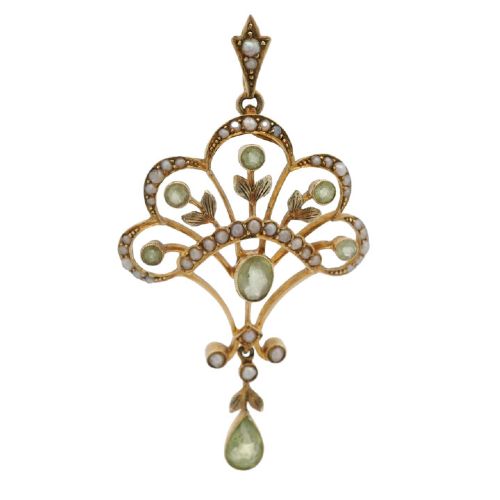
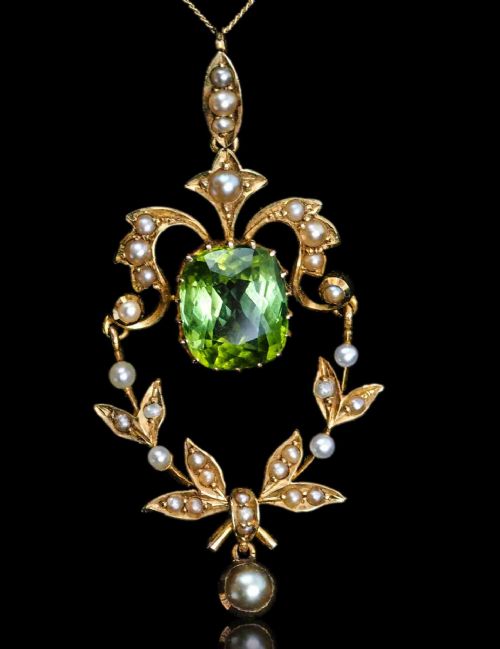
The prevailing examples on this page combine peridot with seed pearls, suspending the central gemstone from yellow gold mounts of nine or fifteen carats. Alongside standalone pendants, the selection includes versatile pieces that function equally as brooches, expanding how the jewellery can be worn. Makers of the period often incorporated delicate garland motifs, floral shapes or star patterns into the metalwork.
The materials span traditional yellow gold, platinum accents and occasionally silver, reflecting the workshops operating between the late nineteenth century and the nineteen-fifties. While the majority originate from Edwardian and Victorian hands, occasional mid-century interpretations also appear. Each green peridot pendant preserves the characteristic brightness of the stone within period-specific wirework and claw settings.
Materials and construction
Goldsmiths of the Victorian and Edwardian periods typically utilised nine-carat or fifteen-carat yellow gold to construct the frames and chains for these jewels. Peridots were faceted into cushion, round or pear cuts to maximise their natural olive brilliance, then secured in fine claw or collet settings. Seed pearls were frequently drilled and threaded onto tiny gold pins or wire to form intricate floral borders and trailing drops.
The metalwork often involved hand-pierced gallery frames and millegrain edging, where tiny beads of metal decorate the borders of the gold. Art Nouveau and Arts and Crafts examples display fluid, whiplash lines and hand-hammered textures that highlight individual craftsmanship over mass production. Diamonds, white sapphires or pink tourmalines occasionally appear alongside the peridot as accent stones to enhance the central colour.
Listings for this phrase frequently combine peridot with seed pearls set in fifteen-carat yellow gold during the Edwardian and Victorian periods.
Judgements of quality
The distinction between standard and exceptional pieces rests upon the saturation and clarity of the peridot itself, alongside the crispness of the surrounding goldwork. Superior examples display a clean, vibrant green without dark inclusions, set within mounts that show precise hand-piercing and secure stone setting. The integration of pearls also dictates worth, with uniform, well-matched seed pearls firmly pegged to the frame indicating higher workshop standards.
Makers known for distinct artistic output, such as registered firms, tend to command greater attention than anonymous factory output. The survival of original components, such as matching chains, conversion fittings for brooches, or period boxes, elevates the integrity of the piece. Ultimately, the harmony between the gemstone cut and the delicate proportions of the gold frame defines the upper tier of surviving peridot jewellery.
Murrle Bennett
The Green Peridot Pendant Glossary
- Peridot
- A gemstone of olivine composition known for its distinct lime or olive-green colour. It was a favourite stone in Edwardian and Victorian pendant designs.
- Seed pearl
- A very small, naturally formed or cultured pearl used in clusters or borders. These tiny pearls are often threaded onto fine gold wire around a central peridot.
- Lavalier
- A pendant featuring a small stone or motif suspended from a longer drop centre. This style gained immense popularity during the Edwardian period.
- Millegrain
- A jewellery technique creating a textured, beaded border along the edges of gold settings. It adds a refined, decorative finish typical of early twentieth-century pieces.
- Garland style
- A decorative motif inspired by eighteenth-century design, featuring swags of flowers, ribbons and leaves rendered in gold and gemstones.
Green Peridot Pendant: Frequently Asked Questions
How do I care for a peridot pendant?
Peridot is a softer gemstone compared to diamond or sapphire, rating around six and a half to seven on the Mohs scale. Avoid harsh chemical cleaners, ultrasonic baths and prolonged exposure to direct sunlight.
Clean your pendant gently using warm soapy water and a soft cloth, then store it separately from harder jewellery to prevent scratching the gold and the stone surface.
Are these pendants original or modern reproductions?
The pieces listed originate from historical periods including the Victorian, Edwardian and mid-twentieth-century eras. They exhibit authentic construction methods, wear patterns and material standards consistent with their dates.
Examining the pin mechanisms, gold carats and gemstone cuts helps confirm the historical provenance of each item.
Can this pendant be worn as a brooch?
Several pieces in this selection are designed with dual functionality, featuring both a hidden pendant loop and a secure pin on the reverse. This allowed Edwardian and Victorian owners to wear the same jewel on a chain or pinned to a lapel.
Check the reverse of the setting to see if a hinged pin and safety catch accompany the suspension ring.
What does a Suffragette pendant signify?
Suffragette jewellery typically incorporates the specific colour triad of green, white and violet, representing give, women and freedom. In these pendants, peridot provides the green element alongside white pearls or sapphires and purple stones like amethyst.
These pieces were worn by supporters of the women's suffrage movement during the early twentieth century as a subtle symbol of their cause.