
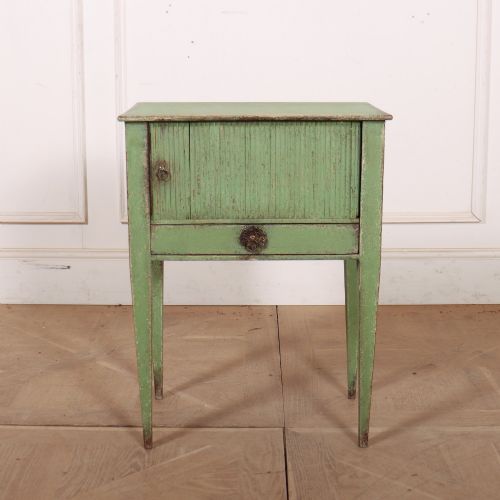
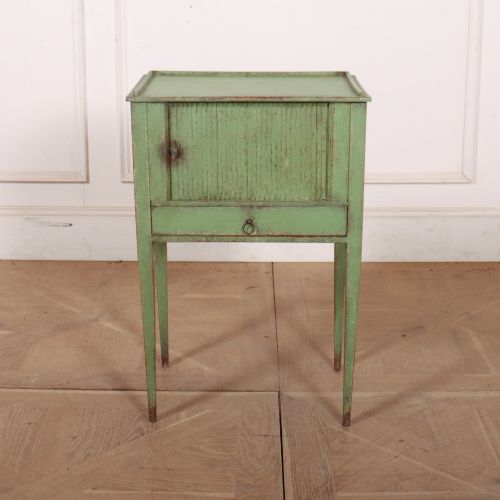
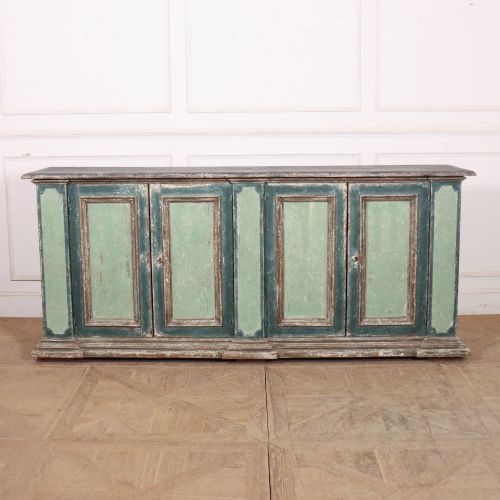
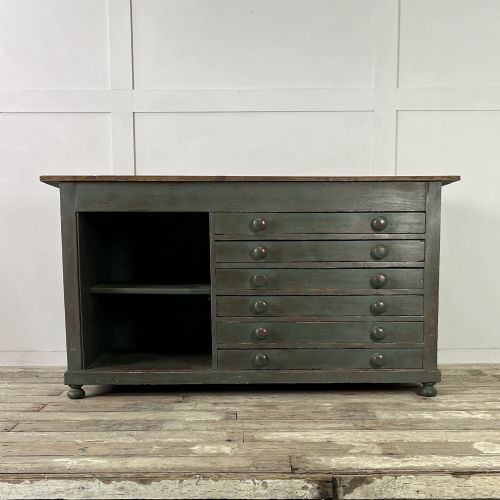


Green Painted Side Cabinet
A green painted side cabinet brings a bold splash of colour and period character to any room.
Green Painted Side Cabinet
When you search for a green painted side cabinet, you encounter a selection of storage items spanning from the eighteenth century through to the twentieth century. These furnishings range from compact bedside tables to larger cupboards and display units, originating mainly from English, Dutch, and Italian workshops.
The regional styles vary noticeably across the selection, featuring provincial interpretations alongside neoclassical and rococo designs. You will frequently find pieces finished in painted wood, pine, and softwood, often complemented by marble tops, brass fittings, or mirror glass.
How they were made
Construction relies heavily on timbers such as pine and softwood, which provide a stable base for decorative painted surfaces. Cabinetmakers shaped these materials into diverse forms, from demi-lune consoles to glazed display units.
Finishing techniques centre on applied paint layers, occasionally enhanced by giltwood details or marble tops. Workshops utilised brass for hardware, ensuring functional durability alongside decorative appeal.
Materials recorded across the selection include painted wood, pine, softwood, marble, brass, giltwood, and mirror glass.
What varies in quality
Quality rests primarily on the integrity of the original paint surface and the refinement of the provincial or neoclassical carving. Pieces displaying integrated regional details and harmonious proportions stand apart from simpler utility items.
The choice of supplementary materials, such as genuine marble tops or finely cast brass mounts, elevates a cabinet's status. Preservation of the underlying softwood and pine structure further defines the higher tier of these furnishings.
Pauly et Cie
The Green Painted Side Cabinet Glossary
- Demi-lune
- A half-moon shape characteristic of console tables and side cabinets designed to sit flush against a wall. This profile became particularly popular in neoclassical furniture design.
- Rococo
- An ornate style marked by asymmetrical curves and flowing scrollwork, seen in Venetian and Dutch provincial pieces. It originated in France before spreading across European furniture workshops.
- Softwood
- Timber from conifer trees, such as pine, utilised widely for the carcass and internal structure of painted cabinets. It provides a lighter alternative to denser hardwoods.
- Giltwood
- Wood that has been treated with gold leaf or a gold-coloured metallic finish to simulate solid gold. This treatment highlights carved architectural details on decorative cupboards.
Green Painted Side Cabinet: Frequently Asked Questions
What rooms suit a side cabinet?
These cabinets work well in living rooms, hallways, or bedrooms where surface space and enclosed storage are both required. Their compact footprints allow them to fit into narrower areas without dominating the floor plan.
Depending on the specific form, such as a bedside table or a glazed display unit, they serve equally well for holding lamps, books, or decorative objects while keeping clutter concealed.
How do I identify provincial styles?
Provincial furniture often reinterprets high-style court designs using local materials and simpler construction methods. Look for regional quirks in the painted decoration and proportions.
Dutch and Italian provincial pieces, for instance, display distinct interpretations of rococo or neoclassical motifs that differ from standard English workshop output.
Are marble tops original?
Marble tops on side cabinets and console tables were typically fitted during the original construction to provide a durable, heat-resistant surface. They appear frequently on neoclassical and nineteenth-century pieces.
Examining the fit against the wooden frame helps determine whether the stone top belongs to the period of the cabinet's manufacture.
How should I care for painted wood?
Painted wooden furniture requires protection from direct sunlight and excessive humidity to prevent the paint surface from cracking or fading. Dusting gently with a dry cloth is generally sufficient for routine maintenance.
Avoid harsh chemical cleaners or abrasive polishes, which can strip historic paint layers and compromise the finish of the timber underneath.