


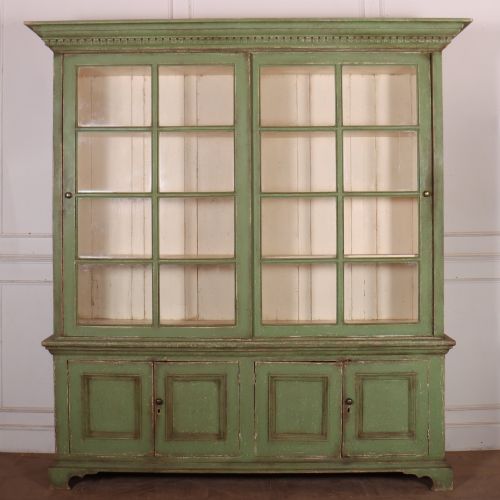
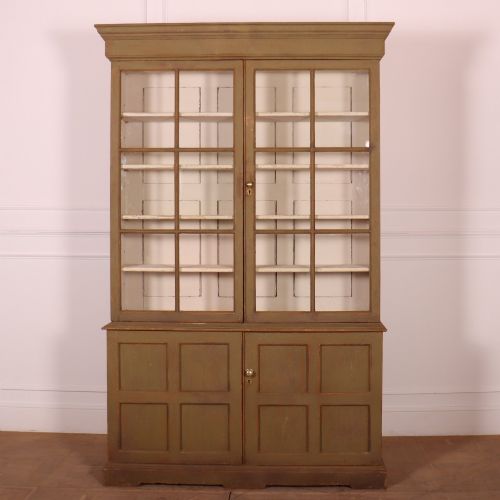

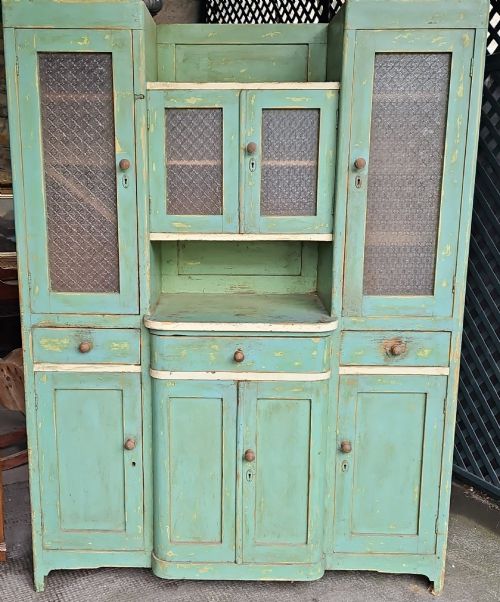


Green Painted Kitchen Cabinet
These green painted kitchen cabinets bring honest utility and colour to a room, offering practical storage disguised in charming vernacular tradition.
Green Painted Kitchen Cabinet
A green painted kitchen cabinet serves as a robust storage piece rooted in vernacular tradition, ranging from tall dressers to compact food cupboards. When searching for a green painted kitchen cabinet, you encounter sturdy utilitarian forms intended for everyday domestic service rather than formal drawing rooms.
The selections span distinct regional styles including English country, Scandinavian country, French provincial, and Alpine folk art. These pieces emerge predominantly from the nineteenth century, the Edwardian era, and the Georgian period, often showcasing later painted green surfaces upon older timber.
Forms vary from large kitchen dressers and housekeeper cupboards with glazed or solid doors to smaller sideboards and miniature dressers. Each piece reflects the practical needs of past domestic spaces, carrying the marks of decades of household use.
Materials and construction
Construction relies heavily on solid pine and painted wood, forming the structural carcases, shelves, and panelled doors of these cabinets. Woodworkers utilised straightforward joinery appropriate for utilitarian furniture destined for hardworking country kitchens and pantries.
Hardware details incorporate brass and iron for hinges, hooks, and latches, whilst textured glass frequently appears in the upper doors of glazed dressers. Paint finishes, applied originally or at a later date, seal and colour the timber while developing a distinct patina over time.
Green Painted Kitchen Cabinet Retail Price Guide 2026
Typical asking prices for green painted kitchen cabinet among the pieces listed under this phrase on Sellingantiques today, from the lower quarter to the upper quarter. They describe what is for sale here now, not the wider market.
Pine and painted wood dominate the material selection across these listings, accompanied by brass and iron hardware.
Judging quality and character
Quality rests in the proportion, structural integrity, and the honesty of the timber and paint surface. Superior examples maintain their original doors, drawers, and backboards without excessive structural intervention.
The character of the painted finish dictates much of the visual appeal, where layered brushwork and natural wear outshine flat, modern applications. Original hardware and well-proportioned cornices elevate standard utilitarian storage into notable examples of country craftsmanship.
The Green Painted Kitchen Cabinet Glossary
- Pine
- A softwood commonly used for country furniture due to its availability and workability. It accepts paint readily and forms the primary material for the majority of these cupboards.
- Housekeeper cupboard
- A large storage piece traditionally used in substantial homes for linens, dry goods, or china. These feature multiple doors and internal shelving designed for heavy domestic use.
- Dresser base
- The lower section of a kitchen dresser, often functioning independently as a sideboard with drawers and cupboards beneath a solid top. It provides lower-level storage without the upper plate rack.
- Textured glass
- Patterned or rolled glass used in cabinet doors to obscure contents whilst diffusing light. It appears frequently in nineteenth-century glazed kitchen furniture.
- Folk art
- Decorative items and furniture created within a traditional community style, often by self-taught makers. Alpine and country pieces frequently display these distinct regional aesthetic choices.
Green Painted Kitchen Cabinet: Frequently Asked Questions
What is a housekeeper cupboard?
A housekeeper cupboard is a large, utilitarian storage cabinet traditionally used to store household linens, dry foods, or tableware. These pieces typically feature multiple panelled doors enclosing deep shelves.
In historical settings, they stood in hallways, pantries, or large kitchens for easy access by domestic staff. Today, they serve as substantial storage pantries in modern homes.
How do I care for painted pine?
Care for painted pine involves dusting regularly with a soft, dry cloth and avoiding harsh chemical cleaners that can strip or dull the finish. Keep the timber away from direct heat sources and excessive moisture.
Allow the natural patina and minor scuffs to remain as part of the piece's history. Gentle waxing can protect older painted surfaces where appropriate.
Are these cabinets purely English?
No, these cabinets originate from various regions including England, France, Denmark, and Alpine areas. Each geographic origin brings distinct design characteristics and vernacular traditions.
English pieces often lean towards rustic farmhouse styles, whereas French and Scandinavian variants feature different mouldings, proportions, and paint treatments.
How do I date an antique cabinet?
Dating relies on examining construction methods, nail types, timber species, and hinge styles. Hand-sawn boards and hand-forged iron hardware generally point towards earlier Georgian and nineteenth-century origins.
Paint layers also offer clues, as many pieces feature later decorative coats applied over older pine carcases. Examining drawer construction reveals whether handmade dovetails or machine-cut joints were utilised.