



Green Oak Table
When you want a green oak table, you seek substantial timber surfaces bearing rich tones, patination and historical carving.
Green Oak Table
A green oak table or desk unites sturdy British timber construction with periods spanning the nineteenth and early twentieth centuries. Pieces grouped under this heading often display substantial proportions, dark patination, and functional writing surfaces.
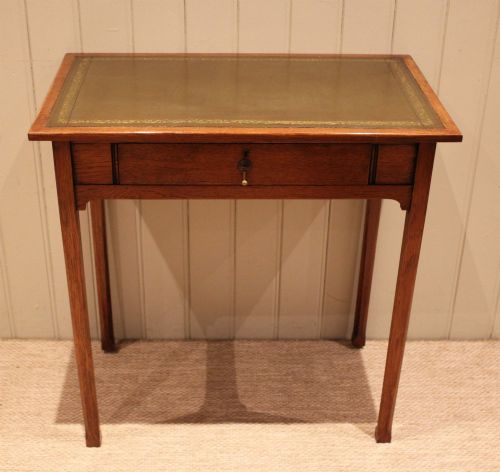
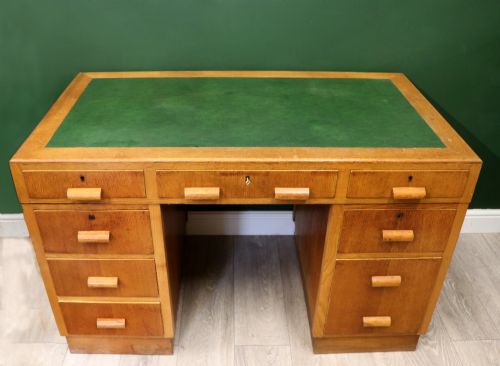
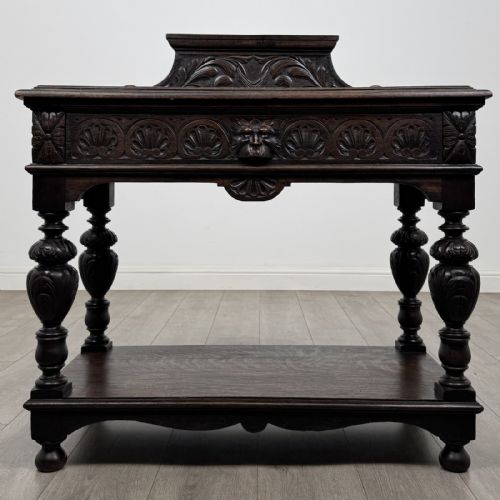
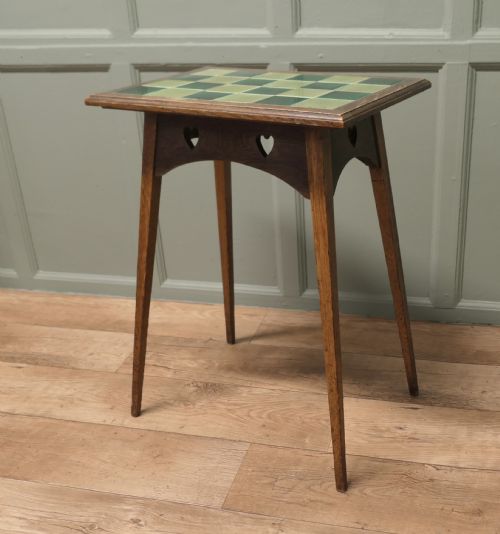
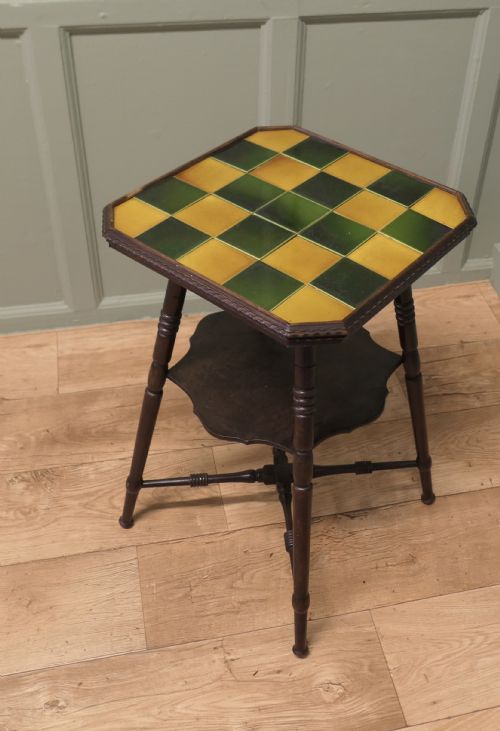
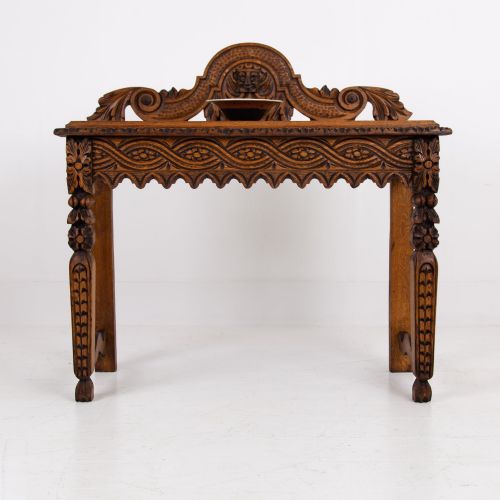
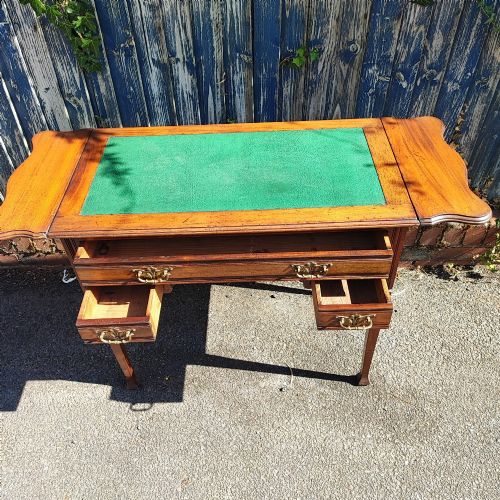
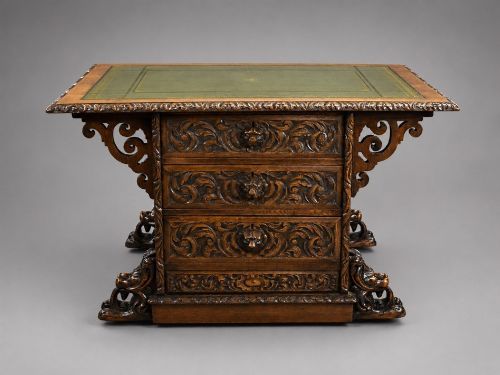
The selections encountered on this page run from small Arts and Crafts writing desks to large partners tables, occasional tables with ceramic tiles, and carved side tables bearing distinctive mask motifs.
Makers and designers working within the Arts and Crafts movement or Gothic Revival styles heavily influence the inventory. Buyers find items ranging from utilitarian office desks to decorative hall tables and compact occasional pieces.
Quality Indicators
Construction methods also separate standard commercial production from bespoke workshop output. Integrated drawer linings, substantial brass fittings, and untouched original leather writing surfaces elevate a piece above simpler utilitarian counterparts.
Green Oak Table Retail Price Guide 2026
Typical asking prices for green oak table among the pieces listed under this phrase on Sellingantiques today, from the lower quarter to the upper quarter. They describe what is for sale here now, not the wider market.
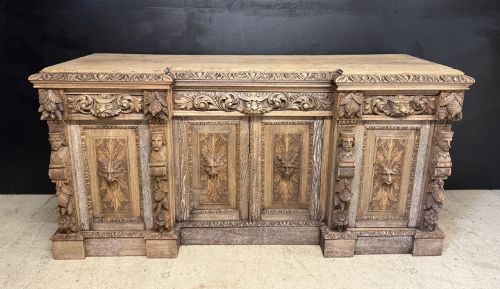
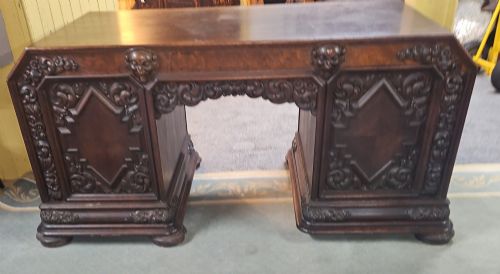
Intricate foliage masks peer out from nineteenth-century side tables, watching over centuries of correspondence.
Liberty London·Shapland & Petter·Winterhalder & Hofmeier·T Wilson·Gillow & Co
The Green Oak Table Glossary
- Green Man
- A sculptural architectural ornament depicting a face made of or entwined with leaves and vines. This motif frequently appears on carved nineteenth-century side tables and desks.
- Partners Desk
- A large double-sided desk designed for two people to work opposite one another. These incorporate drawers and cupboards on both long faces.
- Arts and Crafts
- A design movement emphasising handcraftsmanship and simple vernacular forms. Pieces from this tradition often feature exposed joinery and integrated ceramic tiles.
- Kneehole Desk
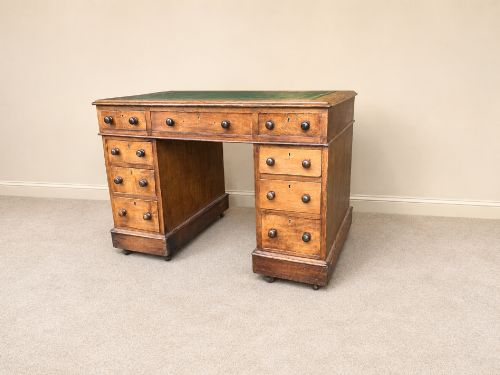
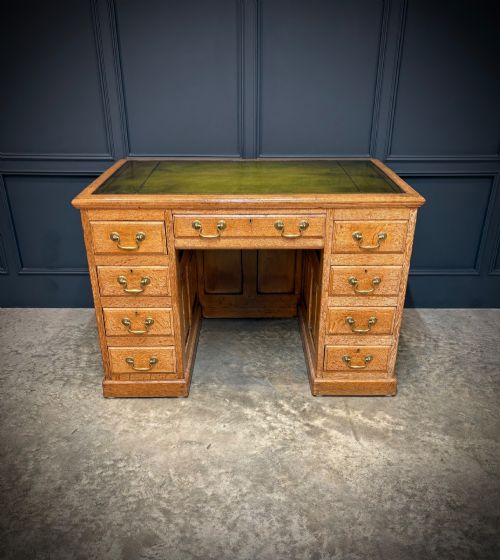
- A freestanding desk featuring a central recess for the user's legs, flanked by pedestals of small drawers. This form became popular during the nineteenth century for administrative work.
- Tiled Top Table
- An occasional or side table inset with decorative ceramic tiles. These surfaces protected the wood from hot vessels and damp items.
Green Oak Table: Frequently Asked Questions
What defines a green oak table?
A green oak table utilises sturdy oak timber, sometimes referencing the colloquial term for freshly felled unseasoned wood or describing pieces featuring green man carvings. The selection spans Victorian and Edwardian desks, side tables, and occasional furniture.
These items showcase historical craftsmanship ranging from utilitarian office furniture to decorative Arts and Crafts tables inset with ceramic tiles.
How do I care for a leather top?
Leather writing surfaces require gentle cleaning with a dry or barely damp cloth to avoid water damage. Conditioning wax helps maintain flexibility and prevents cracking over time.
Keep these surfaces away from direct sunlight and heat sources to preserve the original colour and texture of the hide.
Where were partners desks used?
Partners desks served administrative roles in large estate offices, banks, and libraries during the nineteenth century. Their double-sided configuration allowed two individuals to work face-to-face.
Today, these substantial pieces function effectively as large freestanding desks or central library tables in spacious rooms.
How do I identify Arts and Crafts pieces?
Arts and Crafts furniture displays visible joinery, honest material use, and functional forms without excessive ornamentation. Makers often incorporated hand-carved motifs or decorative ceramic tiles.
This aesthetic prioritizes traditional hand-tool techniques over industrial mass production.