



Green Metal Pendant
These green metal pendant lights and allied chandeliers bring functional industrial heft and painted French provincial charm to any interior.
Green Metal Pendant
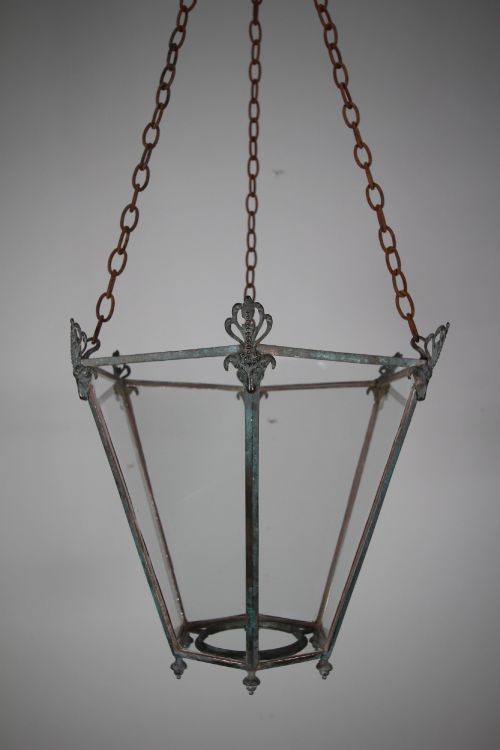
When you search for a green metal pendant, you are looking at functional ceiling lighting and chandeliers formed from painted steel, iron, copper, and toleware. These pieces span from the late nineteenth century through to the middle of the twentieth century, carrying the practical utility of industrial workshops and the decorative painted finishes of French country houses.
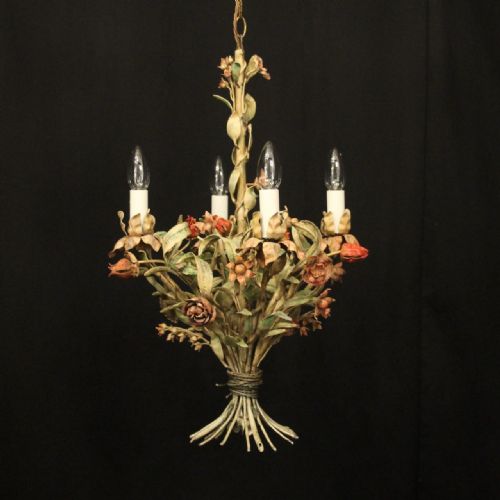
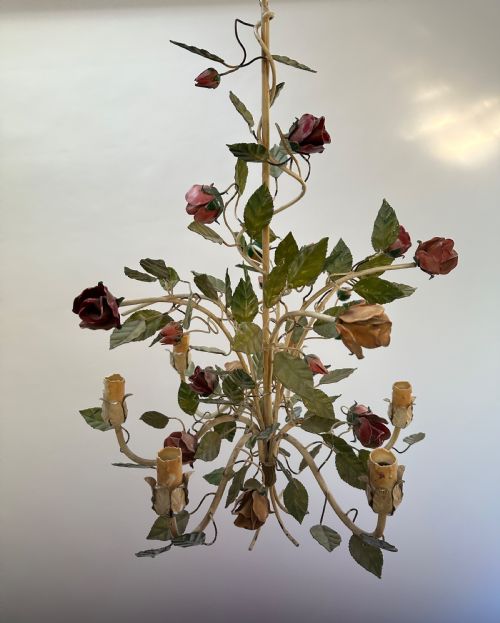
The versions you are most likely to meet on this page lean heavily towards French polychrome toleware chandeliers from the nineteen thirties and industrial enamel pendant lights from the nineteen twenties and forties. Alongside these, you find coaching lanterns in copper and iron, plus prismatic glass and steel Holophane fittings designed for commercial spaces.
Forms range from simple single-bulb industrial shades to multi-armed chandeliers carrying four, five, or seven lights, often featuring large decorative drips. The unifying thread across these objects is the durable metal construction combined with green painted or patinated surfaces that show age and use.
How they were made
Construction relies on sheet metal, wrought iron, and steel that was beaten, spun, or welded into functional shades and structural frames. Makers applied painted finishes, including polychrome toleware and vitreous enamel, directly to the iron and steel substrates to prevent corrosion and add decorative colour.
Brass elements and copper components often appear alongside the ironwork for structural fixings, suspension arms, and lantern bodies. Prismatic glass elements, such as those by Holophane, were engineered to direct and diffuse light efficiently in industrial and commercial settings.
Green Metal Pendant Retail Price Guide 2026
Typical asking prices for green metal pendant among the pieces listed under this phrase on Sellingantiques today, from the lower quarter to the upper quarter. They describe what is for sale here now, not the wider market.
Several chandeliers feature oversized decorative drips that mimic melting candle wax long after electricity took over.
What varies in quality
The distinction between ordinary utility items and superior pieces rests on the complexity of the metalwork and the hand-painted execution of the polychrome surfaces. Multi-armed toleware chandeliers with layered floral or painted details represent a higher decorative ambition than plain industrial enamel shades.
Subtlety of patination and the survival of original painted finishes separate well-preserved examples from those subjected to modern repainting. Heavier gauge metals, robust brass fittings, and intact manufacturer components indicate sturdier construction and greater period integrity.
The Green Metal Pendant Glossary
- Toleware
- Painted or lacquered metalware, typically tin or sheet iron, decorated with polychrome designs that imitate Asian lacquer or folk art traditions.
- Holophane
- A brand of scientific glass luminaires known for prismatic ribbed shades designed to control and distribute light effectively.
- Polychrome
- Decorated in multiple colours, frequently seen on floral toleware chandelier arms and drip pans.
- Chandelier
- A branched ceiling-mounted lighting fixture designed to hold multiple bulbs or candles.
- Patina
- The surface alteration and mellowing developed on metal and painted finishes through age and handling.
Green Metal Pendant: Frequently Asked Questions
Where should I hang a green metal pendant?
These fixtures suit kitchens, utility rooms, and dining areas where direct downward illumination or decorative overhead presence is required.
Larger multi-armed chandeliers fit well in high-ceilinged living spaces, while single enamel pendants hang effectively over islands or tables.
How do I date a green metal light?
Dating relies on material combinations, manufacturing techniques, and stylistic markers recorded across the nineteenth and twentieth centuries.
Industrial enamel shades typically point to the nineteen twenties and forties, whereas toleware chandeliers often date to the nineteen thirties.
Are these lights wired for modern use?
Most antique and vintage fixtures require checking and rewiring by a qualified electrician to meet current safety standards.
Original lamp holders and wiring are frequently updated while retaining the external metal shade and structural body.
What maintenance do painted metal lights need?
Dusting with a dry cloth and gentle cleaning keeps the painted surfaces and metalwork stable without harming the original finish.
Harsh chemical cleaners should be avoided to protect antique enamel, toleware, and patinated copper or iron.